Select Page

Sluething the car (how I found my Alpina)

September 1, 2017

I’m a serial renovator – you know the type, I buy run-down houses, live in it for a bit, fixing up a house I couldn’t otherwise afford. And after about five or 10 years, I sell the house and move on to the next project. What does it have to do with this Alpina? Well, I’m the same with cars.

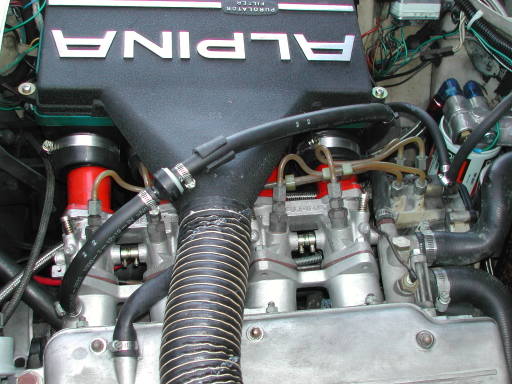
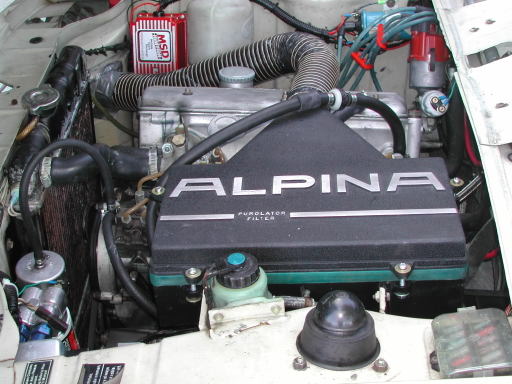
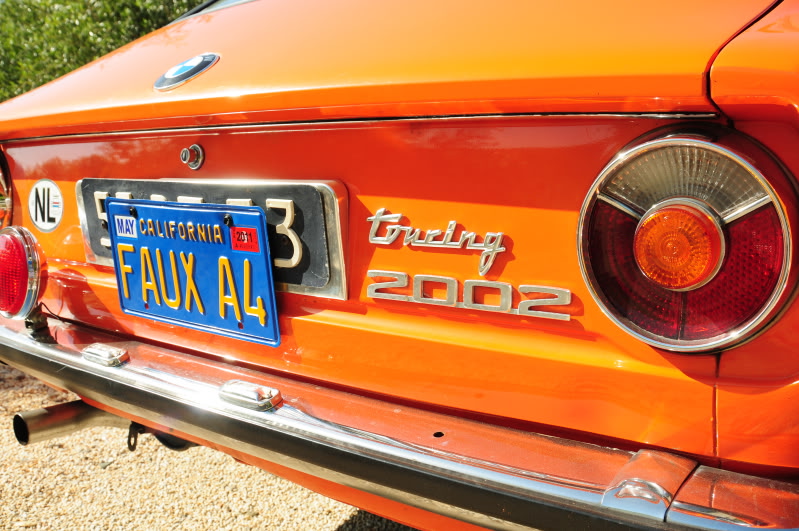
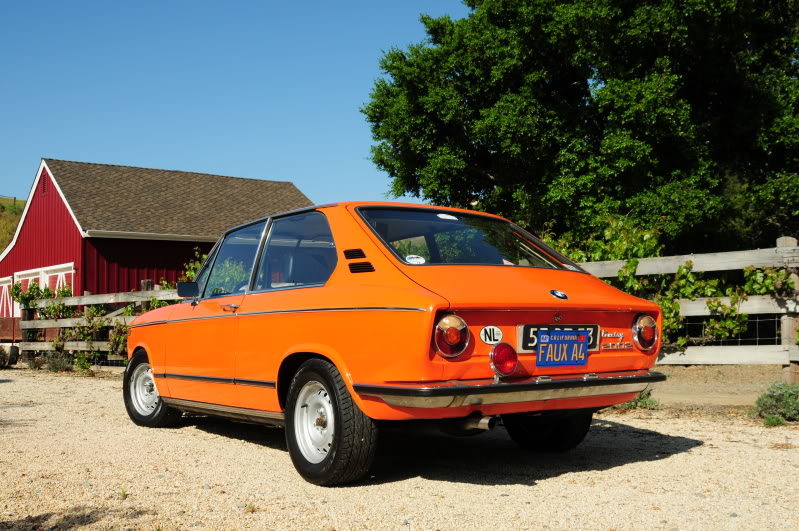
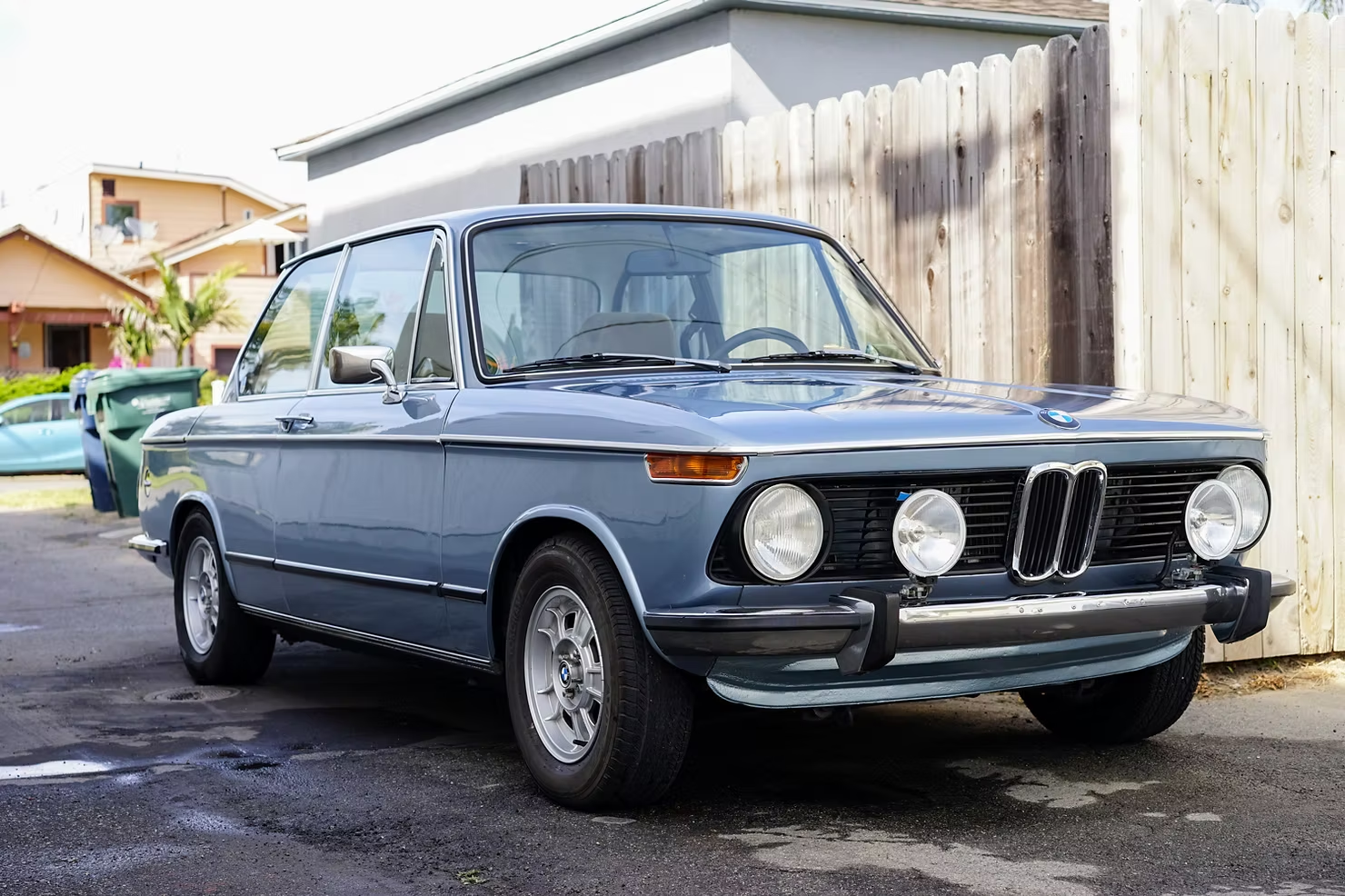
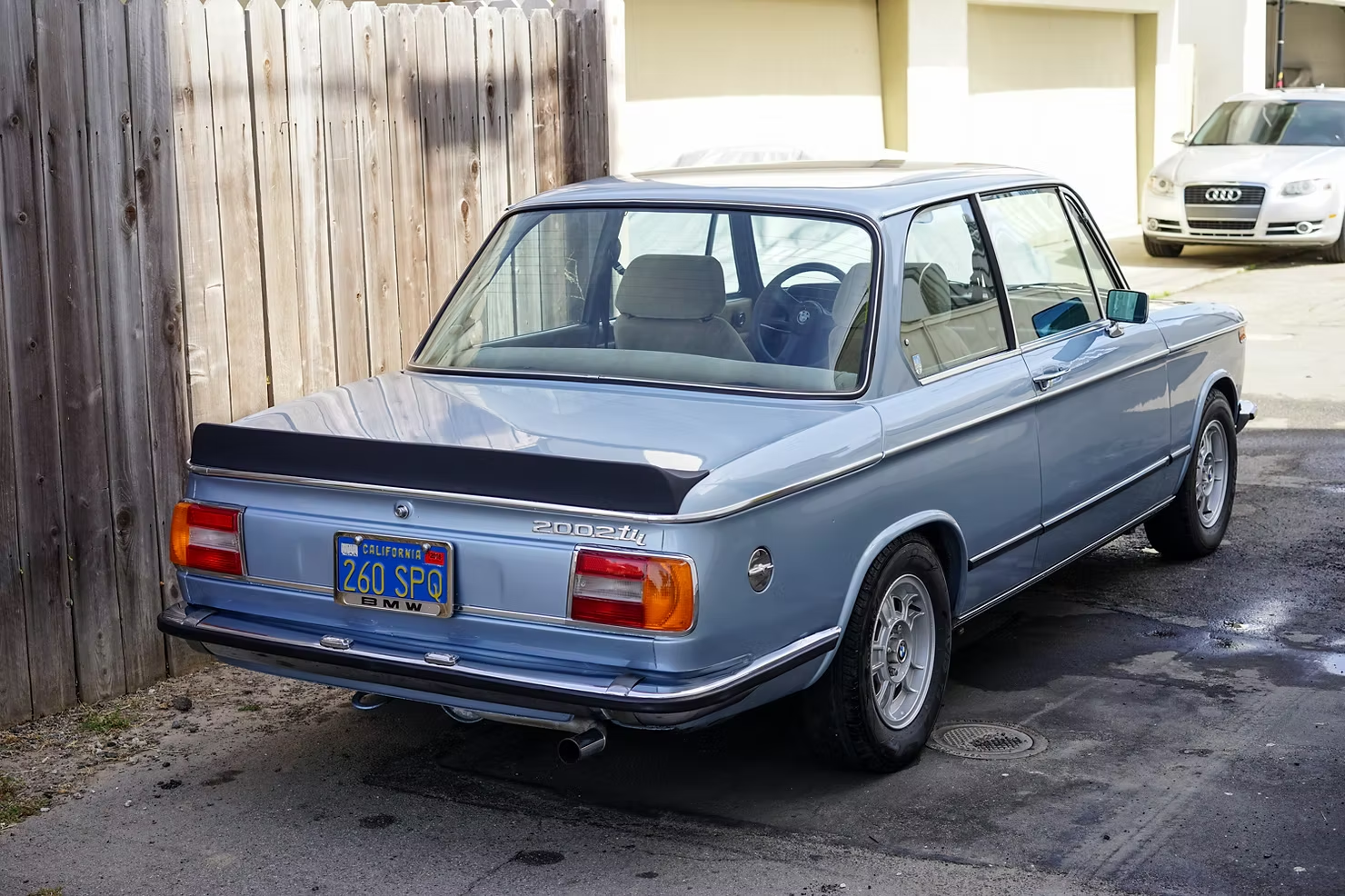
I buy old BMWs, and do a resto-mod, mostly on 2002tiis. I modify them, often with vintage Alpina parts that I had squirreled away over the years. Most recently I built an Inka 2002 touring with virtually every Alpina part available back in the day, including a complete Alpina A4 four-throttle, kugelfischer-based, mechanical fuel injection system (sporting the appropriate personalized plate FAUX A4).

While it’s fun building faux Alpinas, I’ve had a hankering for a real, honest to God Buchloe-built Alpina. For years I’ve been looking for the right car but it’s always alluded me; they either weren’t California legal or a real Alpina. The few that ticked both boxes were too expensive or too much of a project for a shade-tree mechanic like me.

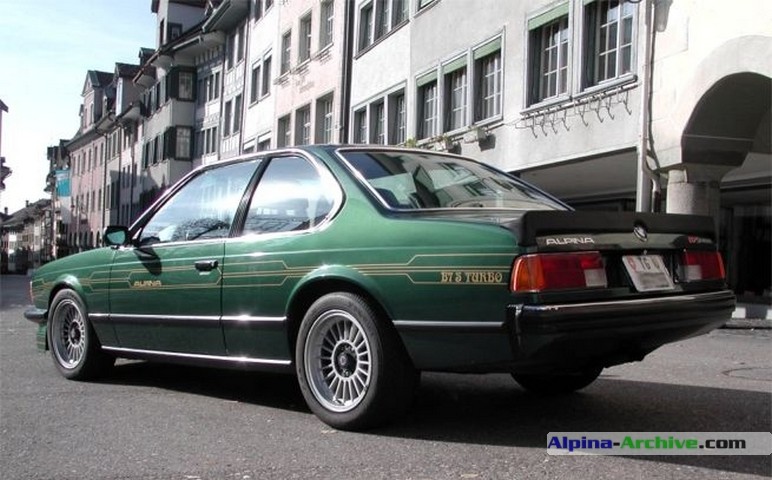
One random morning, while drinking my coffee and reading an email blast from Bring-a-Trailer, I spotted a listing for one of my favorite Alpinas – an e21-based C1 2.3 (https://bringatrailer.com/listing/1982-alpina-c1-2-3/). The pictures weren’t the most revealing, but it looked decent. The interior was pretty much all there but old: disheveled, faded, and cracked. The mechanics looked overly greasy, but were claimed to be in good condition, including new brakes and suspension (with the original Alpina/Bilsteins, ready to be rebuilt). Even from the (deceiving?) pictures on BaT, the car clearly needed someone to lovingly massage it, but didn’t appear to be a basketcase. Could this be the one for me?
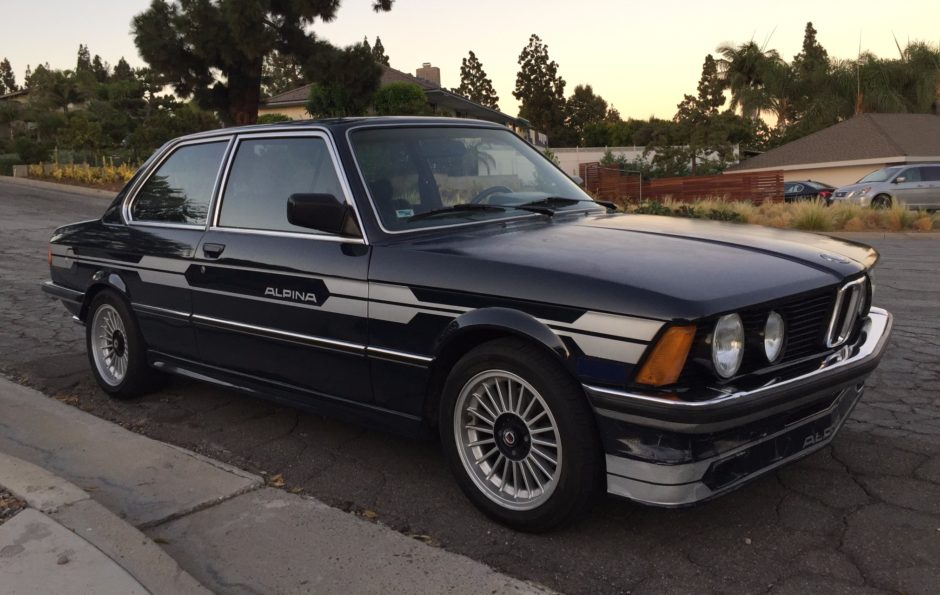
My requirements were that it was registerable in California and a genuine Alpina. Figuring out whether it was California legal was easy. To register a grey-market car (a Euro-market car not imported by BMW of North America) in California, it needs a valid so-called BAR sticker, an indication that the car has been approved by the California Bureau of Automotive Repair and complies with smog requirements at the time the sticker was issued. Cars that have a BAR sticker and have been continuously registered in California since getting the sticker are grandfathered in. If the car moved out of state after getting a sticker, it needs a new sticker if it moves back! Because getting the sticker is an expensive and difficult process, a valid BAR sticker is the holy grail for euro-car fans.
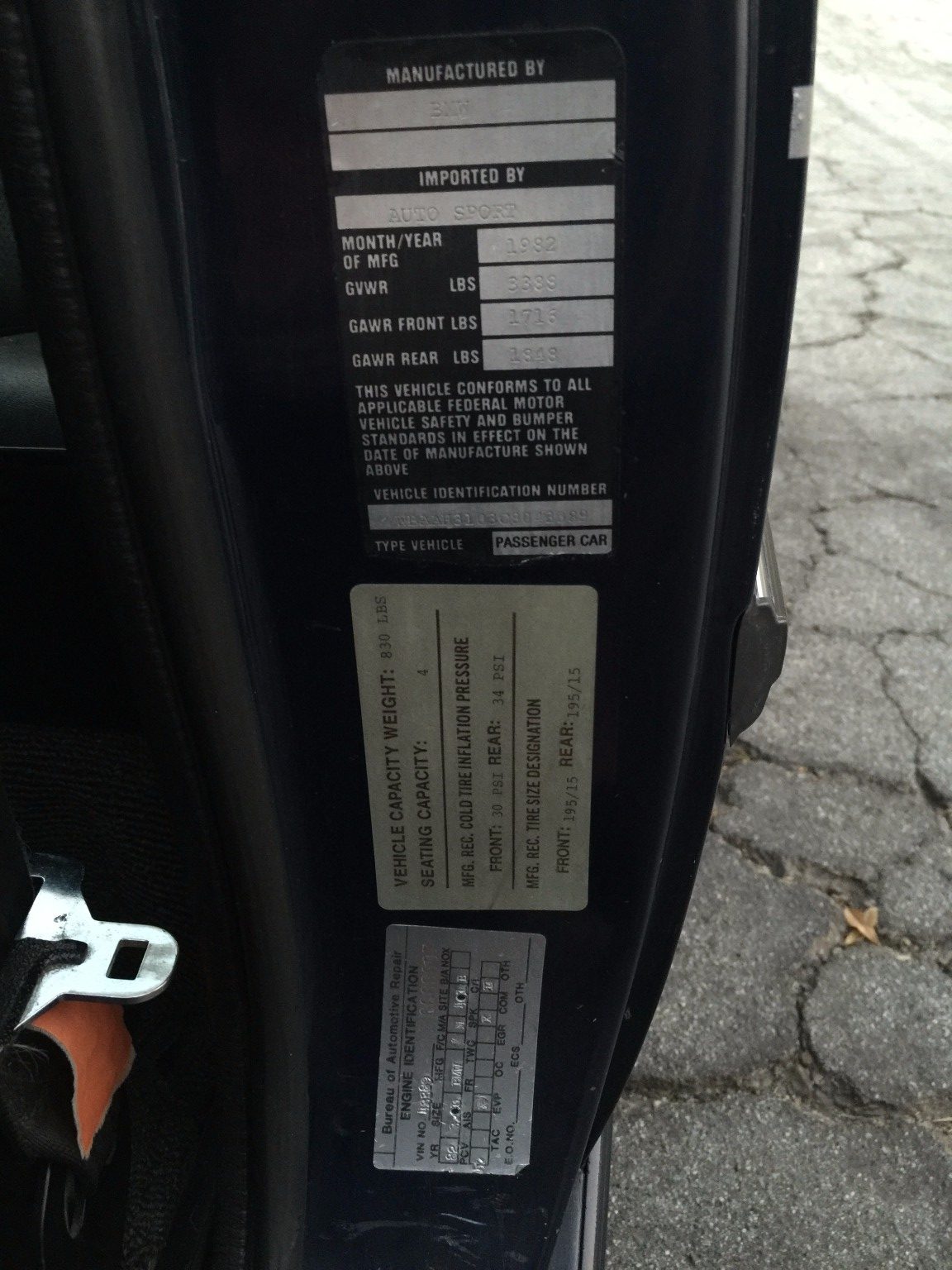
Looking at the pictures on BaT, the car had California plates, looked to be currently registered in California, and had a BAR sticker. I contacted the seller and was able to verify it had been continuously registered in the Golden State and was smog legal. One hurdle cleared!

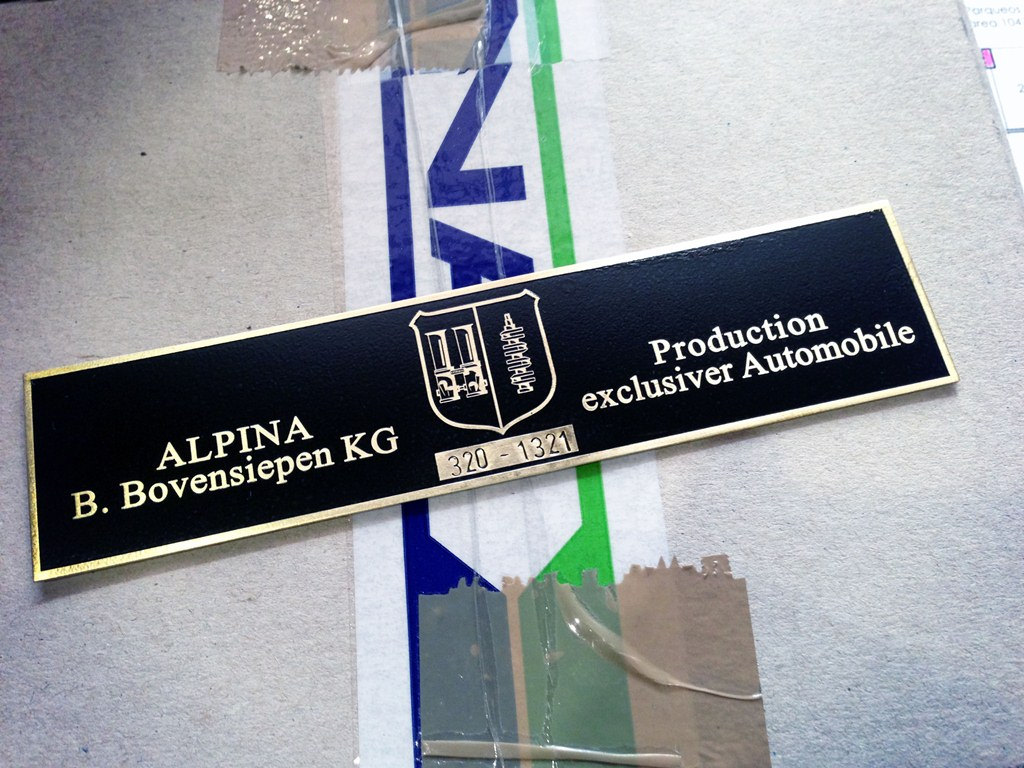
Next, the most important – and certainly more difficult – hurdle: is it a real Alpina? That may seem like an easy question to answer, but it actually isn’t. Back in the day, it was hard to know if a car was a genuine Alpina or “just” an old BMW with some Alpina parts on it. Even an Alpina dash plaque did not guarantee authenticity – anyone can buy the plaque (available on eBay even now!) and have it properly engraved. Hell, I did that with a gray-market 1980 323i I owned a couple of decades ago. Without paperwork, like a bill of sale with the VIN, it often felt like an act of faith to believe a BMW was a real Alpina. Popular wisdom was that even Alpina did not have records from back in the 70s or 80s and that they were hostile to inquiries.

Reading the comments on the BaT listing, it was clear that several others were on the hunting for some indicia of authenticity. One guy asked the seller to check for the Alpina stamping on the head and block. When the seller didn’t things got nasty; he was accused of trying to pawn off a 323i with a bunch of cool parts as a real-deal Alpina. I chuckled at the outrage, having seen too many so-called Alpinas that couldn’t pass the originality test.

Then a previous owner piped up, claiming it was a real Alpina with an unethical mechanic pilfering many of the unique parts. He provided some interesting history, including the importer, but was largely ignored. And, to make it worse, the seller rose to the bait, engaging with those who cast doubt on the car. An early bidder wondered if he was a fool for jumping out to a $9,000 bid early-on. It seemed other bidders were scared away by the constant cacophony of callous comments, and they thanked the haters for saving them from buying such a questionable car.

One comment politely summarized the mood of the bidders: “Been watching this one with interest and the glaring omission of stamped block and head photos and/or verification from [the Alpina factory in] Buchloe of its authenticity are growing problems for the seller. … Until then I’m in the camp that it’s a 323i with cool parts and would bid accordingly.”

The auction ended with the car not meeting reserve, the highest bid being $10,000 (mine was second highest at $9,600). I bid on the car on the theory that it was worth around $9,500 (to me at least) even if it was “only” a 323i with a bunch of cool Alpina parts and an all-important valid BAR sticker. I could, after all, make another “faux Alpina,” like I did with the Inka touring. And it had a bunch of expensive parts left (ultra rare seats, some suspension components, correct wheels, shift knob and steering wheel) and an Alpina dash plaque – real or not.
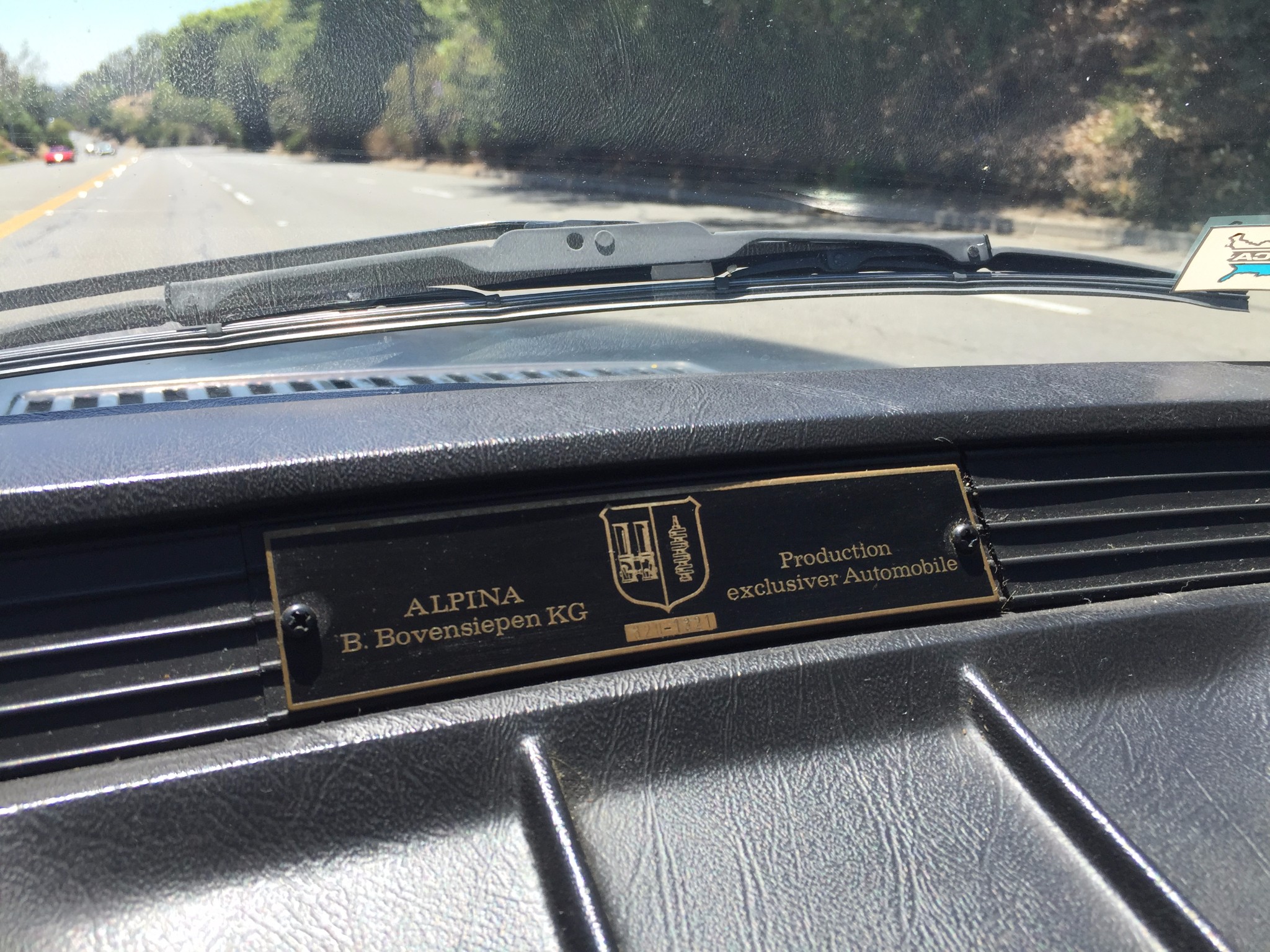
Then two things happened. The first – getting a pre-purchase inspection – almost made me walk away. A few minor and odd flaws were revealed – like the tow hook that is welded to the spare tire well was torn out and the exposed raw metal was rusting – and some other similarly quirky problems that weren’t big deals over all. But there was a big issue: a compression test that revealed low compression in two adjacent cylinders, indicating a blown head gasket – or possibly worse, like a cracked head or bad rings in adjacent cylinders. I wasn’t that worried about an engine rebuild as I’d do everything myself other than the machine work, but the project was getting pretty expensive – especially if all I was getting was a 323i with a bunch of cool Alpina parts and BAR sticker.

While arranging the PPI, I again attempted to sleuth out the car’s history. I talked with the owner, but that offered nothing new. Then I tried to chase down the guy the previous owner said imported the car, Mike Dietel. Mike used to own one of the three Alpina authorized shops in the USA (and had done some really cool home-made conversions in his shop in Orange County). Got nowhere with that. Because I either have too much time on my hands or don’t understand how to prioritize correctly, I kept scrutinizing the pictures, comments, and the seller’s answers on the BaT listing. One of the most critical comments chided the seller for not contacting Alpina to prove it was authentic. But wait, I thought. Decades of conventional wisdom said that Alpina did not have records from back then. And that you needed an “in” there to even have a conversation about cars from the 70s and 80s. Could that conventional wisdom (and my acceptance of it) be wrong? Mr. Critic implied he emailed Alpina and they authenticated a car for him. Frankly, I figured he was blowhard know-it-all, but if he was right…..

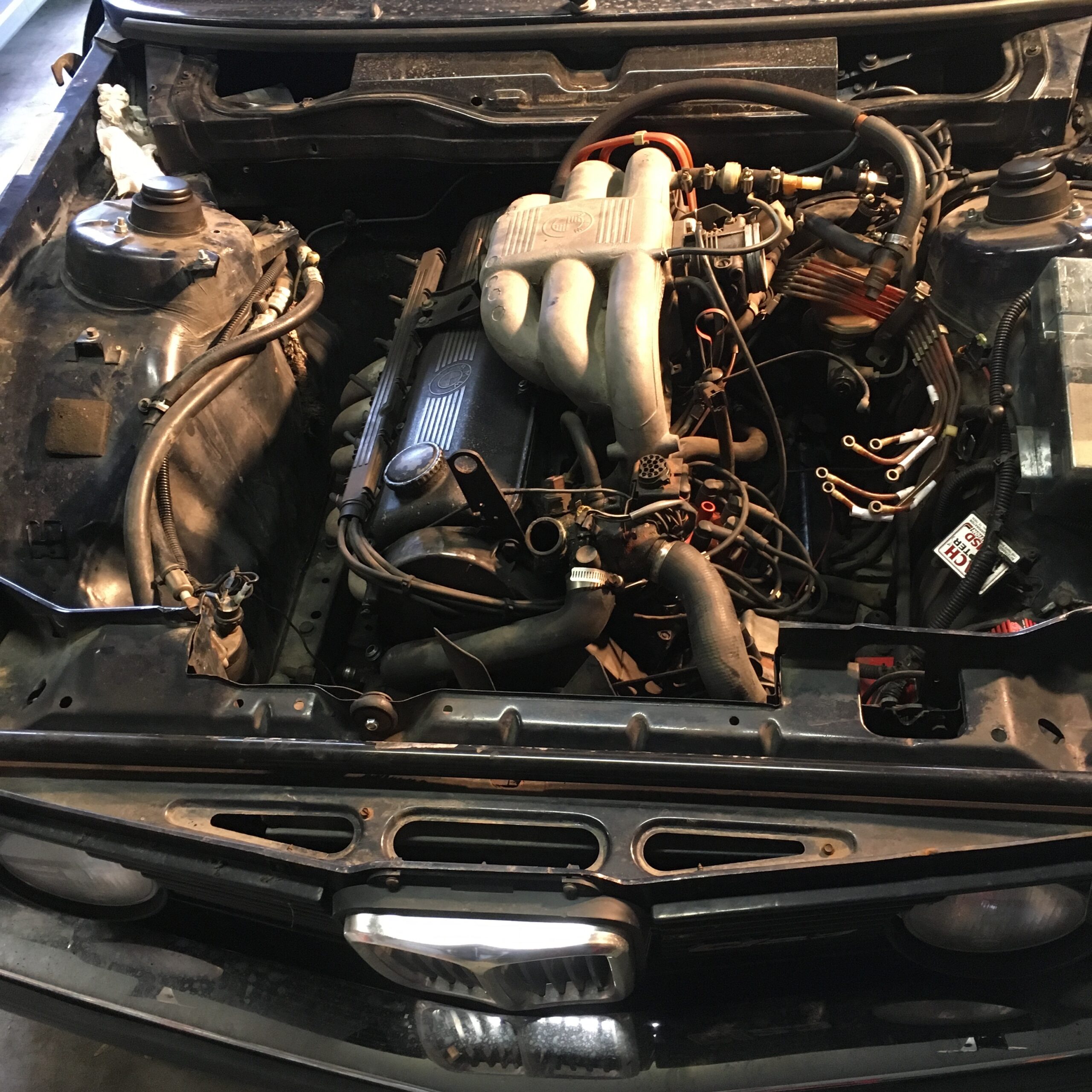
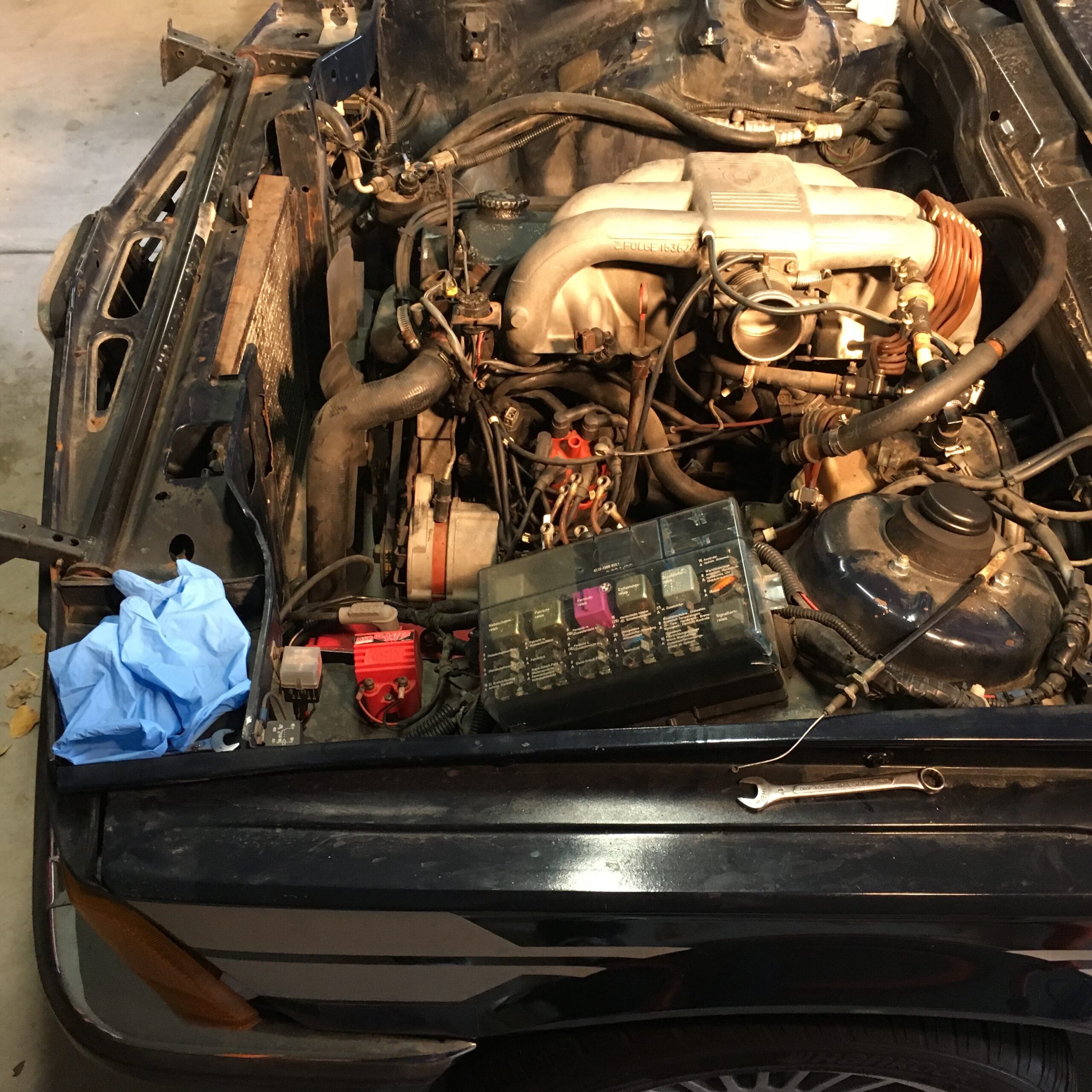
I emailed Alpina with the VIN and a day and half later I got a lovely email from Elisabeth Steck in the Automotive Sales division of Alpina: “I have checked and I found the car in February of the year 1982 and we have had it in our company for modification. Hope, this will help you.” Since the car was built in February of 1982, it seems it went directly there from BMW. Eureka! BINGO! Suddenly the car was more than reasonably priced. And, importantly, the right amount of project for me. Eventually, after a bit too much negotiation, it was mine. We arranged shipping, I drove the car to my secure, undisclosed location and have started taking it apart.

So, I now have a new project – this time a real Alpina, with a bunch of genuine Alpina parts. Requiring lots and lots of work to bring it back to its past glory, just the way I like my projects. And I should be ready to sell it in about five or ten years.
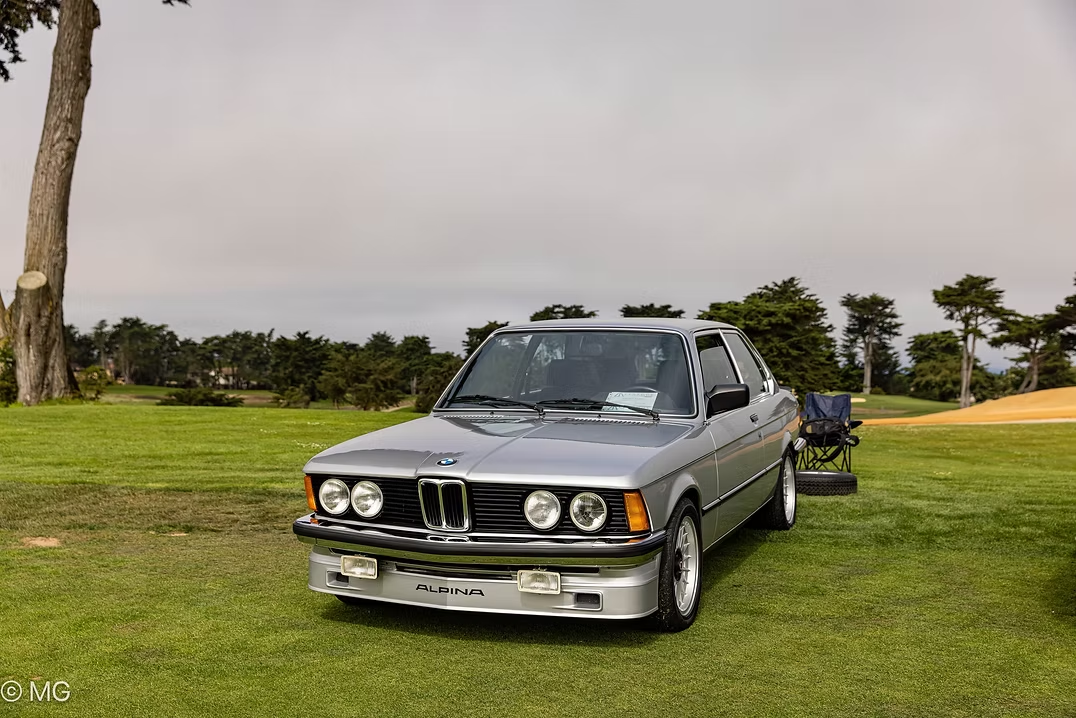
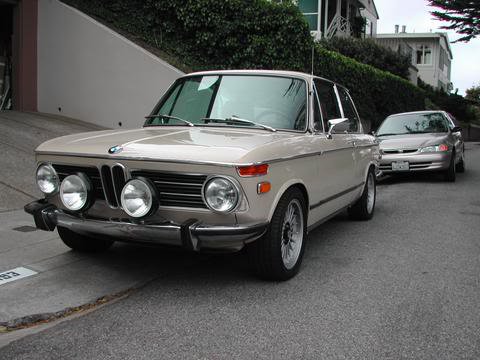
test

I am text block. Click edit button to change this text. Lorem ipsum dolor sit amet, consectetur adipiscing elit. Ut elit tellus, luctus nec ullamcorper mattis, pulvinar dapibus leo.

The Back Story (a couple of A4s)

September 15, 2017

As a bona fide 2002 nut, I spent too much time dreaming of Alpina-modified 02s, the best being the 2002tii version known as an Alpina A4. In addition to the usual suspension and braking upgrades, Alpina was known for their tweaked motors. The standard 2002 had about 100hp, the tii had 130hp, and the Alpina A4 and A4S had 165-180hp, achieved through a four-throttle injection system, a tweaked kugelfischer pump, a 300* motorsport cam, and high compression pistons.

I bought my first A4 injection system in the late 1980s, but never got around to installing it in the 2002tii I had back then. (Ironically, I sold that tii and bought a gray-market 1980 e21 323i.)

In 2002, I bought “Sandy,” a Sahara beige 1973 2002tii with a low mileage Dave Cruise motor and Franz Fechner 5-speed. I installed an Alpina A4 system I had found on eBay.de.

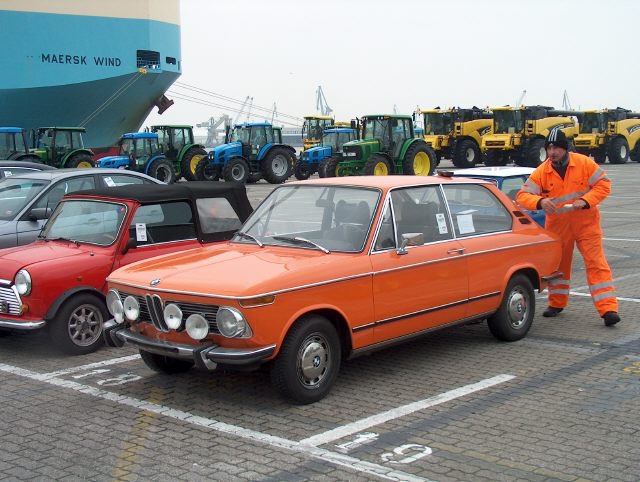
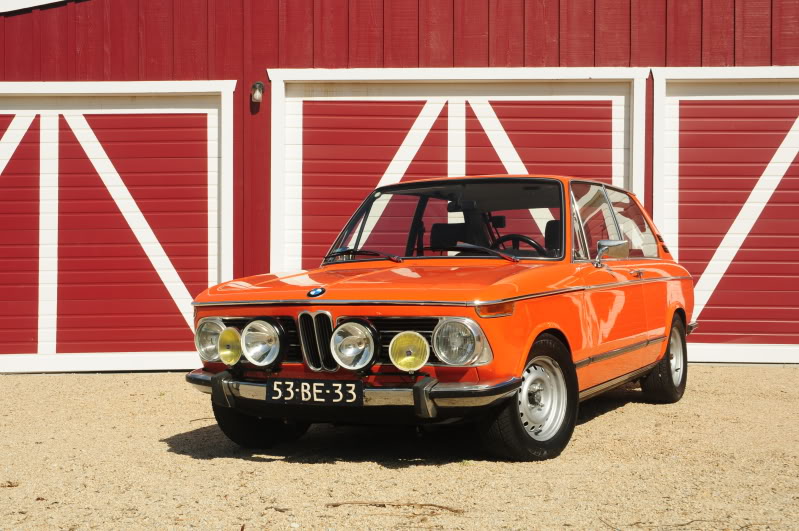
I had fun with that car, but decided I really wanted a 2002 touring. I sold Sandy and bought Inkie, a 1972 Inka touring I imported from Holland.

Although that car was in fine condition, I promptly tore it apart and rebuilt it as an Alpina A4, and it sported the personalized California plates “FAUX A4.”

The motor was the highlight of the rebuild. It had an S14 crank (2.2 liters), 304* schrick cam, custom 10.0:1 JE pistons, an aluminum flywheel, connected to a 5-speed close ratio transmission.

The inka touring got some other special parts too. Underneath, the suspension had very rare Alpina “Green Dot” Bilstein struts up front and inverted rear shocks, Alpina adjustable sway bars, and ST springs for great handling and good ride-height.

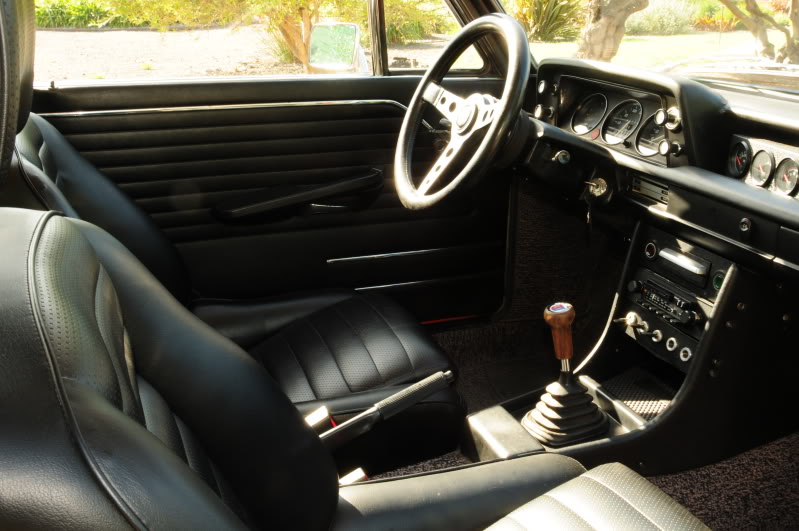
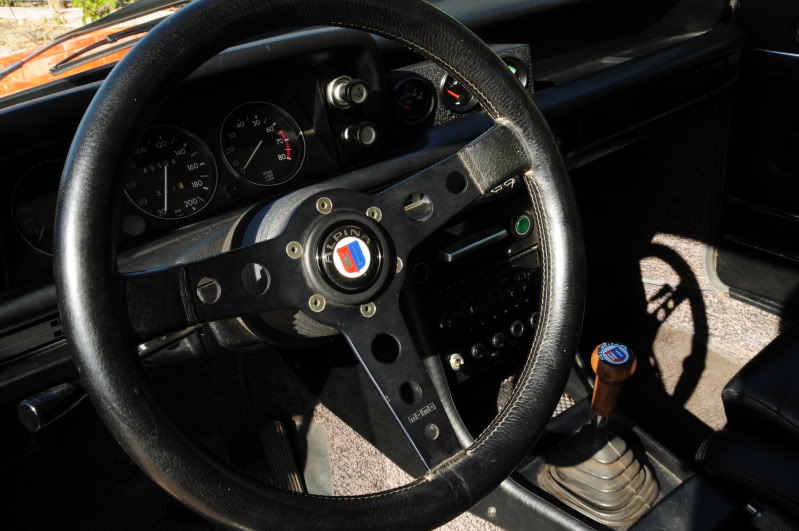
The interior featured reupholstered 2002 turbo seats and a Momo Prototipo, the steering wheel used by Alpina.

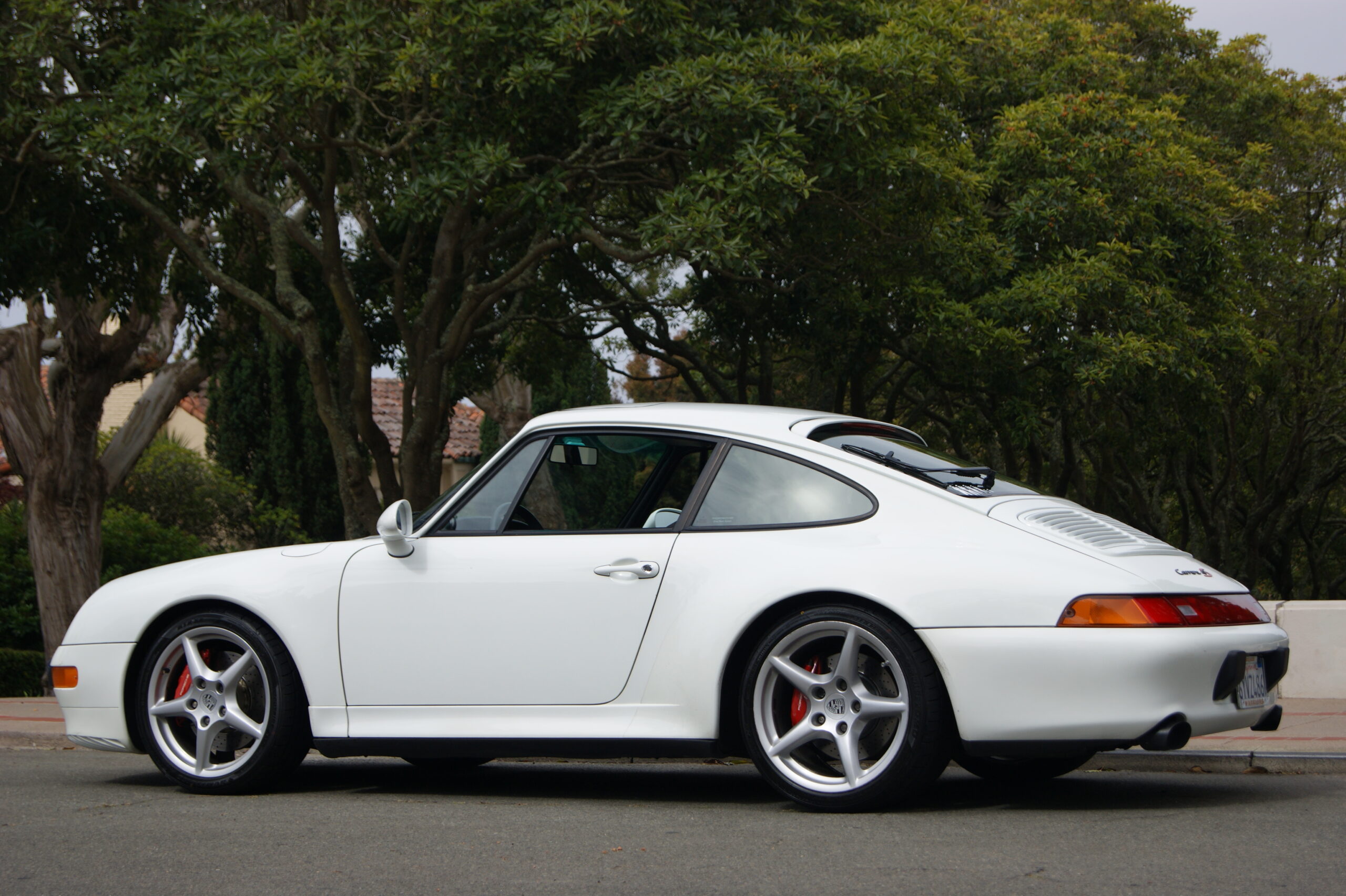
That car was my daily-driver until it was replaced by a 911.

The current stable

September 23, 2017

The Alpina has a good friend in the garage with it, a Fjord 1974 2002tii.

It’s my third tii, and my 8th ’02 (Agave 68 1600, badly repainted silver 69 2002, Amazon 74 2002, Pastel 76 2002, Malaga 72 tii, Sahara 73 tii, Inka 73 touring, and the Fjord 74 tii).

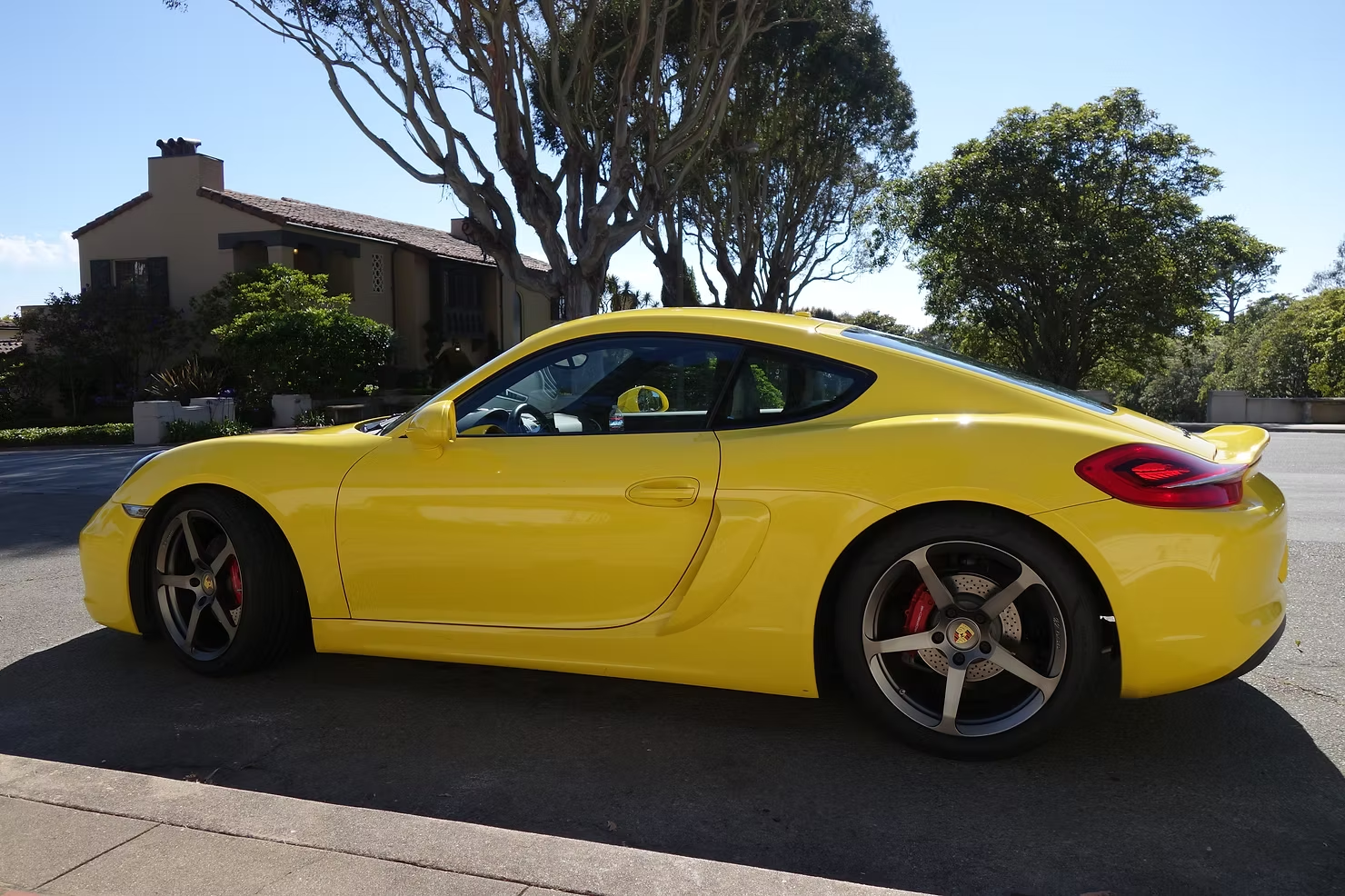
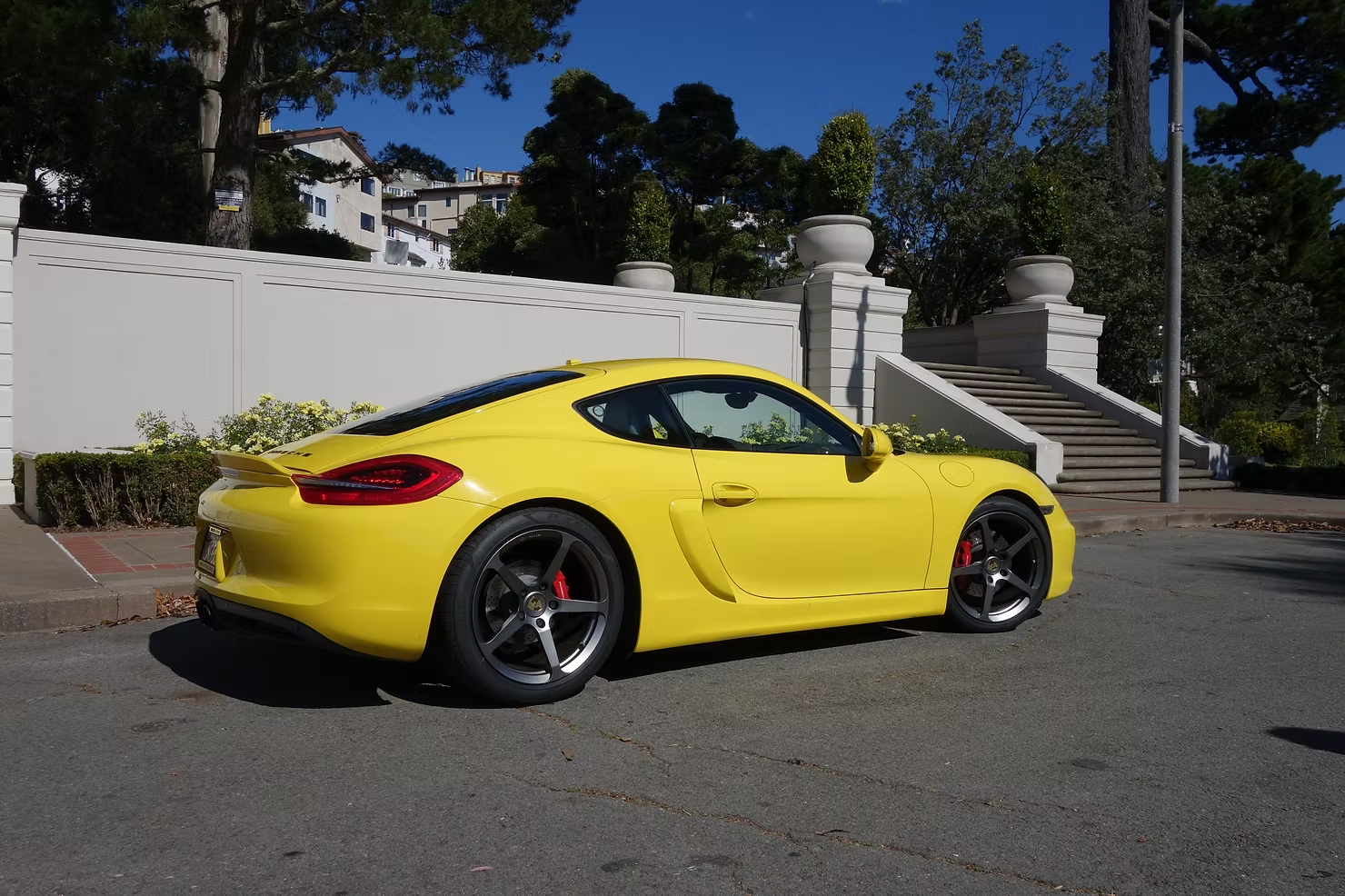
The daily driver is — sacrilege! — a Porsche Cayman S. My first new car, ever (my wife bought a new 2008 328it six-speed, our first new car, and I drove that daily when she got a 318ti). It’s the perfect sports car in my mind and since I no longer drive the kids to school (one in college, one taking the bus to high school), I don’t need a back seat. My son hates to be in the car with me because, as he says, “it’s not an old man’s car. It should be driven by someone young, like me.”

He’s probably right, but I don’t care.

What is an Alpina?

October 3, 2017

If you read my first blog entry, Sleuthing the Car (how I found my Alpina), you likely recall the noise about whether the car was “really” an Alpina. That begs the question: What is an Aplina. Its easy to answer for modern cars. After all, Alpina, now, is a bona fide car manufacturer (with their own Vehicle Identification Numbers and VIN plates) and the cars they build are Alpinas. Case closed.

But back before they became a manufacturer in 1983, Alpina was just a BMW tuner, like Dinan is now (and Ruf is for Porsche and AMG was for Mercedes Benz). The parallel to Dinan is striking, as if Dinan modeled heir business after Alpina.. Like Dinan, Alpina back in the day, was the premiere vendor and manufacturer of parts to modify your BMW and builder of BMWs that they modified. And, like Dinan, you could get the modified BMWs directly from Alpina (or Dinan) or you could get a BMW modified by an authorized Alpina (or Dinan) dealer. And, eventually, they were both sanctioned by BMW.

So, a pre-1983 car being presented as an Alpina usually falls into one of three categories: a car that has some random Alpina parts installed on it by God-knows-who (that isn’t really an Alpina), a car built by an authorized Alpina dealer/distributor (which may be an Alpina, depending on your definition), and a car build by Alpina themselves.

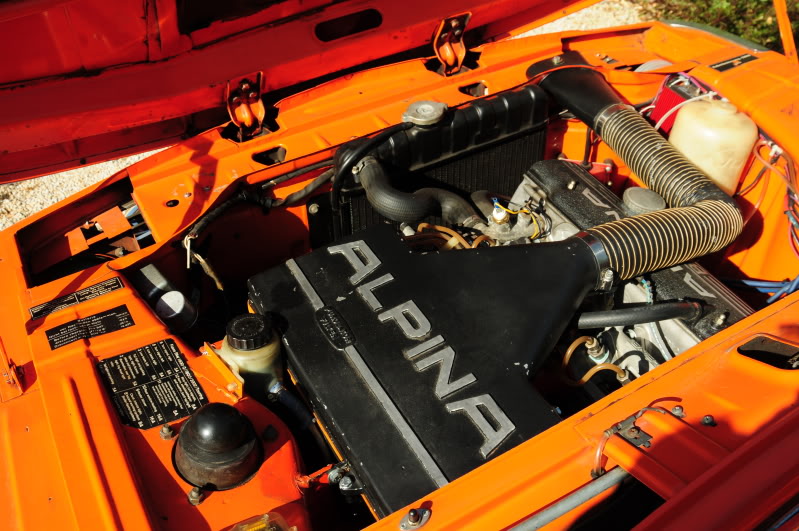
A little Alpina background probably helps. They began tuning BMWs in 1962, first by strapping a pair of Weber carburetors on the M10 in a 1500 sedan. In the 60s, they developed motors with Webers, increased-compression pistons, longer-duration camshafts (notably the BMW Motorsport 300* camshaft), and porting, polishing, and combustion chamber machine work on the head. While this unleashed lots of locked-in horsepower, it wasn’t all that innovative. Indeed, it was fairly common work that many talented machinists could accomplish. What made Alpina so special was they were the first to do it regularly and their work was pretty damn good. Then they designed some pretty neat (and very expensive) parts of their own, like the A4 four-throttle injection system for the 2002tii (they also put the A4 engine in the early e21 3-series cars).

Alpina then took a a page out of Carrol Shelby’s book and put in bigger motors. The e21-based B6 2.8 is a perfect example: They took the M30 motor out of the 5-series and plopped it in a the small 3-series two-door sedan; the earlier ones had unique fuel injection, but about half-way through the run, they changed it to stock BMW L-Jet Bosch fuel injection. Alpina, essentially, followed Shelby’s model (bigger motor in smaller car) but used motors from the original manufacturer (BMW). Their other trick was turbocharging the bigger cars that already had the bigger motors, like the 5- and 6-series (the B7).

At first, this work was done in the Alpina factory, but soon authorized dealers popped up in England, Holland, and the United States. Here, we had Miller/Norburn in North Carolina, Hardy & Beck in Berkeley California, and Dietel Enterprises in Mission Viejo, California. These authorized dealers did several things: sold Alpina parts, installed Alpina parts and built Alpina cars, and in some cases imported cars built by Alpina.

What makes it difficult to know whether a pre-1983 car is “really” an Alpina? Alpina has limited records of the cars they built – for instance, all they could tell me about my C1 2.3 is that it had been brought to them in February of 1982, not what they did to it – or anything else. And from what I’ve heard Alpina has no records whatsoever of the cars built by their authorized dealers. While a car built by Dietel Enterprises might legitimately considered an Alpina, without a record, it is simple a nice car with nice parts and maybe an Alpina dash plaque (which any yahoo could buy off eBay and put on the car).

And many folks did just that – put a bunch of Alpina parts on a car and claimed it to be the real thing. Often, there are few ways to verify authenticity and accepting a car as a “real” Alpina is an act of faith, The guy I bought this C1 from did just that; he was sure it was the real-deal, but he had no solid proof. Having built my 2002 touring with more genuine Alpina parts than many cars that left the Buchloe factory, I am skeptical of any car without documentation is a “real” Alpina.

Hands of God

October 8, 2017

Although the car was authenticated by Alpina, I assumed the worst – that the engine was not an actual Alpina lump. Yeah, the shell was touched by the Hands of God, but the previous owner who piped-up on BaT said an unethical mechanic pilfered many of the precious parts. I feared the motor suffered that fate.

When the car was finally in my hands, I looked for the four-digit hand-stamped numbers in the block and head. I found nothing, not knowing where to look. My fear of the worst grew, but I knew I’d be able to really inspect it once I pulled it out of the body, and I’d figure it out from the serial number on the block.

Every project – at least every project I’ve done – has a pace, a rhythm; it’s own timing. But taking the engine out stalled. Removing a 2002 motor is easy, especially on a carbureted car. A 323i is a bit more complicated and, frankly, I was intimidated as I couldn’t find an English-language manual. The physically bigger motor, the unfamiliar Bosch K-Jet fuel injection, the lack of instruction on how to go about removing it, and my old-man status making me reluctant to lie on the garage floor under a car – it all added up to a lot of inertia. Motivation was also lacking because I couldn’t decide what I wanted to do with the motor: rebuild it stock or take advantage of advances made since Alpina built it in 1982.

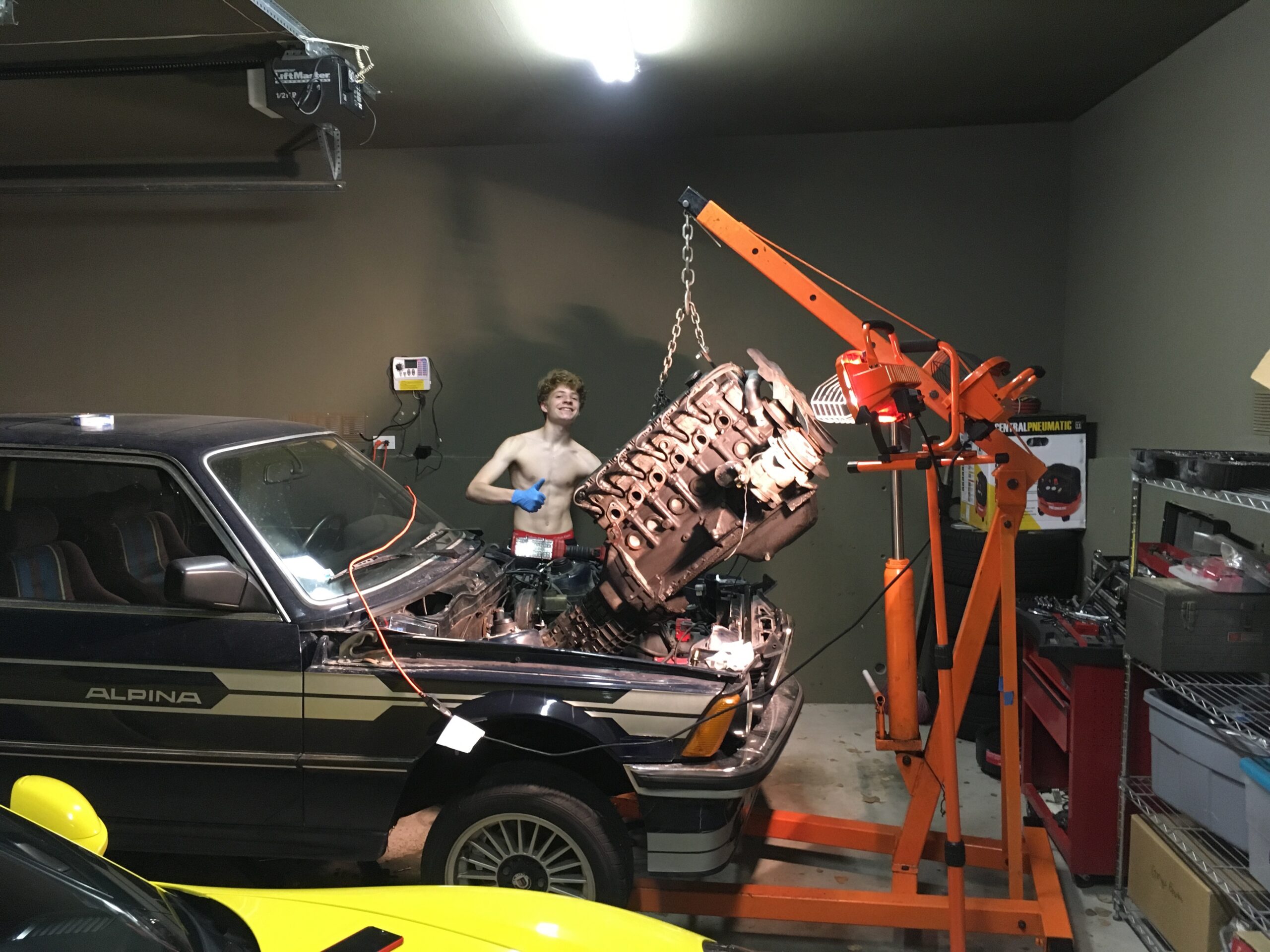
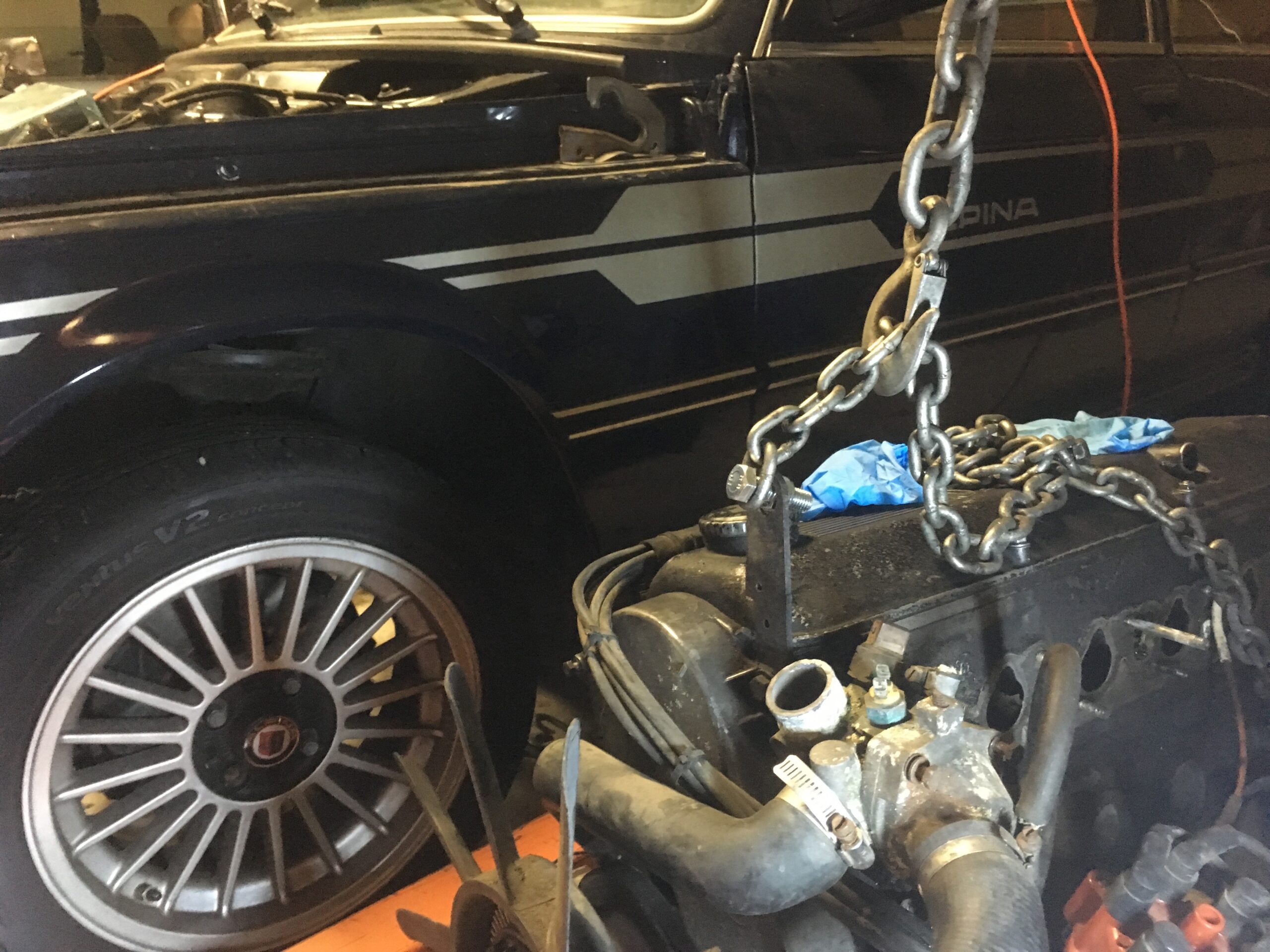
After months of hoping the motor will remove itself, I decided I had to actually get going. Late nights in the garage, disconnecting this or that, finally gave way to actually hooking up the cherry-picker and pulling the motor out. My 16-year-old son helped, much as he did with the Inka 2002 touring, almost ten years earlier.

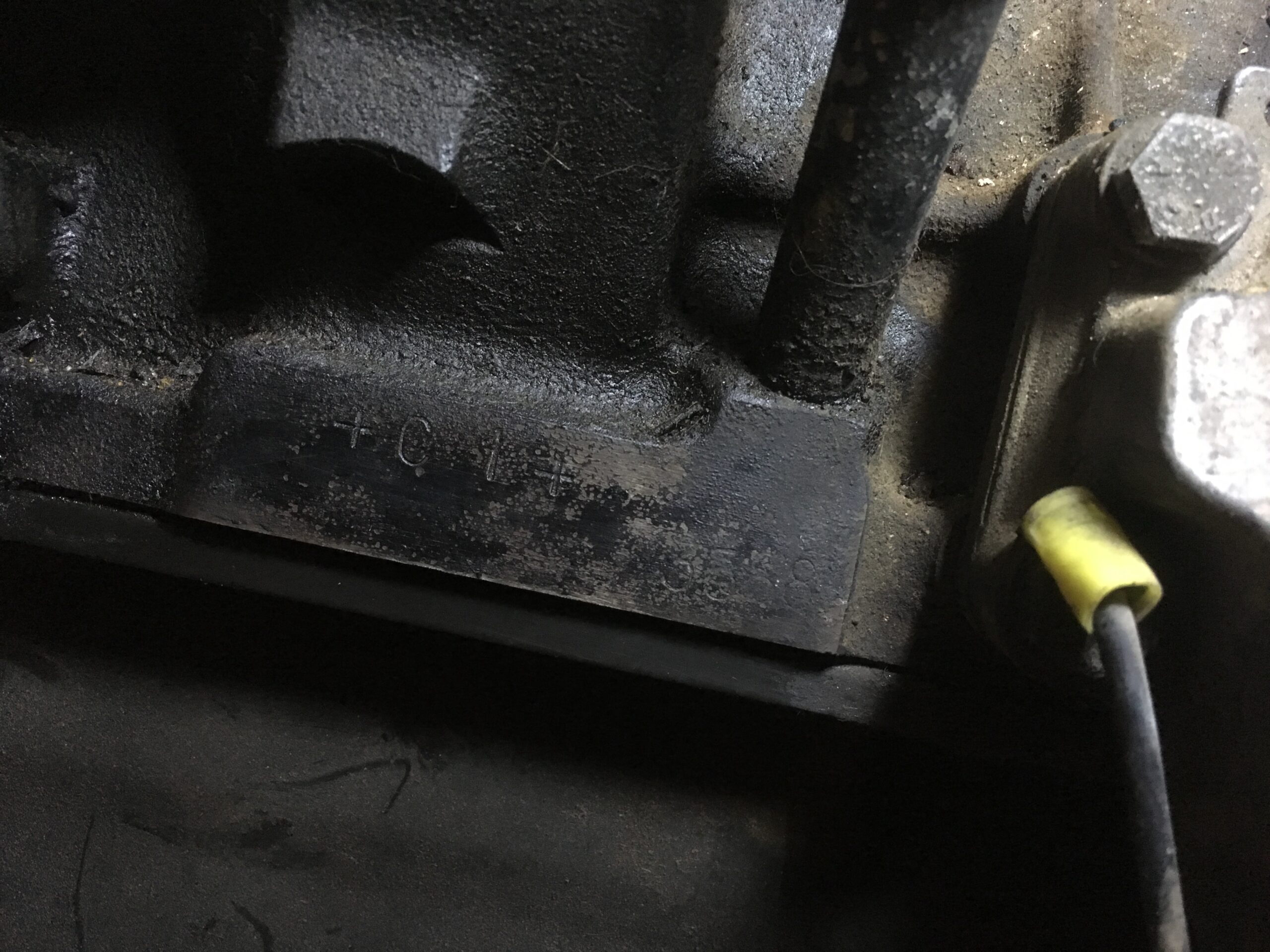
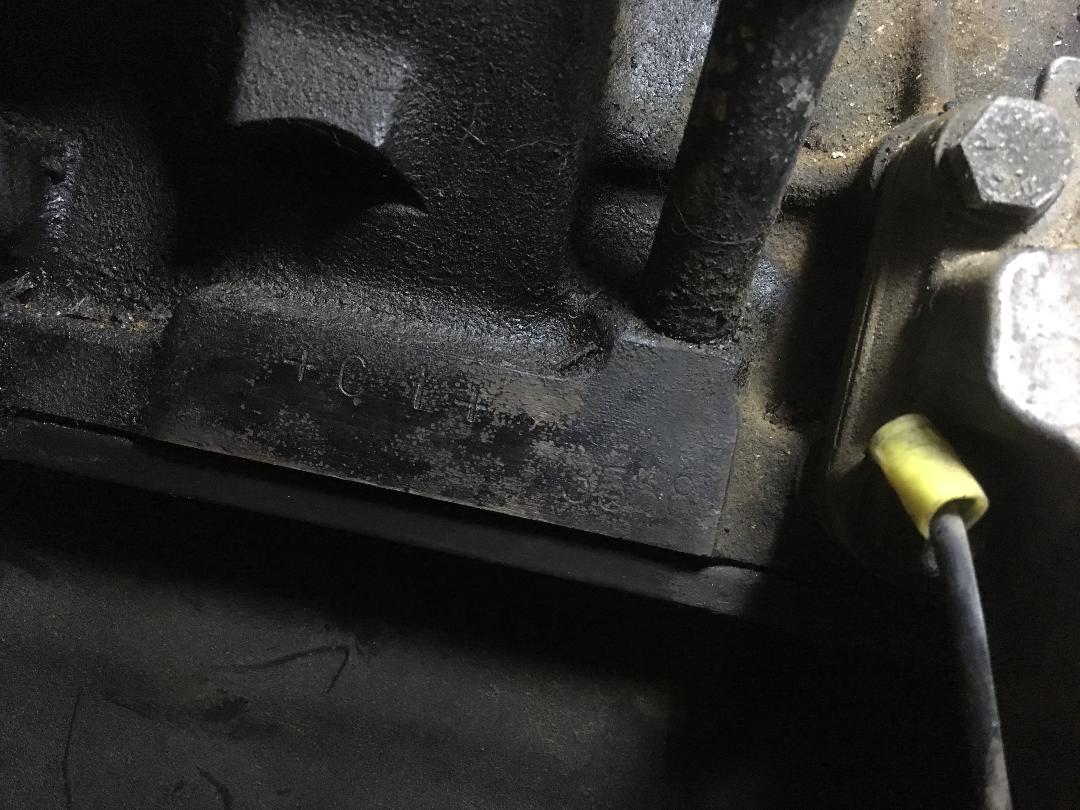
Once the lump was out of the car, I looked all over the block for a serial number – Alpina or otherwise. But I couldn’t find one. Then I asked my friend google where to look, and came upon some stamping below the distributor housing area: “+ C1 +” with a barely legible hand stamped four-digit serial number under it (3568). No one had to tell me this was not a BMW number; I knew who stamped + C1 + on a block and who used those four-digit numbers. The dance around the car, screaming “yes” and “it’s a real Alpina motor, touched by the Hands of God” was so much fun I forgot to check the head. When I finally did, I couldn’t find any numbers, but admittedly had no idea where to look (google wasn’t much help for that).

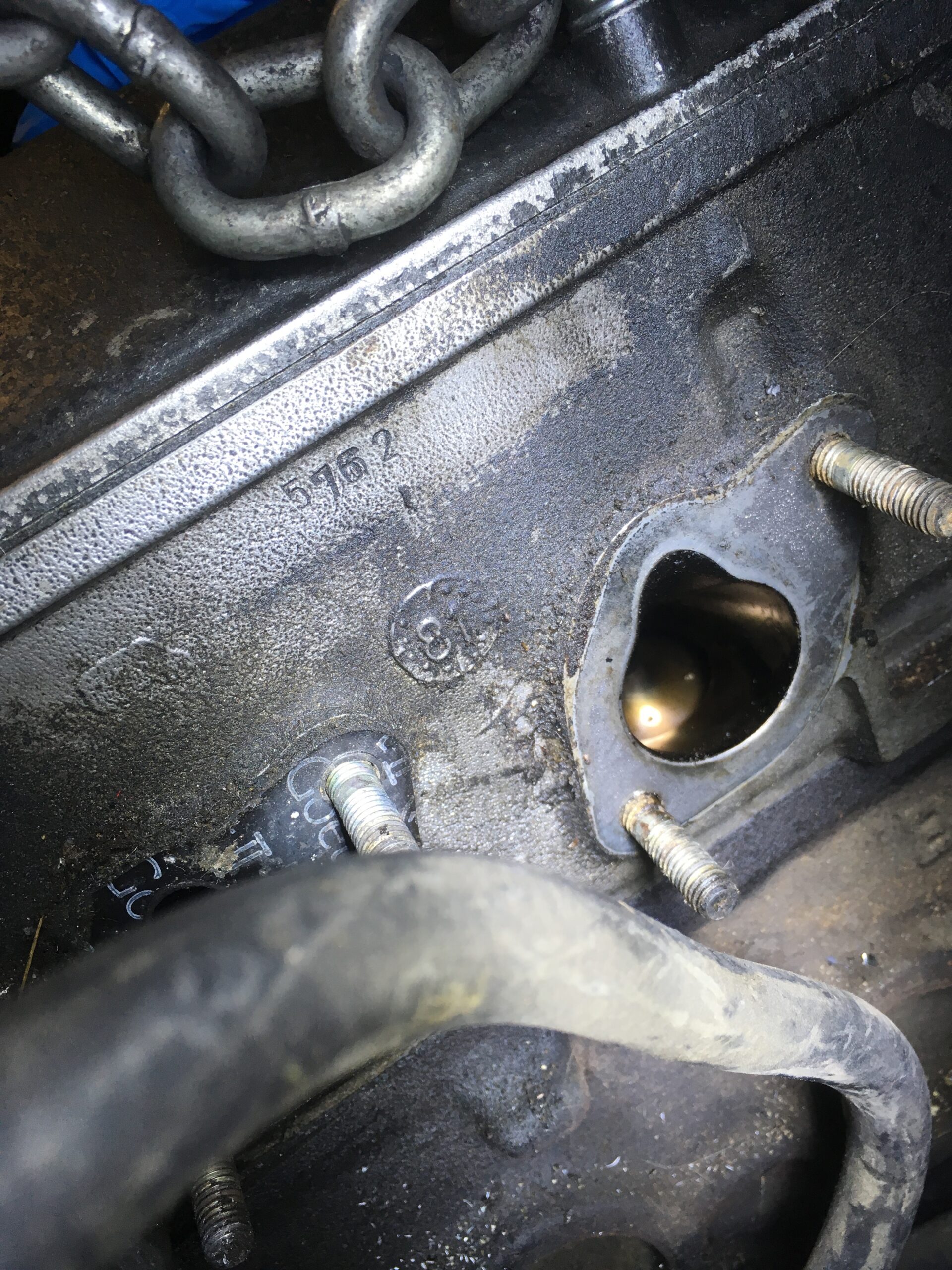
After a week of wondering if I had a genuine Alpina block but not head, a very helpful fellow C1 owner sent me a picture of the stamping on both head and block (thanks Don!) and I found the Alpina serial number on the head. Confirmed, both head and block are original from Alpina.

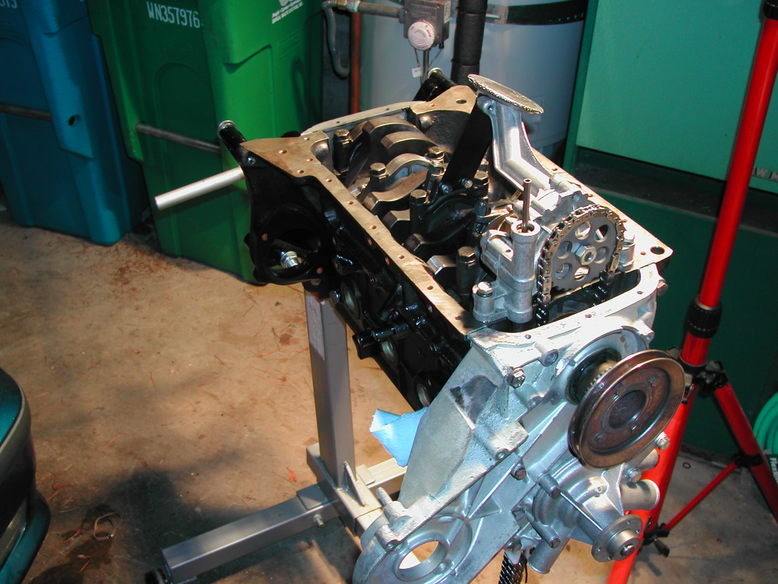
So, I have a motor, touched by the Hands of God, sitting in my garage, probably with a blown head gasket. What to do with that? I don’t want to modify the Alpina block or head, so do I undertake a “stock” Alpina rebuild it and put it back? Store it and build a new block into something bigger, better, and more powerful? Decisions, decisions.