GETTING A BIT TOO FAR OVER THE SKIS

GETTING A BIT TOO FAR OVER THE SKIS

I try, sometimes successfully, to have a theme for every post here. The last post, When good enough isn’t good enough, was about re-repairing things in anticipation of Legends of the Autobahn 2024 and also bringing the restoration up to a new standard. In doing so, it seems, I got a bit ahead of my skis.

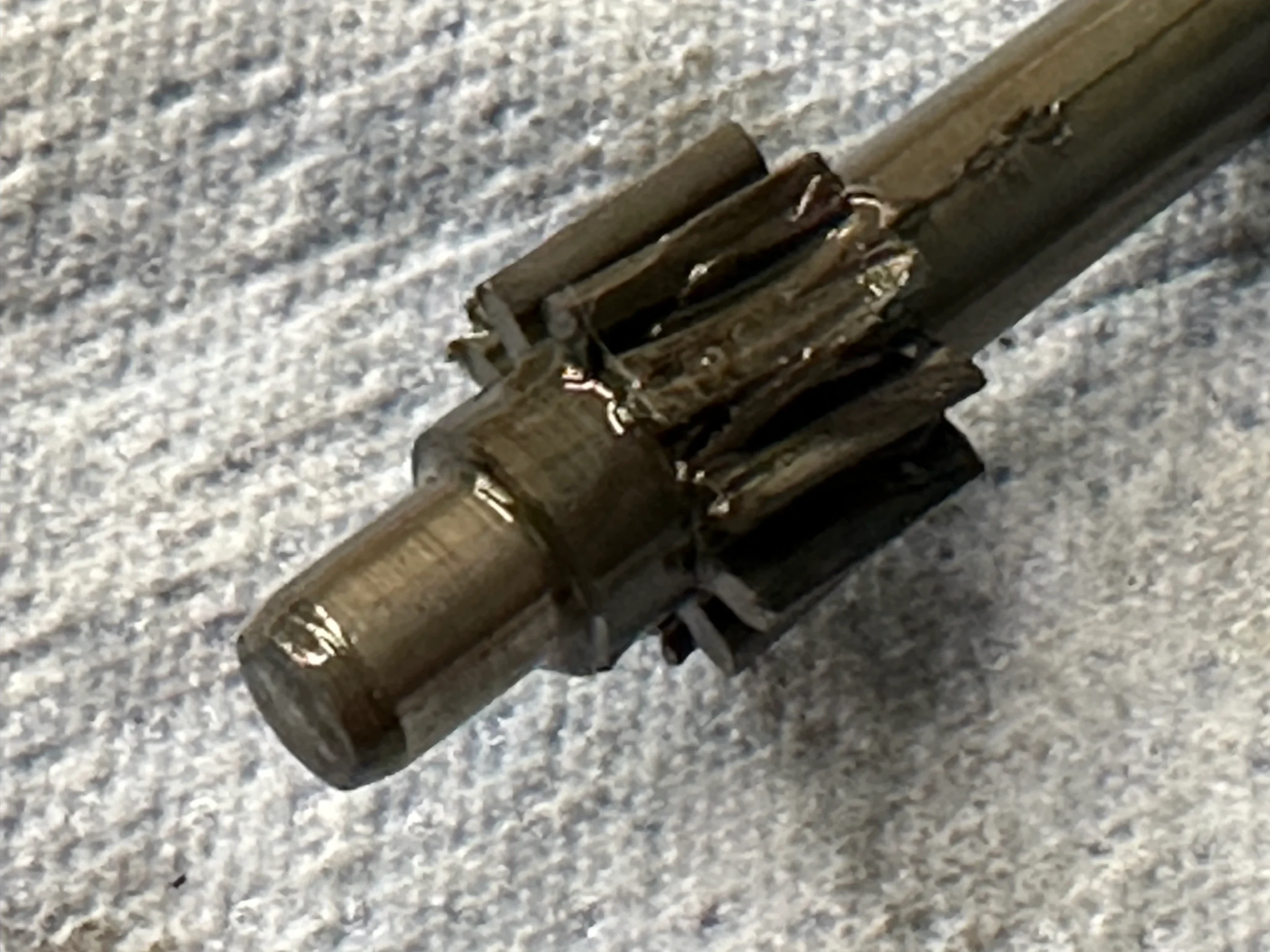
Getting ahead of my skis is something I try not to do. And usually it’s easy to accomplish: just don’t write about anything until it’s finished, after I know the full arc of the story. But I violated that rule last month when I wrote, among other things, about the fix to the flickering oil pressure gauge and having the body shop replace the transmission speedo gear so I’d have a functioning speedometer and fixing the previously addressed rust in the frame-rail. None of those worked out as planned and the story arc changed things in big and small ways.

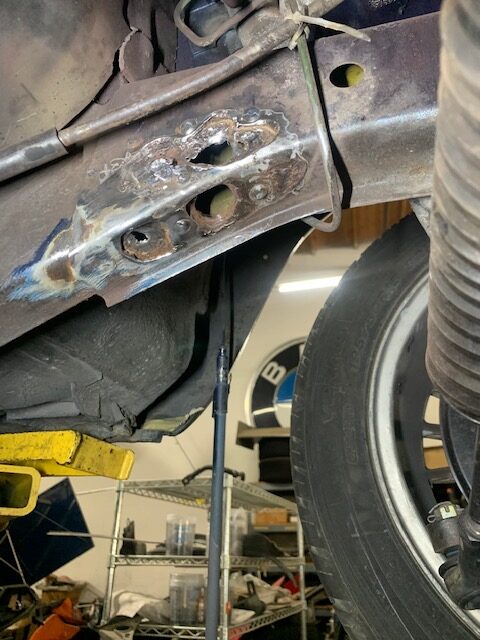
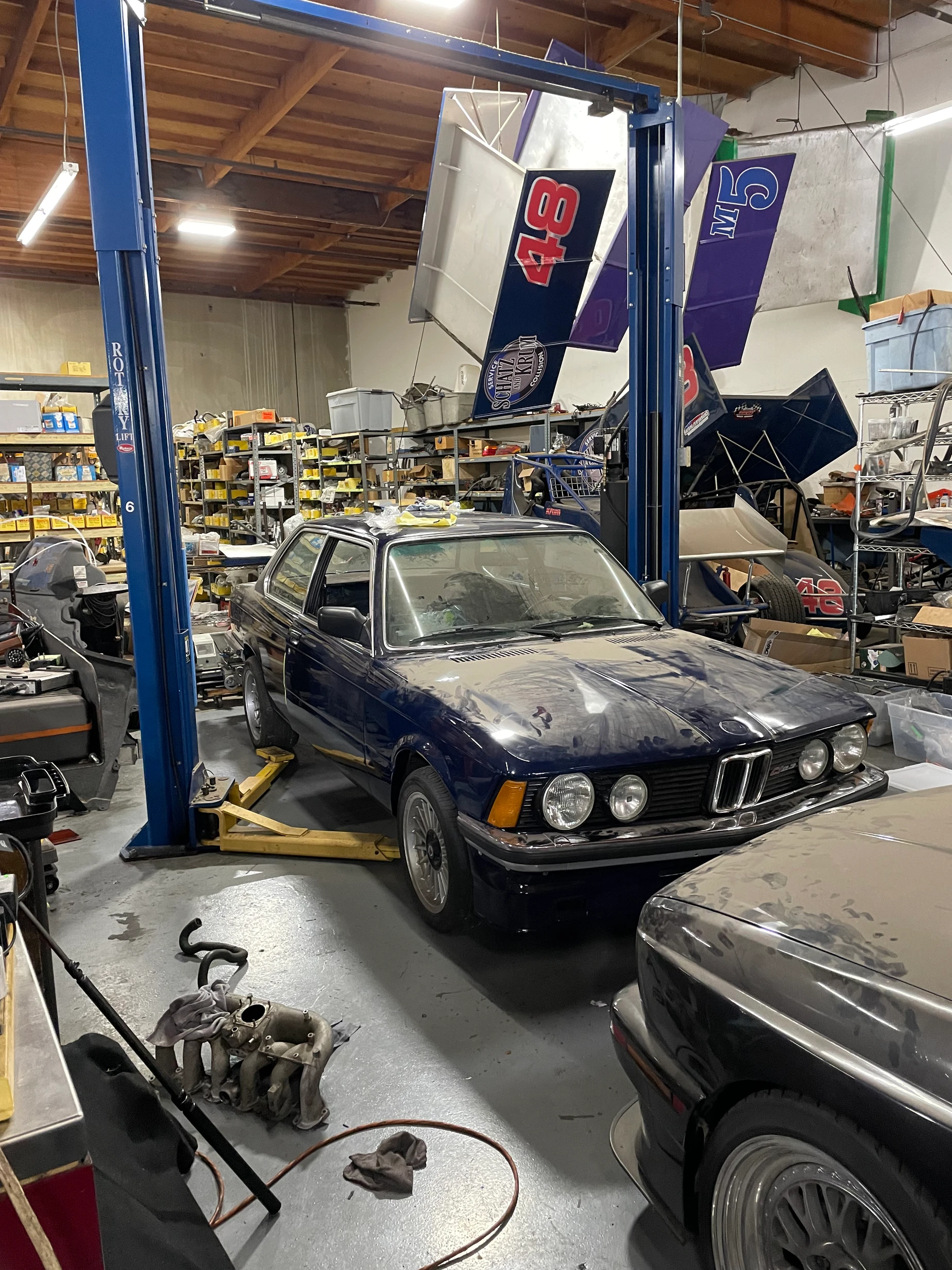
Even though I had dropped the Alpina off at the body shop well in advance of LoTA they didn’t have time to fix the frame-rail. And that was disappointing but understandable: they had at least one other car in there being prepped for LoTA and several, you know, getting repaired. Conversely, the frame-rail was an optional project, not nearly as mission critical as other things on their plate, like trying to get another very nice e21 323i together for Monterey.
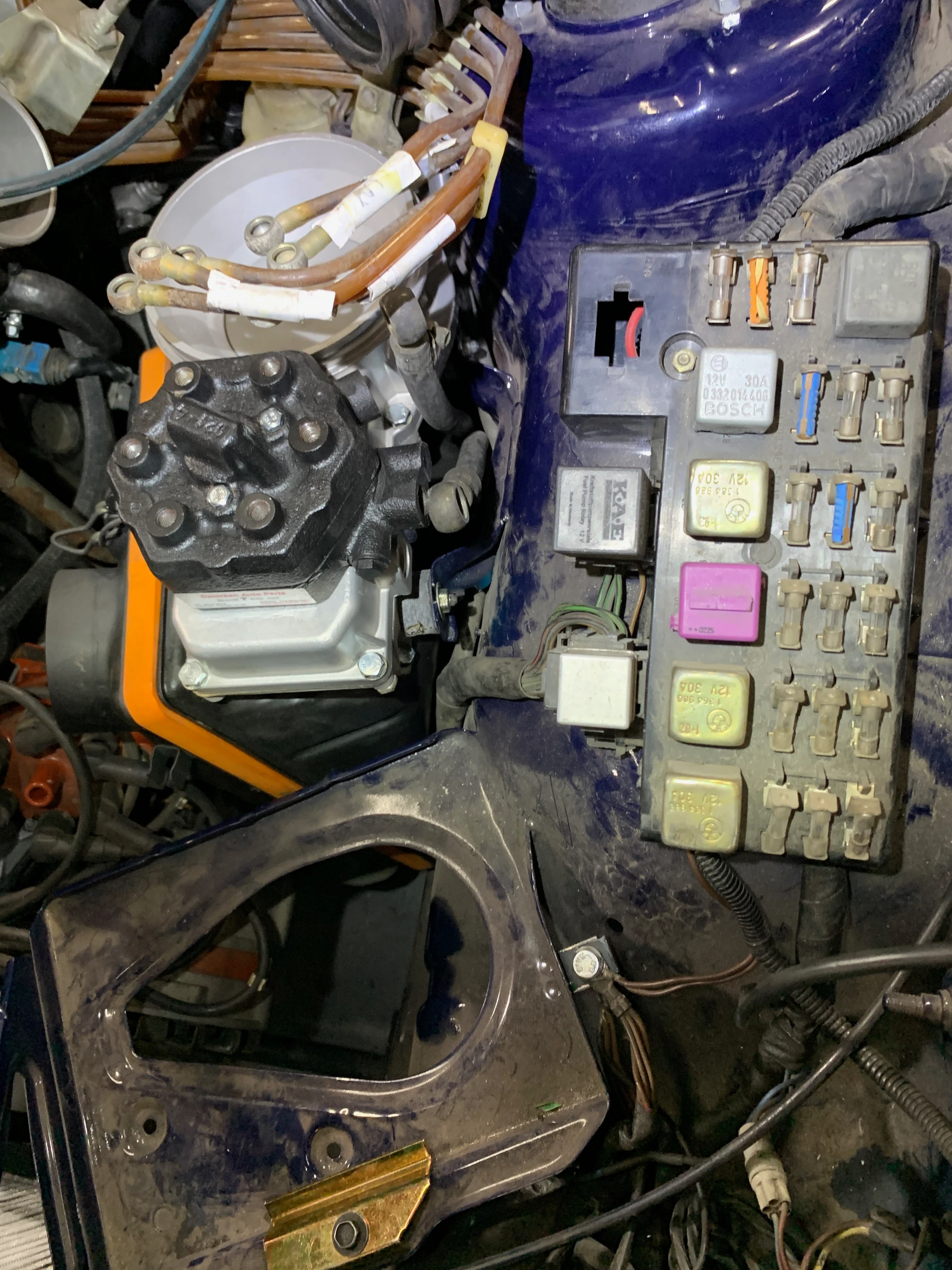
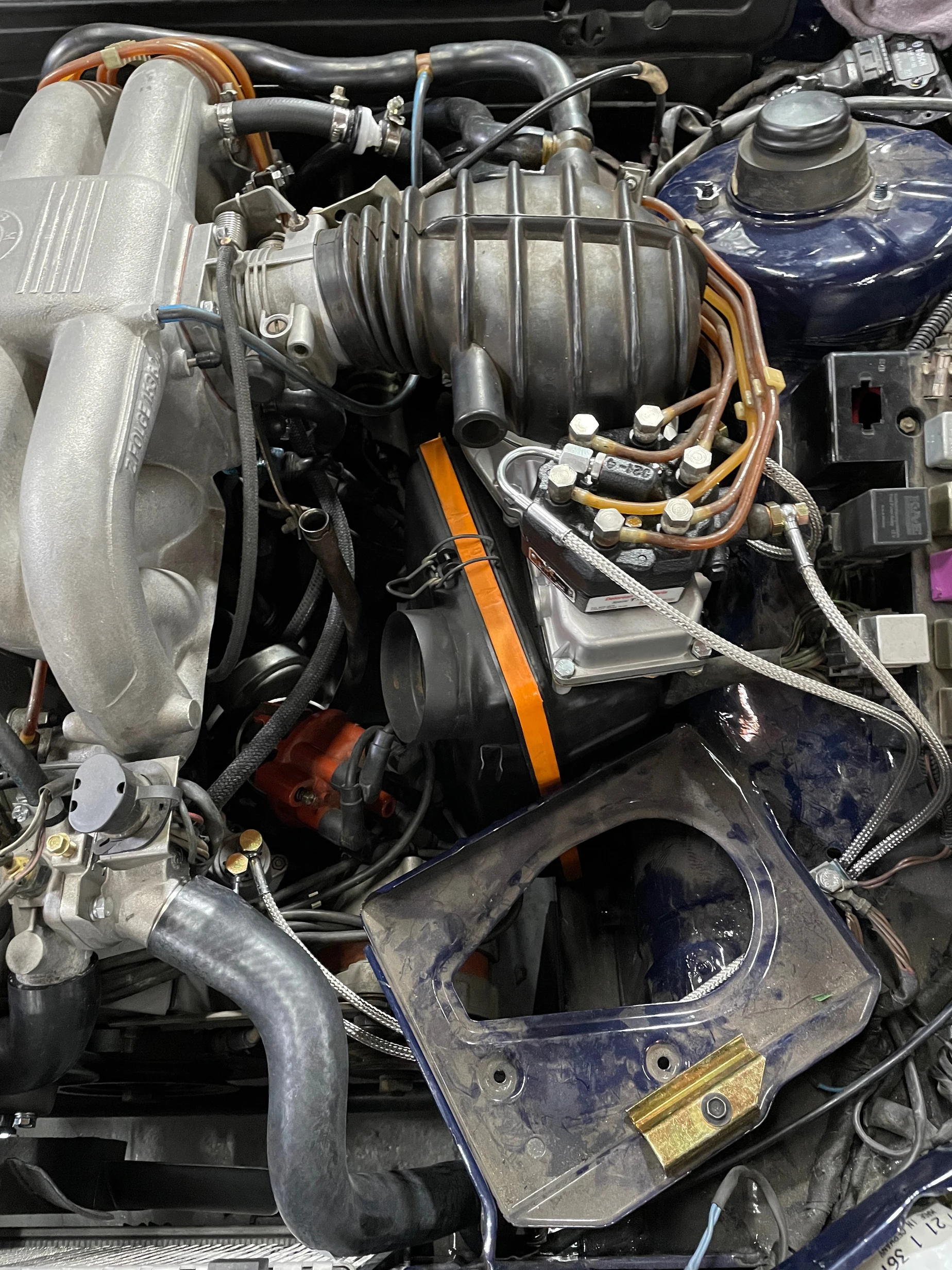
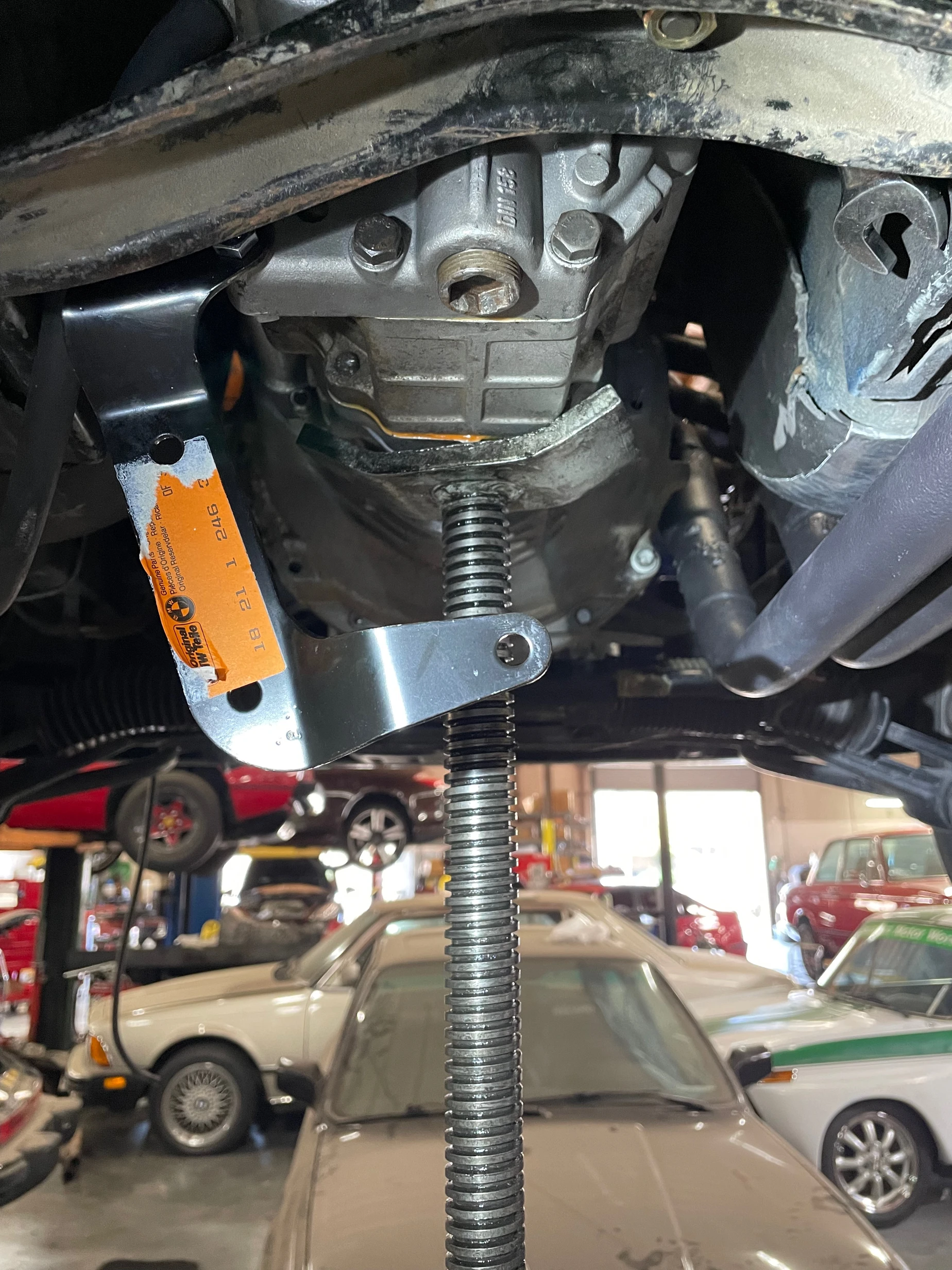
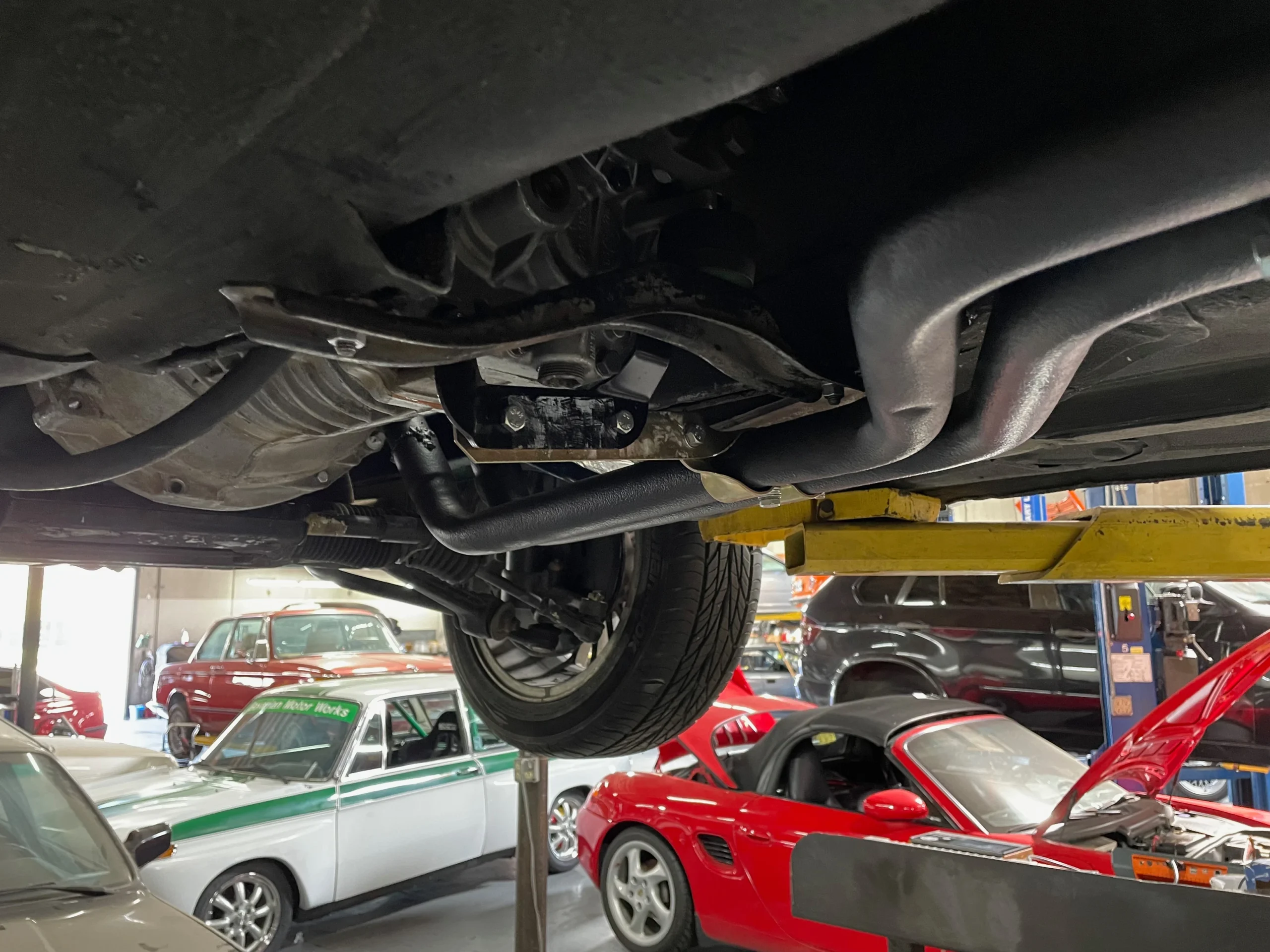
Although this is not the body shop’s fault, the first thing I noticed upon driving it home was that the speedo gear change did not fix the non-functioning speedometer. I spent the drive strategizing how to fix that and the stumbling on acceleration. Before this revelation I planned to ship the car to my new home in New York and, over the winter, becoming proficient enough in K-Jet fuel injection to fix the stumbling/lean running myself. I unsuccessfully tried this in the 1990s when I owned my first e21 323i but was determined to do better this time. The transmission, however, added a new wrinkle. So, I hatched a new plan to take the car to Sacramento and have Stu, who worked on the transmission before it was put in, fix the speedo drive. And he also happens to be the best person I knew for fine tuning the K-Jet. To make things even better, another friend drilled and tapped a spare fuel pressure regulator to make it adjustable. A phone call to Stu and a plan was made.

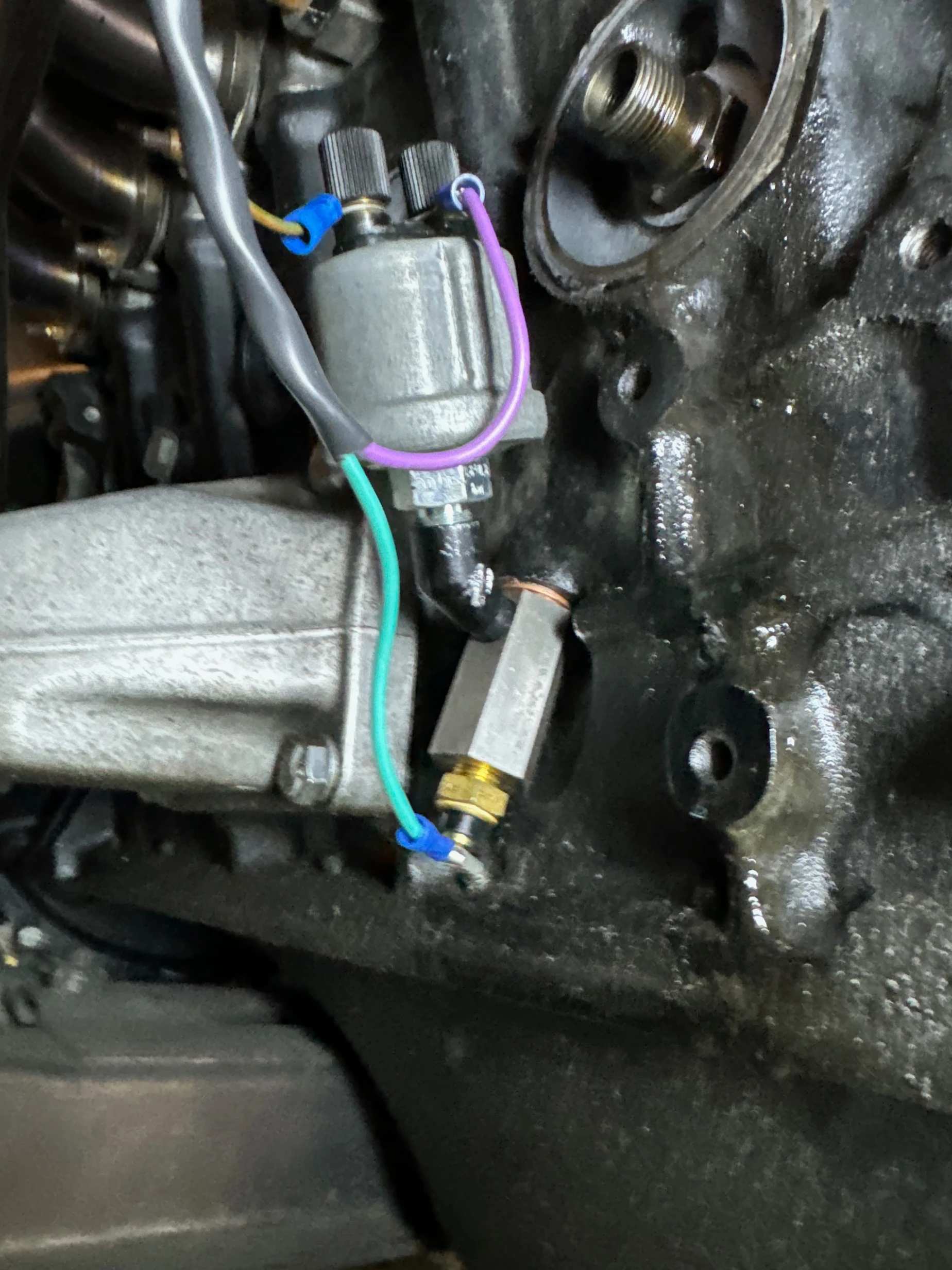
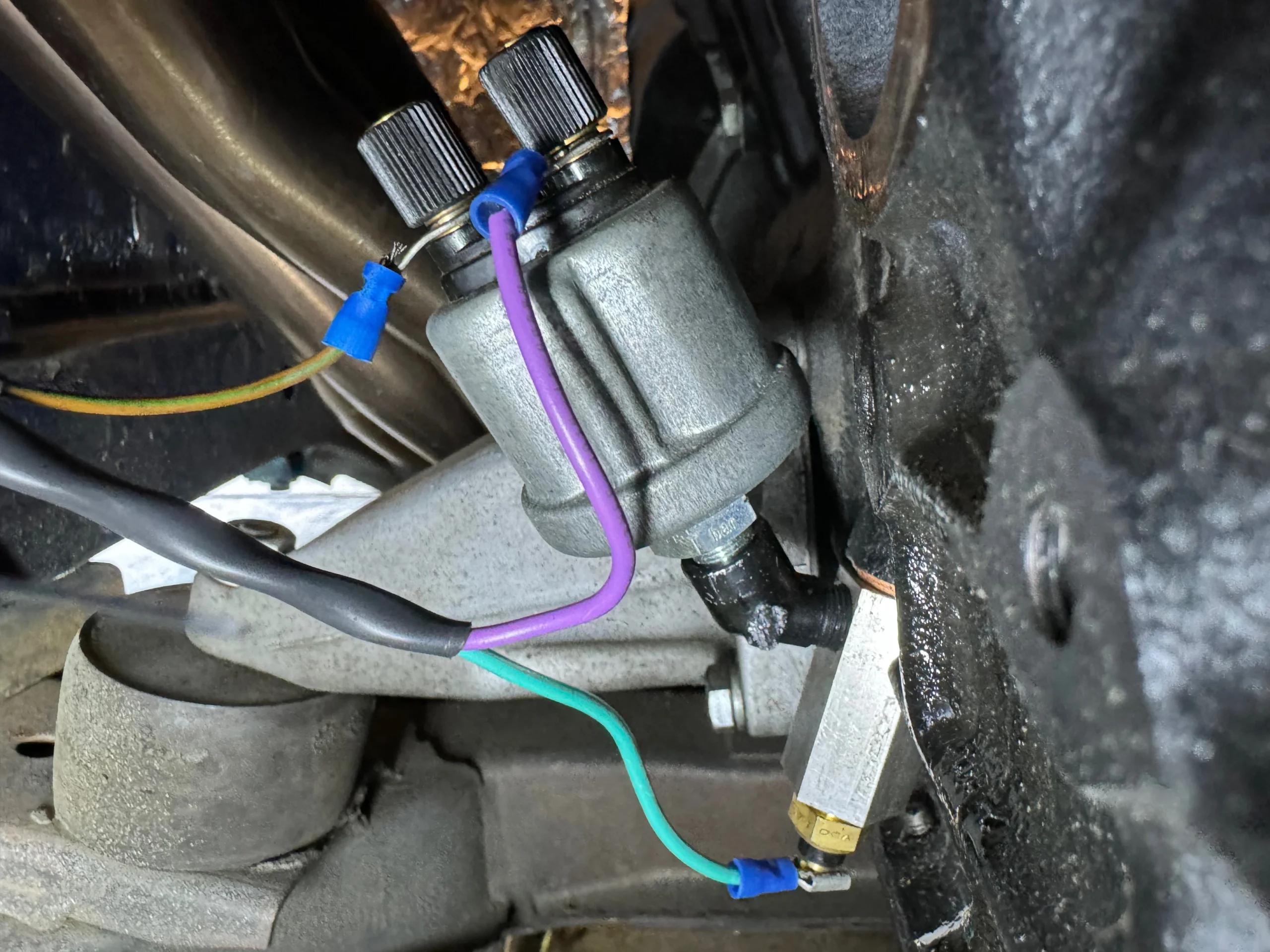
Once I got the car home, my first mission was to change the oil pressure sender. You may recall, I figured out that I had put in a 80 PSI sender in the car but was using a 150 PSI gauge. I put the new 150 PSI gauge in but noticed, when taking the old one out, that it was not an 80 PSI sender, but the same as the new one I was installing. To add insult to injury, once the oil was warm, the idiot light still flickered. Also, the pressure never gets above 60 PSI when cold or 45 when warm. All this isn’t dangerous—more just annoying and perplexing, as ever M10 I’ve built hovers around 60 PSI when warm and 90 when cold. I’ll get to the bottom of this but will wait to explain the fix (or should I say anticipated fix) because I don’t want to again get too far over my skis.

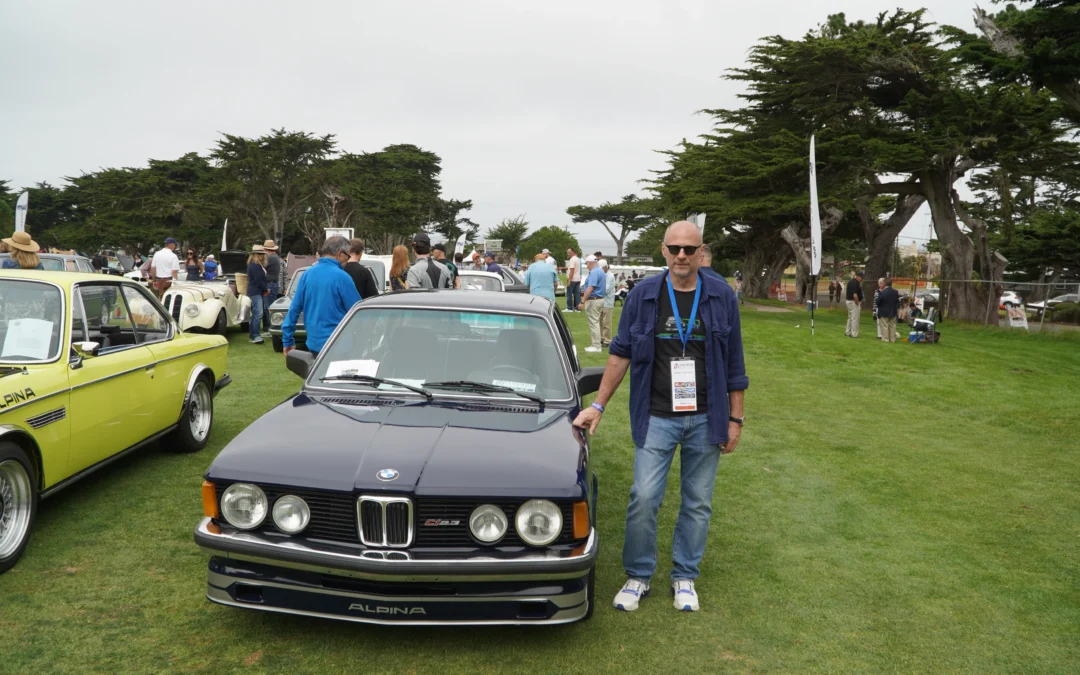
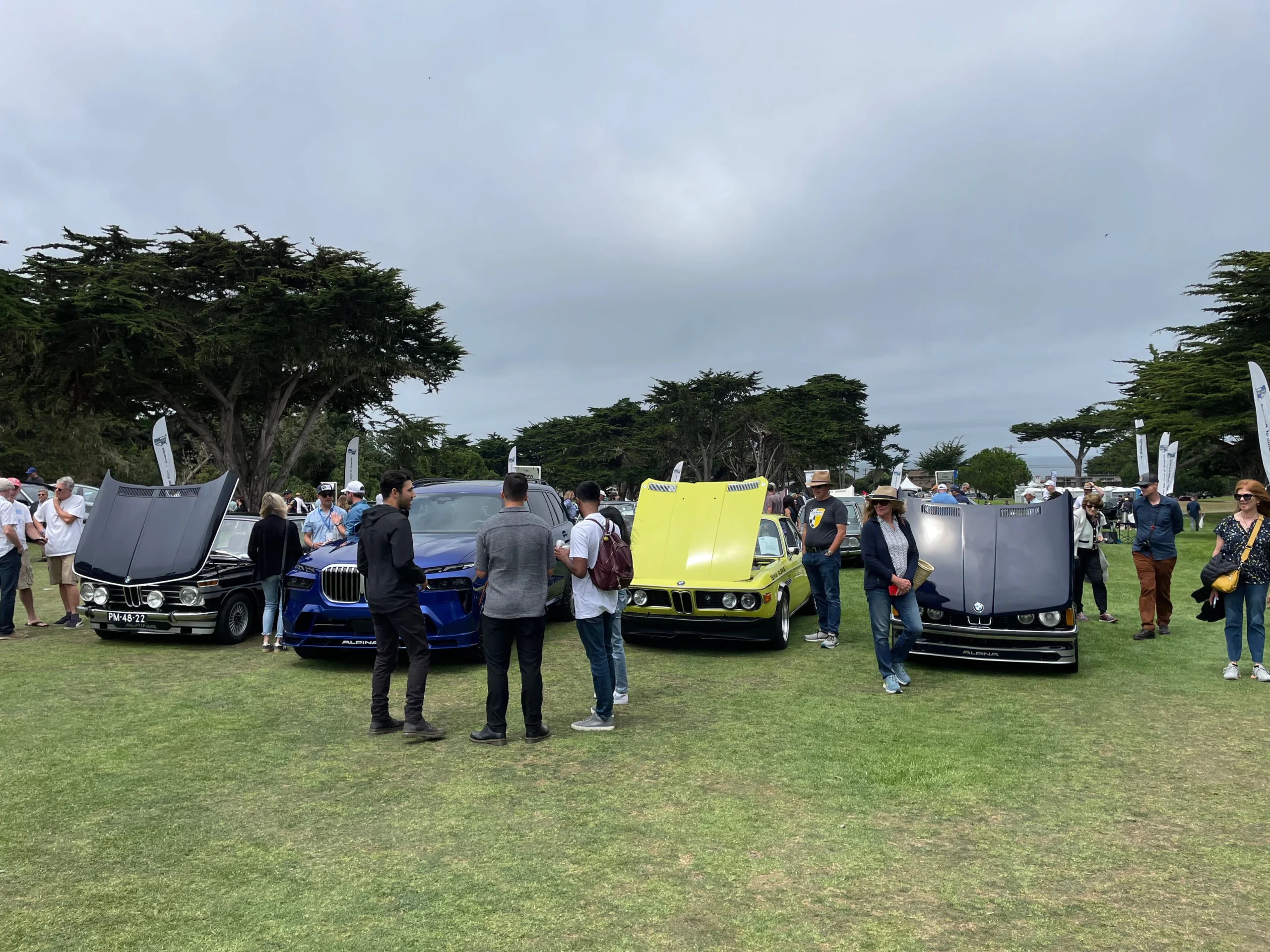
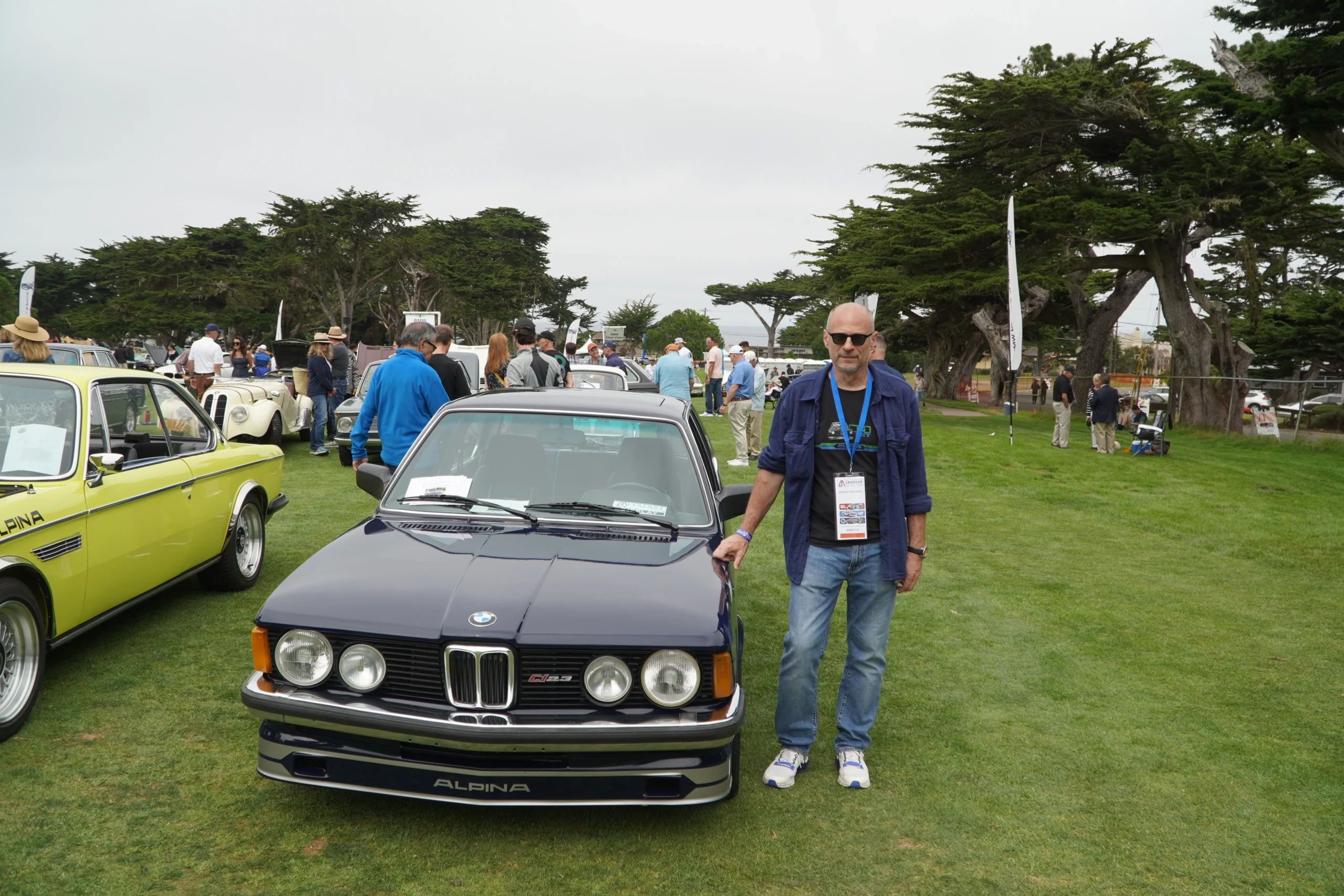
Other than the lack of speedo and flickering oil pressure light, the drive to and from Legends was uneventful and the show was a lot of fun. I spent most my time talking to folks. I knew several of the participants, some who were pretty good friends, and walked around socializing most of the day. I saw Julius who owns a e21 B6 (but not running well enough to bring to Legends), Ricardo who is restoring and modifying his e21 (and got to meet his son who is going to my alma mater), Rob who owns several 2002s but was having his 2002tii with many Alpina bits (including an A4 injection system) judged in the concourse, and many 2002 friends (Jan, Bart, Delia, etc.) and some new friends. And, of course, the Alpina crowd, too. Because of all the socializing I didn’t really have a chance to take many—ok, any—pictures but I was able to harvest a few cool ones from the BMWCCA Golden Gate chapter FaceBook page and other such places. It was a bitter-sweet Legends for me, given that I’m moving away: It was great to see so many folks I know, some well and others car acquaintances. But I worried about how long it would take to make the same sort of connections on the east coast. Of course, I could always avoid the August humidity of the east coast and make Legends an annual trip to California….
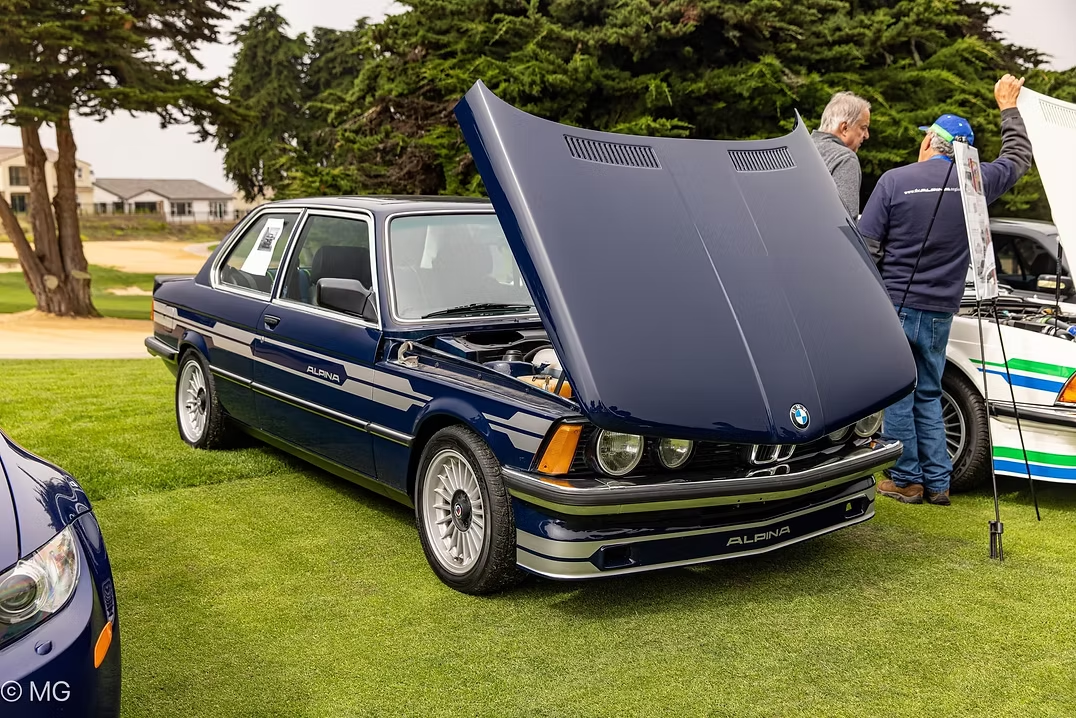
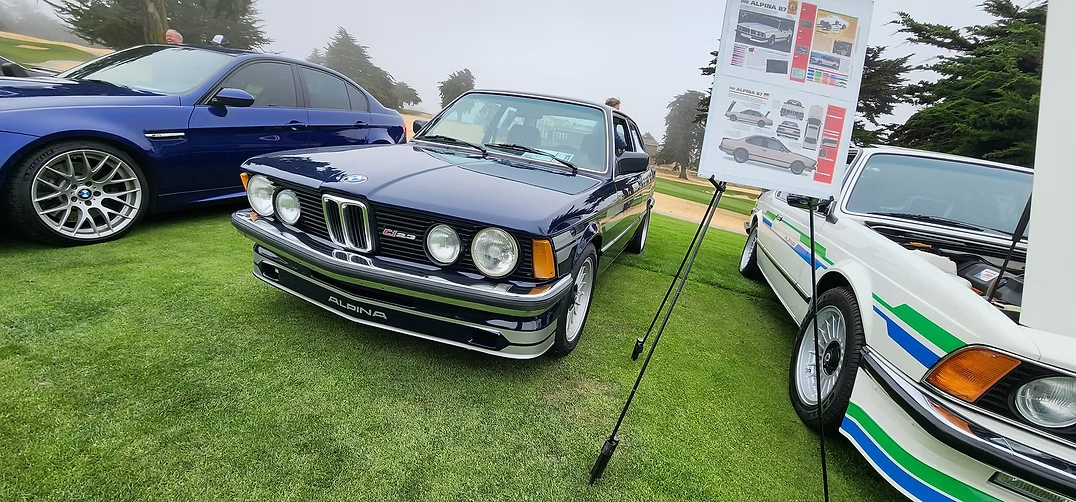
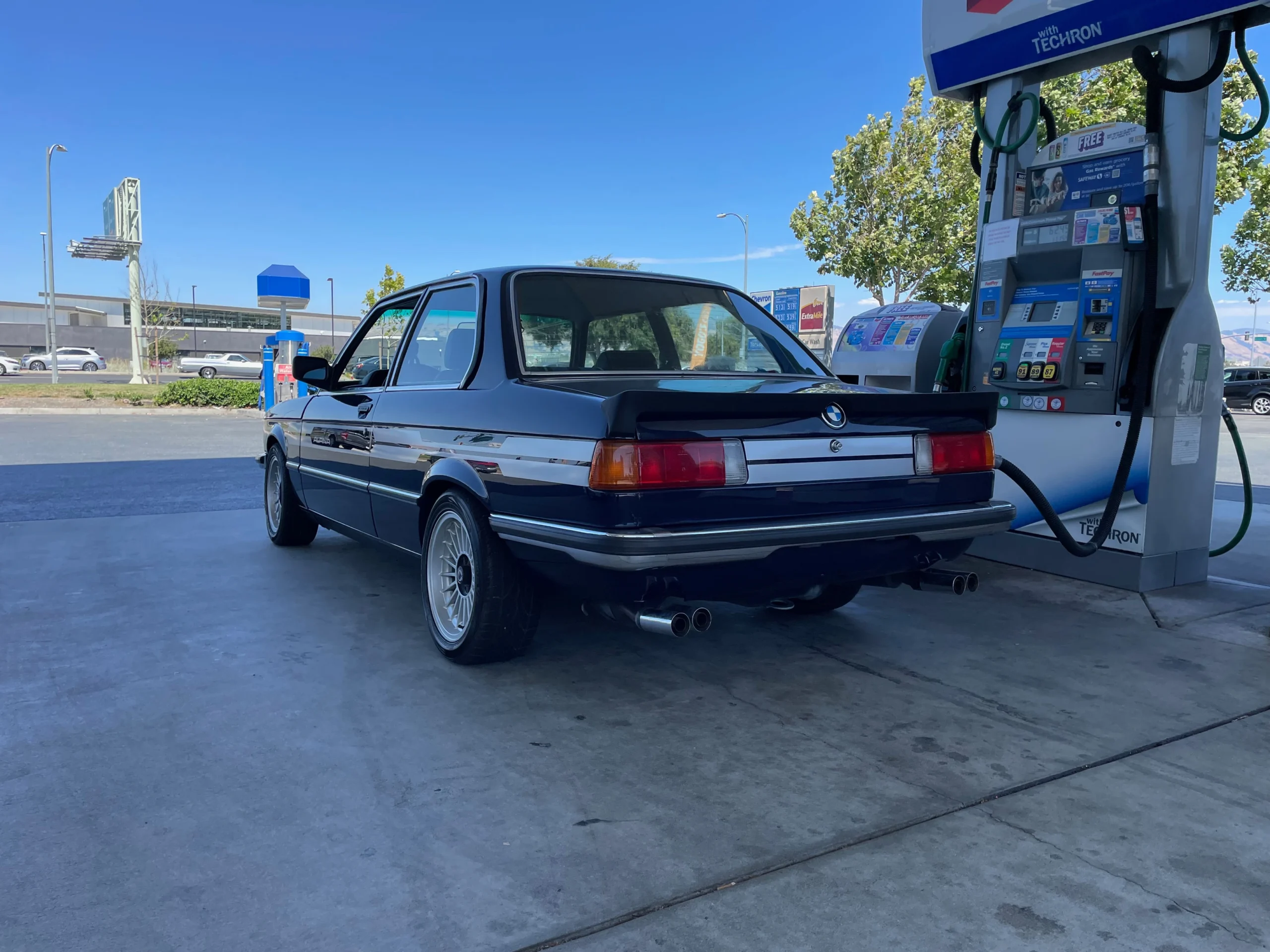
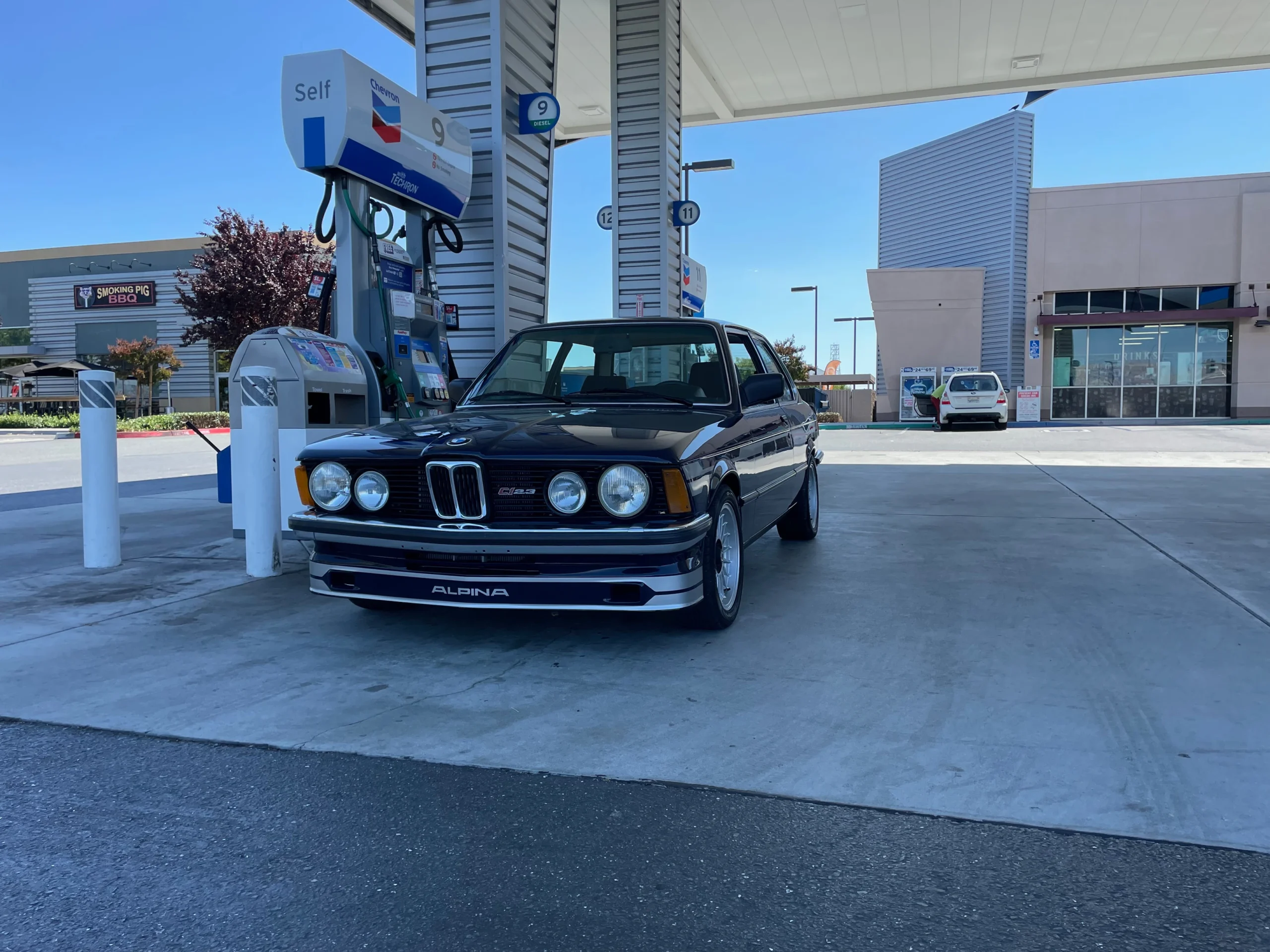
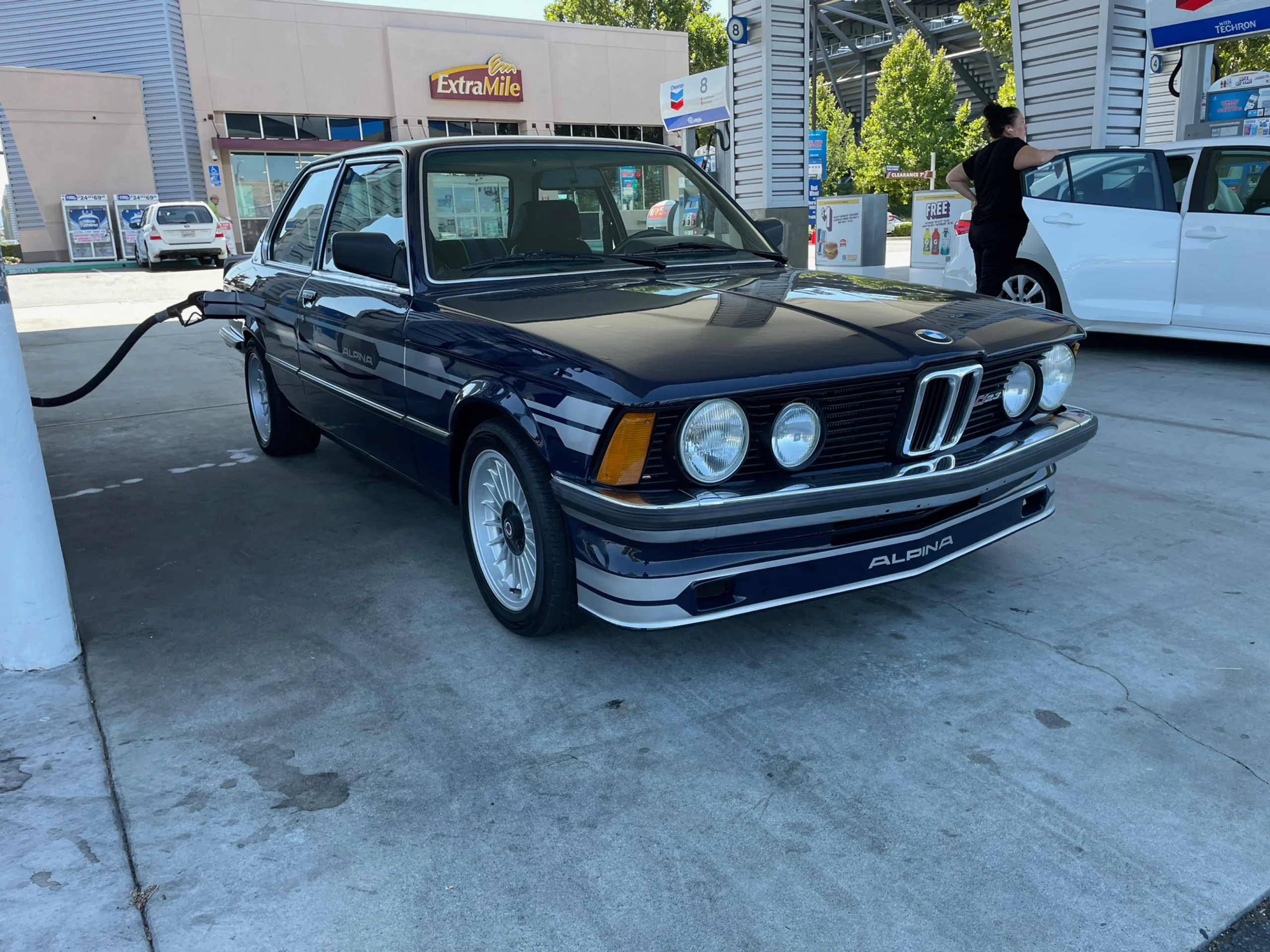
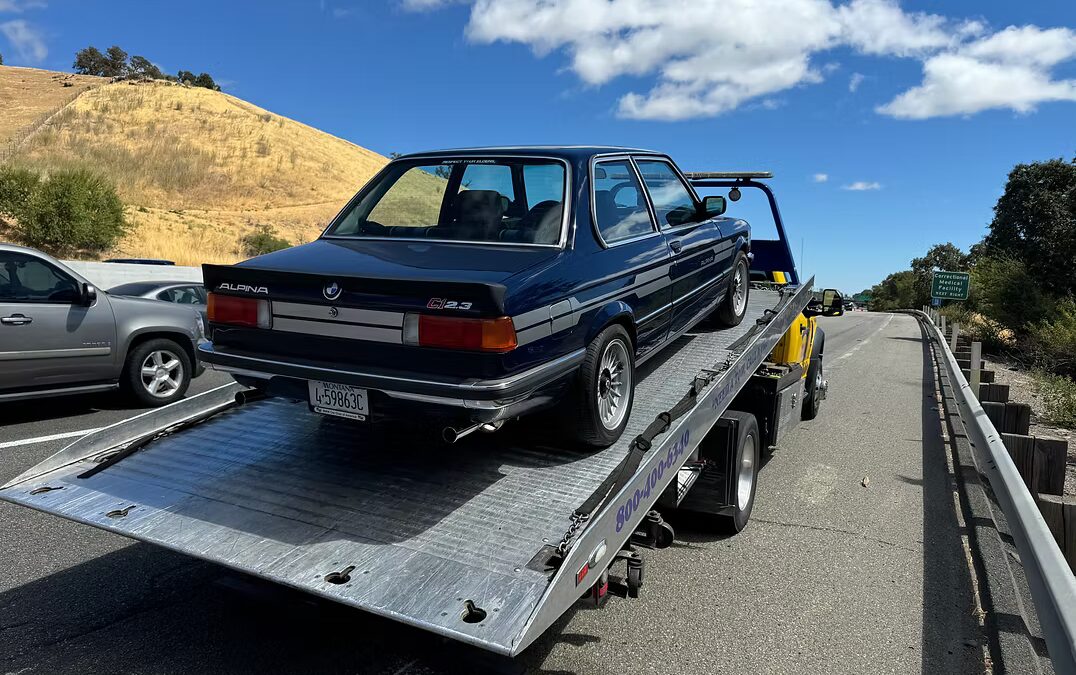
After a day of rest, I got up early Saturday morning to take the Alpina up to Sacramento. By the time I got to San Francisco, where I stopped to fill the car up with gas, it was drizzling. Apparently, the tires didn’t like that as I accelerated up the cloverleaf back onto the highway and the rear end came around. In the spin, the car jumped a curb. After the visual inspection everything seemed fine and I was back on my way. A few miles later, however, some unusual noise was coming from the front and steering required more effort. I got off the highway and confirmed my suspicions: a flat tire. Luckly, I recently got a used wheel with decent looked rubber. I called AAA; there was a truck minutes away, the spare was installed, and I was back on my way!
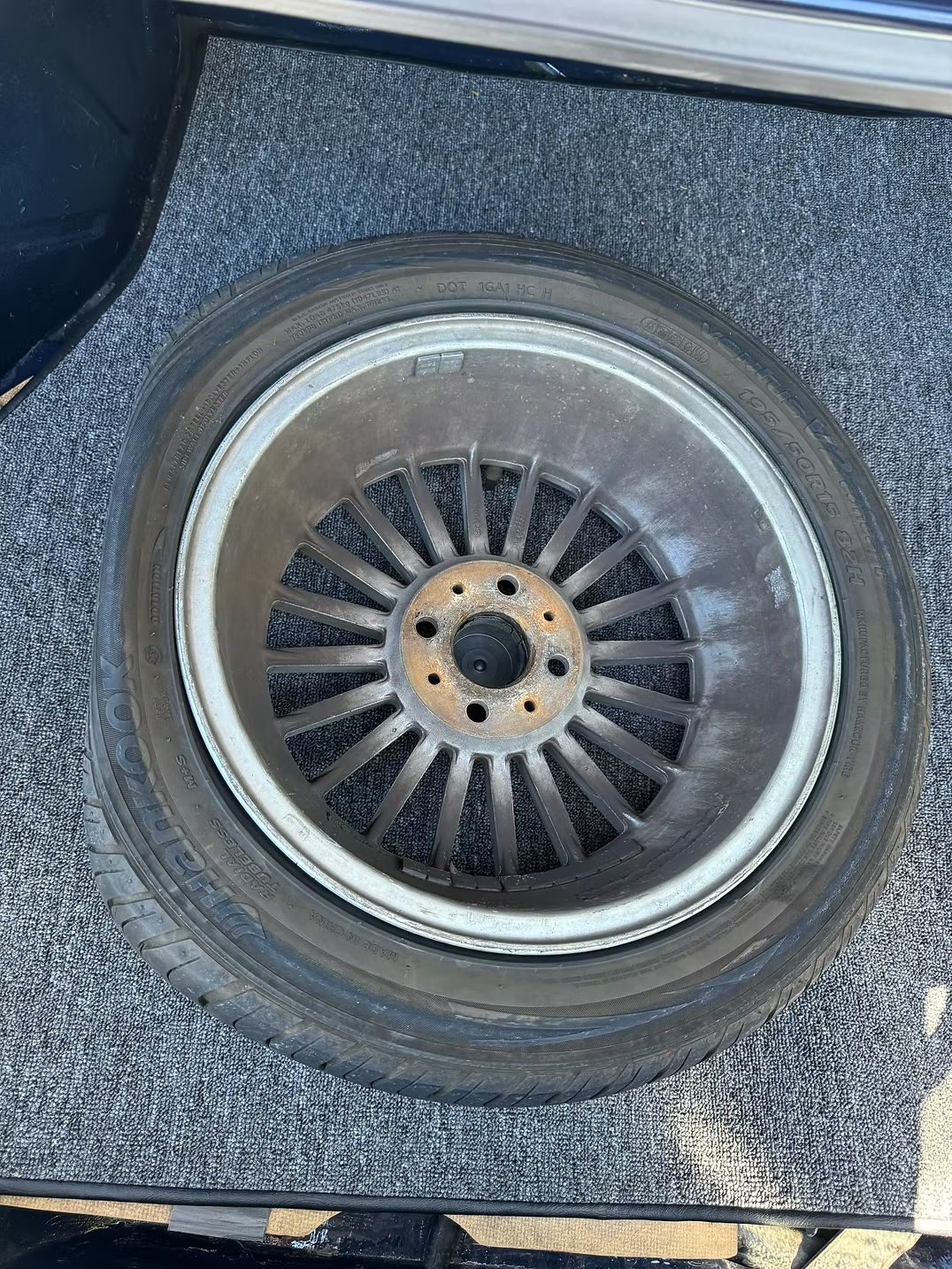
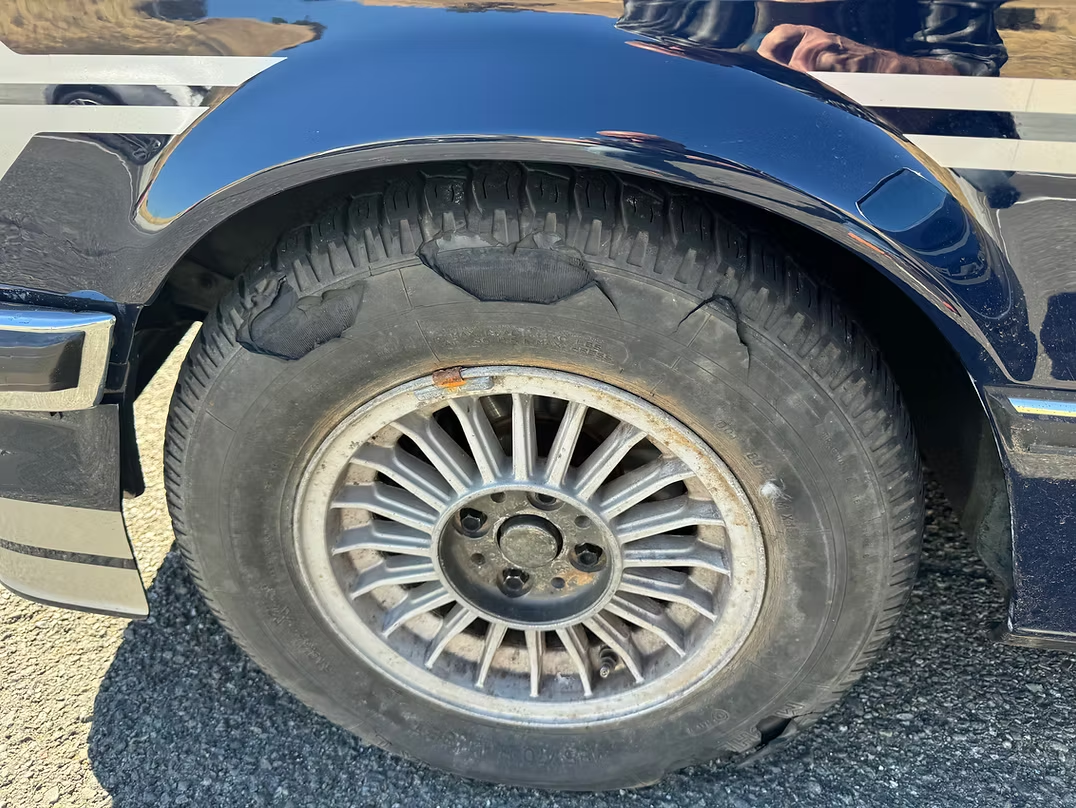
At least for a while. About 50 miles later some weird thumps could be heard. I wondered if it was the pavement and changed lanes. It would go away for a bit but came back. And got worse. Soon it was bad enough that I pulled over and saw that the spare was disintegrating.

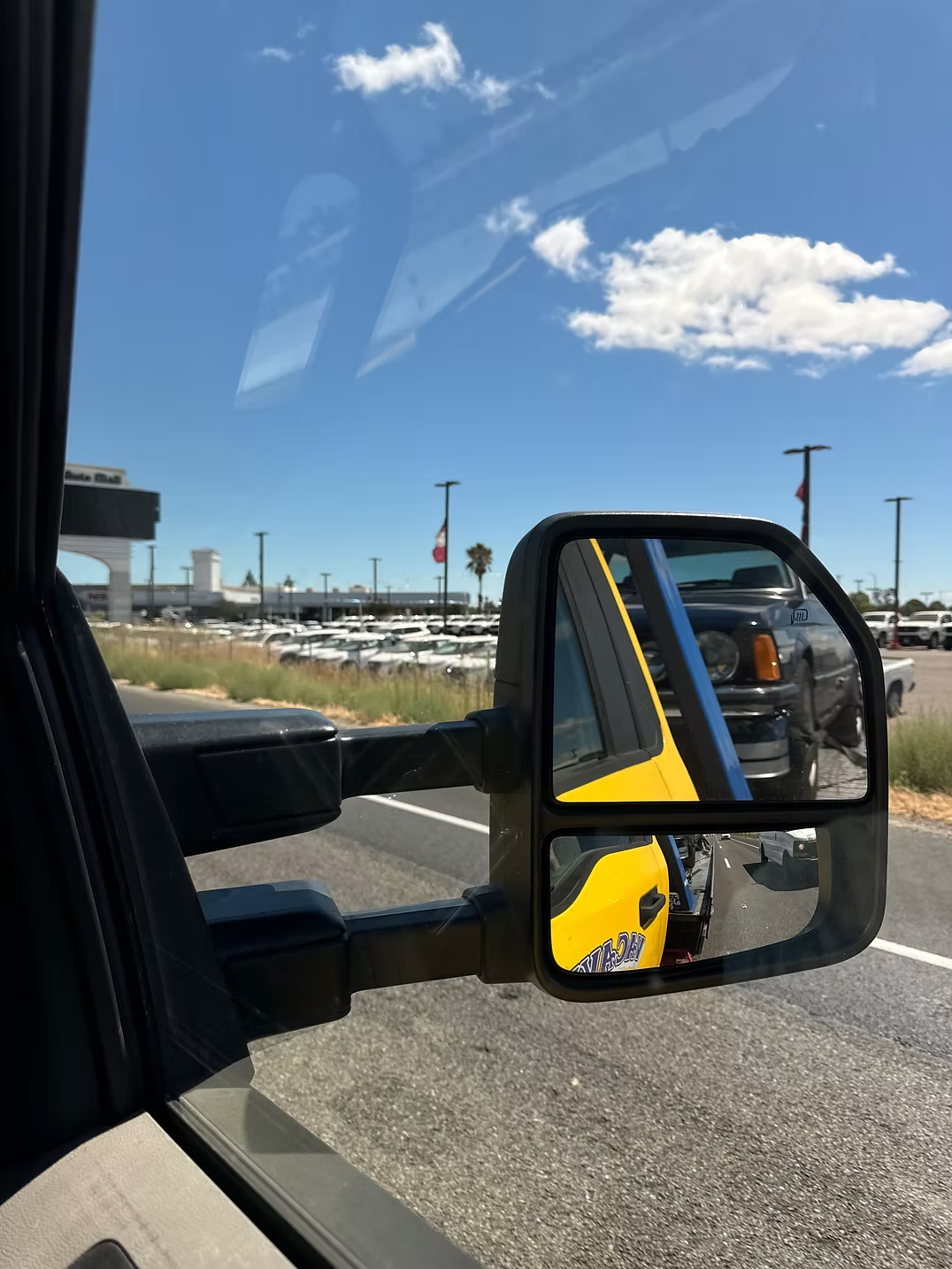
Apparently, the good rubber was really old and rotten. With no usable spare, I called AAA; almost 90 minutes later, the truck showed up and towed me to the shop. Stu then took me to the train, which I took home. I wasn’t happy about how the trip turned out but I was thankful that I didn’t have a blow out with the disintegrating spare and that the spin didn’t appear to cause any more damage than a flat tire.
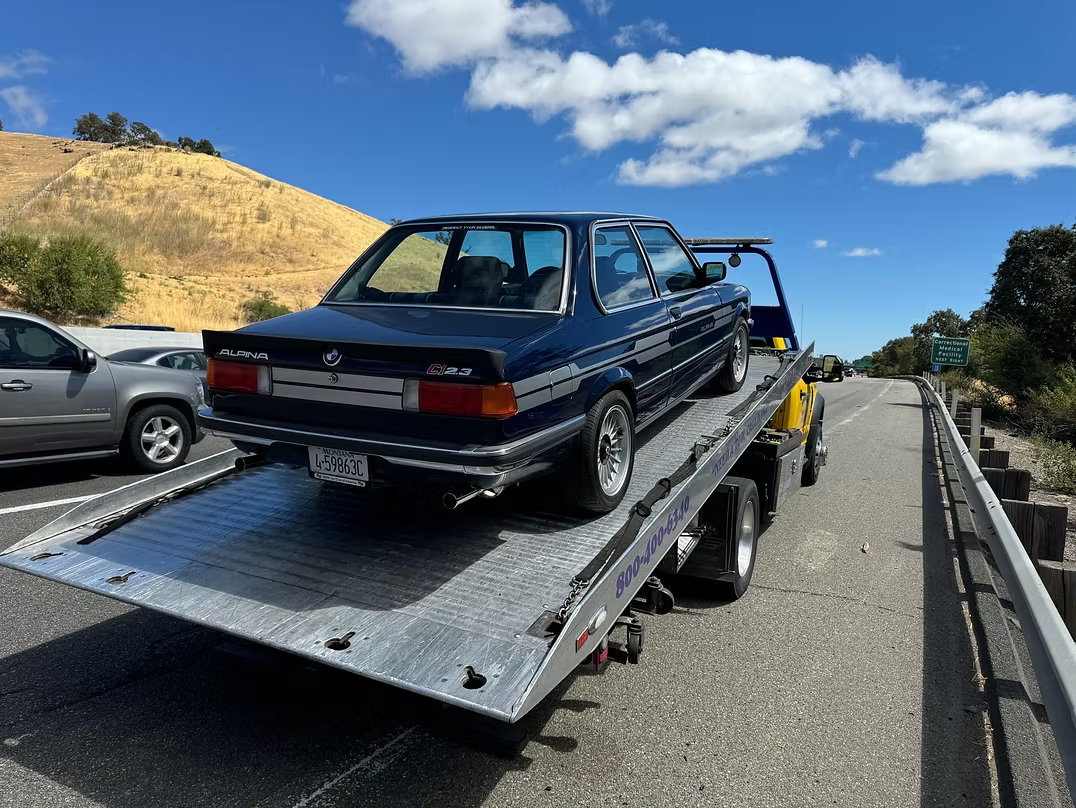
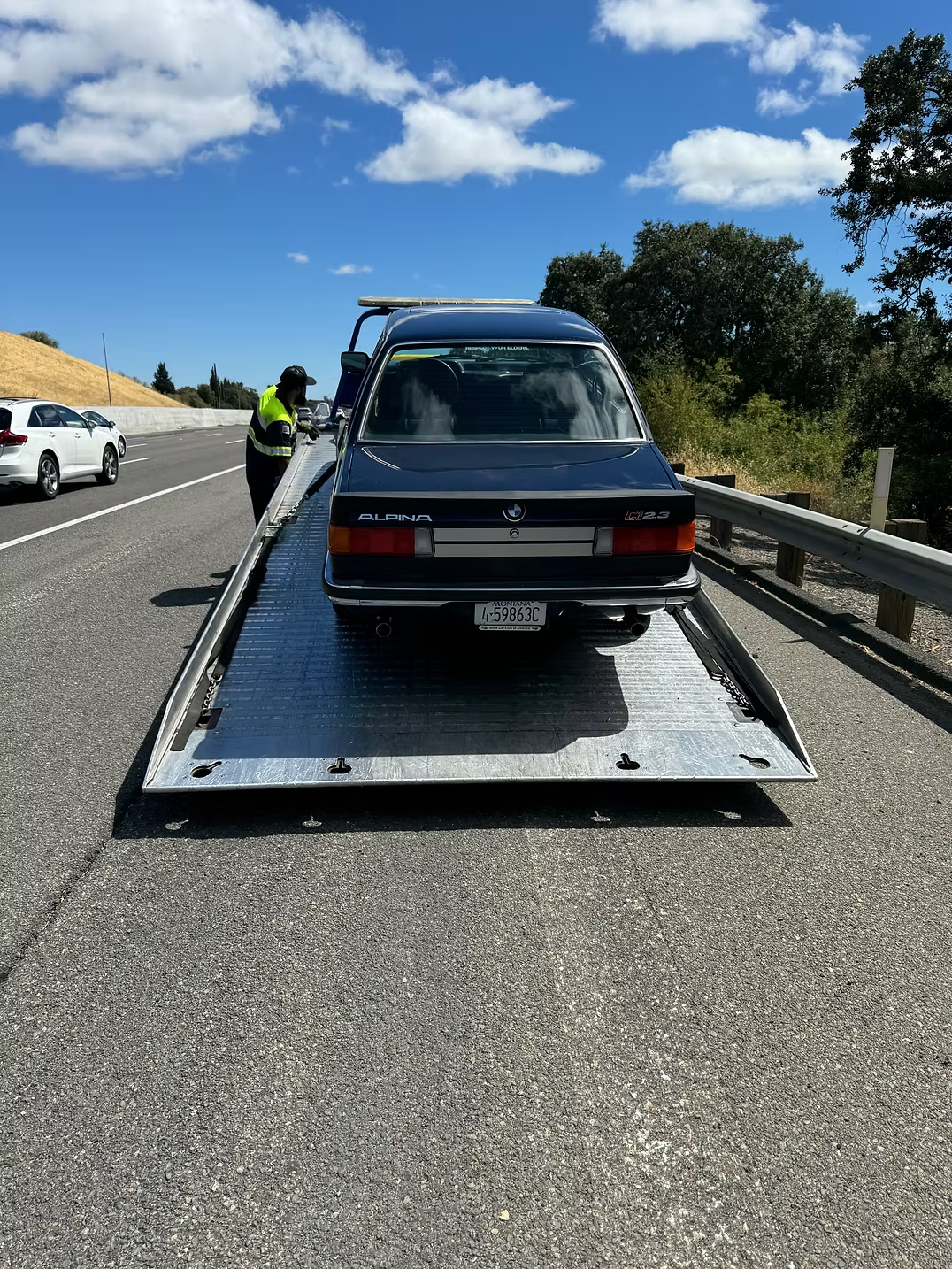
So, the car is in Sacramento, back in Stu’s hands. When I get it shipped east I’m hopeful that the speedo will work and the fuel injection is dialed-in. And I’ll work on the that flickering oil pressure light. But I won’t get out over my skis and declare any of these things fixed!
WHEN GOOD ENOUGH IS NO LONGER GOOD ENOUGH

WHEN GOOD ENOUGH IS NO LONGER GOOD ENOUGH

July, 2024

For a change, a fair amount has happened since the last post about making it to Monterey last August for the Alpina corral at Legends of the Autobahn. Sure, nothing as monumental as getting it running after being dormant for seven years, or ensuring she was roadworthy, or taking a couple hundred miles trip without incident. But even if the work didn’t mean big steps forward, the many little things, and a few medium-sized ones, did add up to some fulfilling progress.

And that fulfilling progress begat a new dynamic: redoing several things that were good enough to make the car roadworthy but now aren’t good enough given how nice the car has turned out.

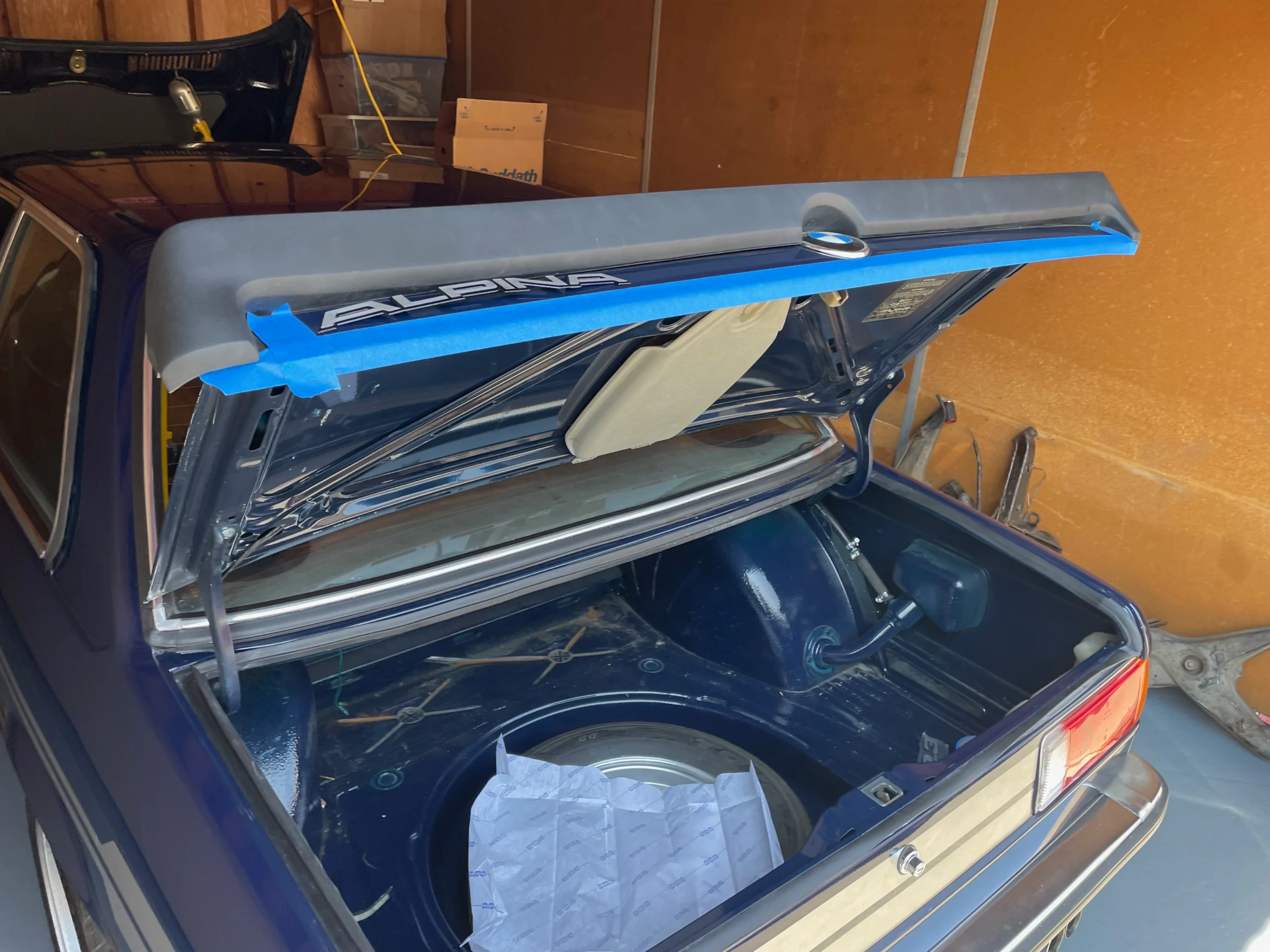
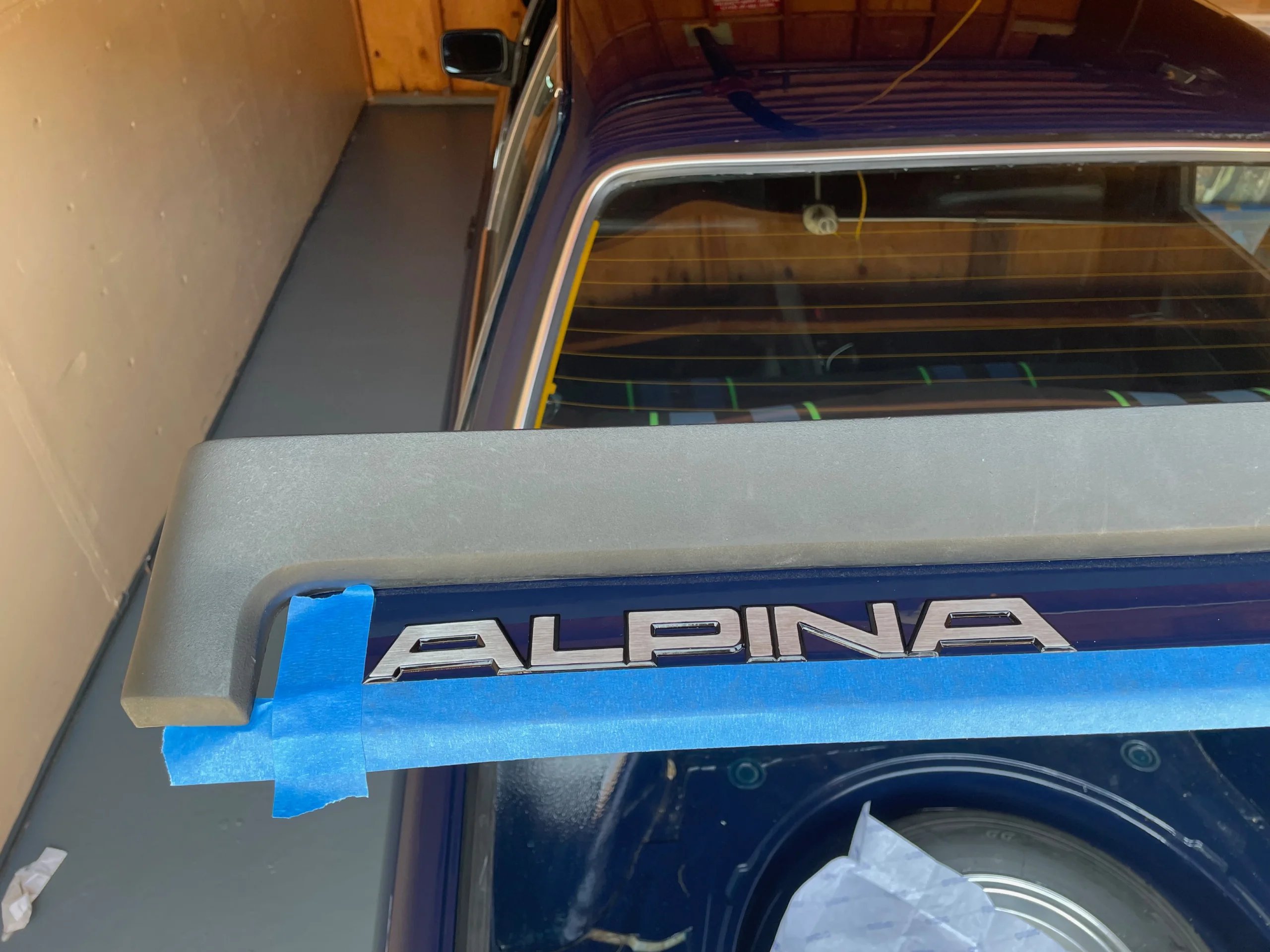
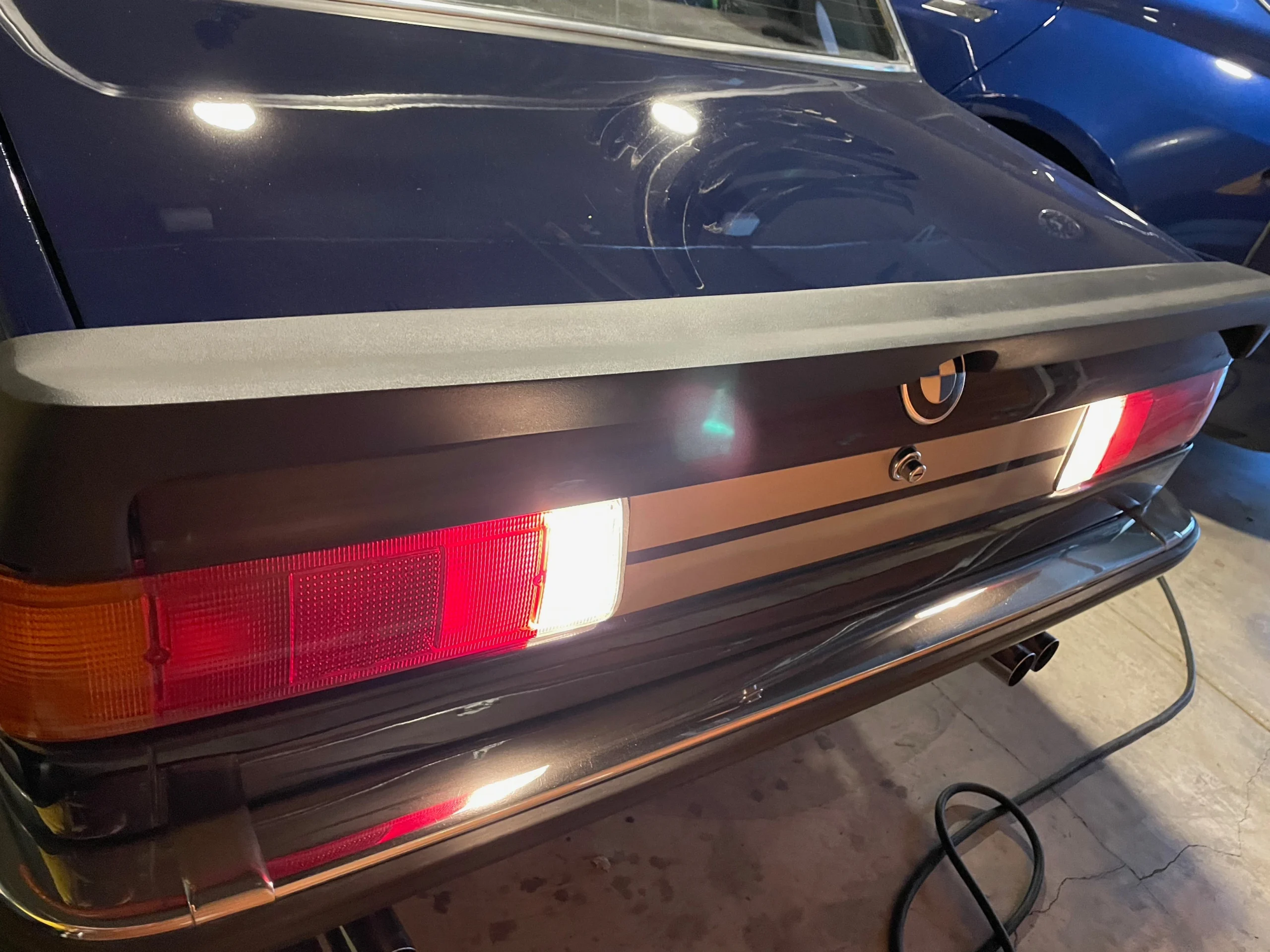
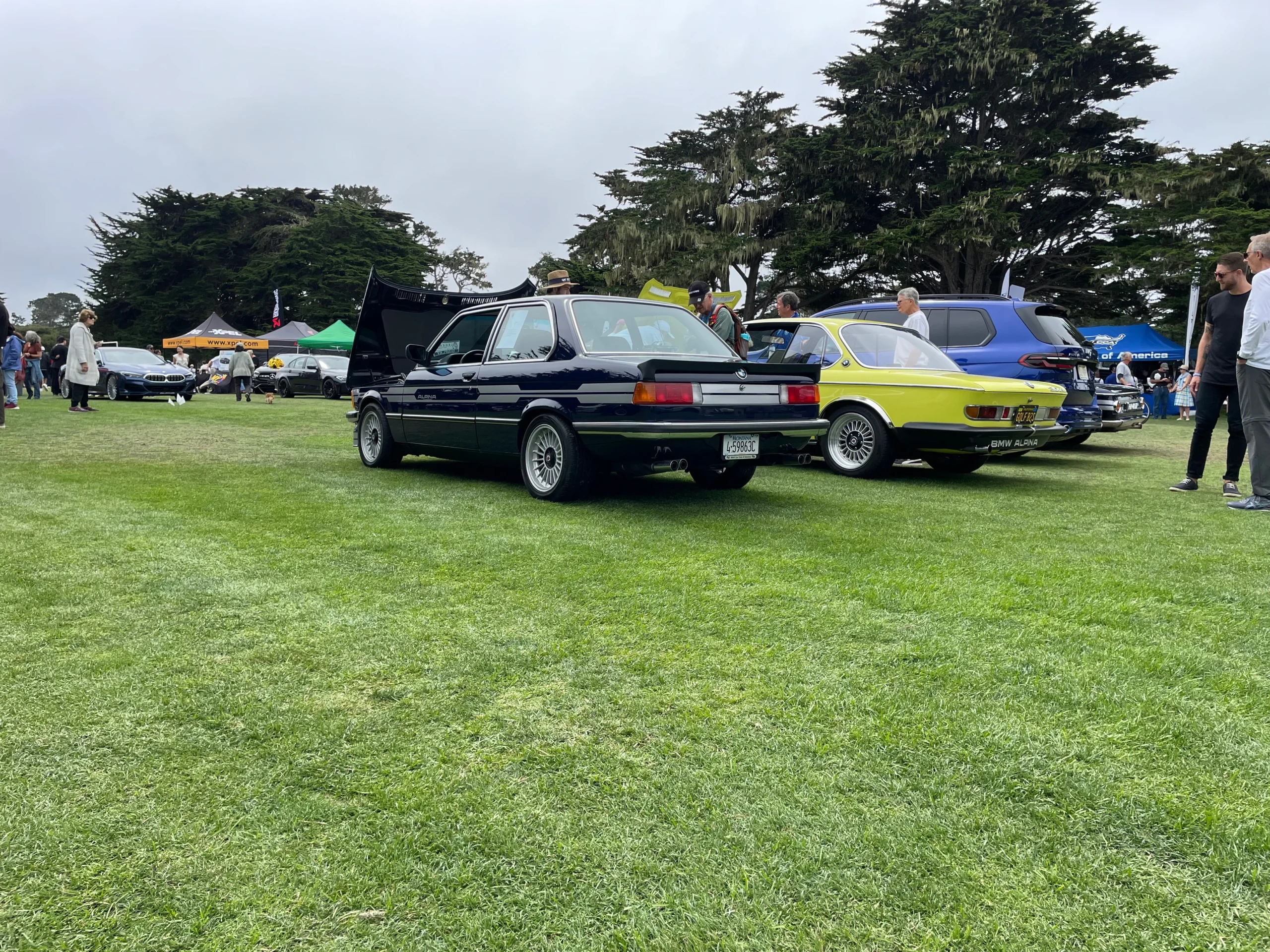
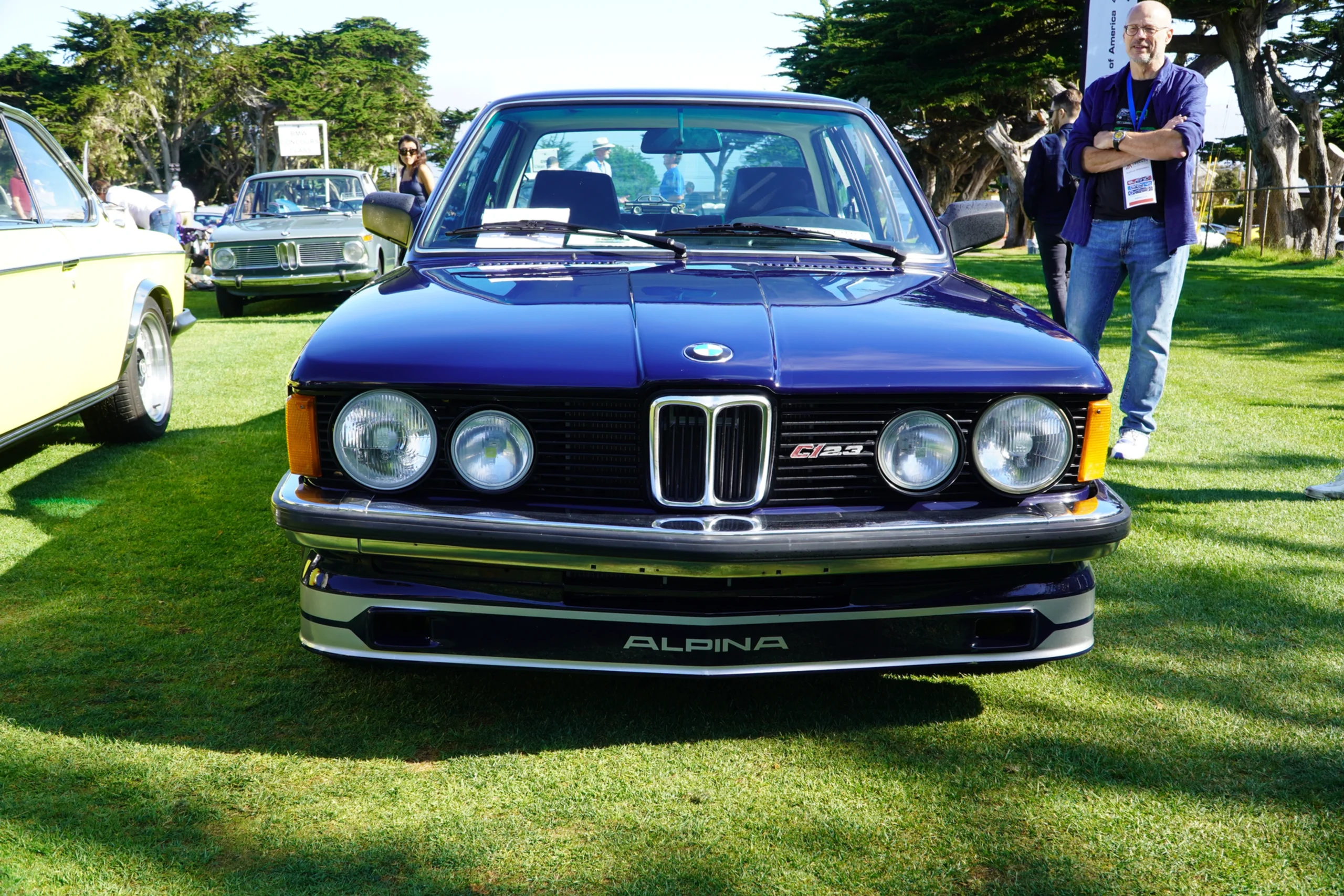
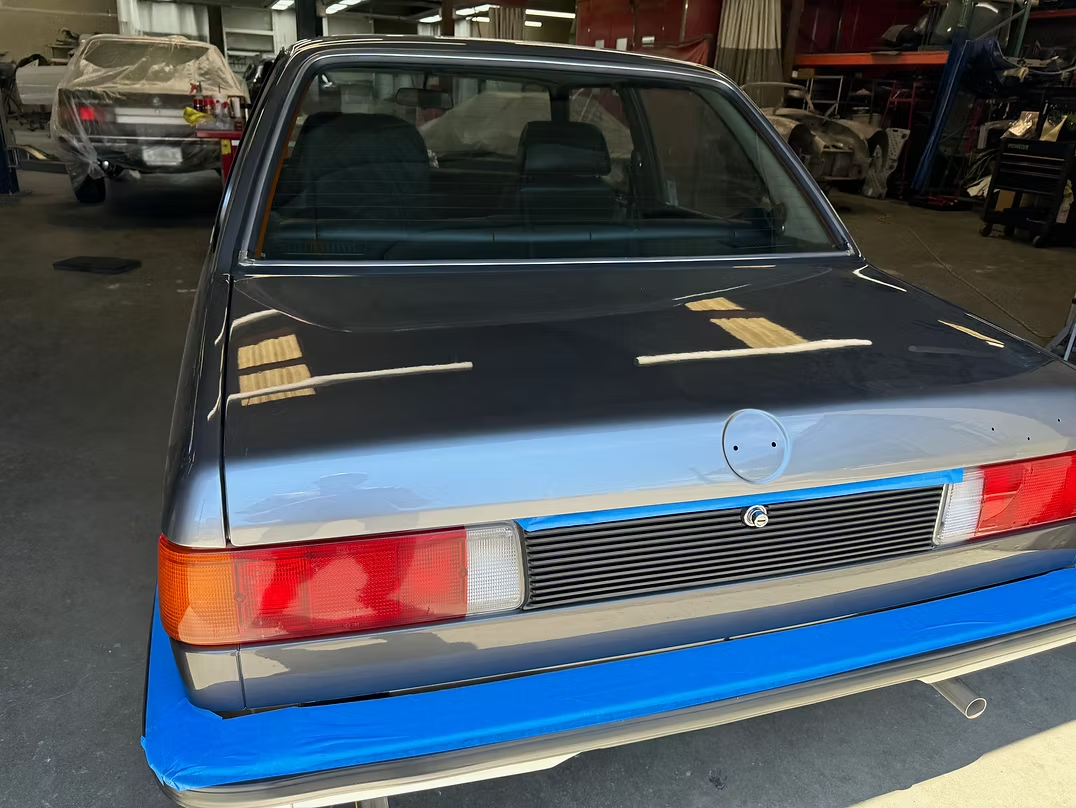
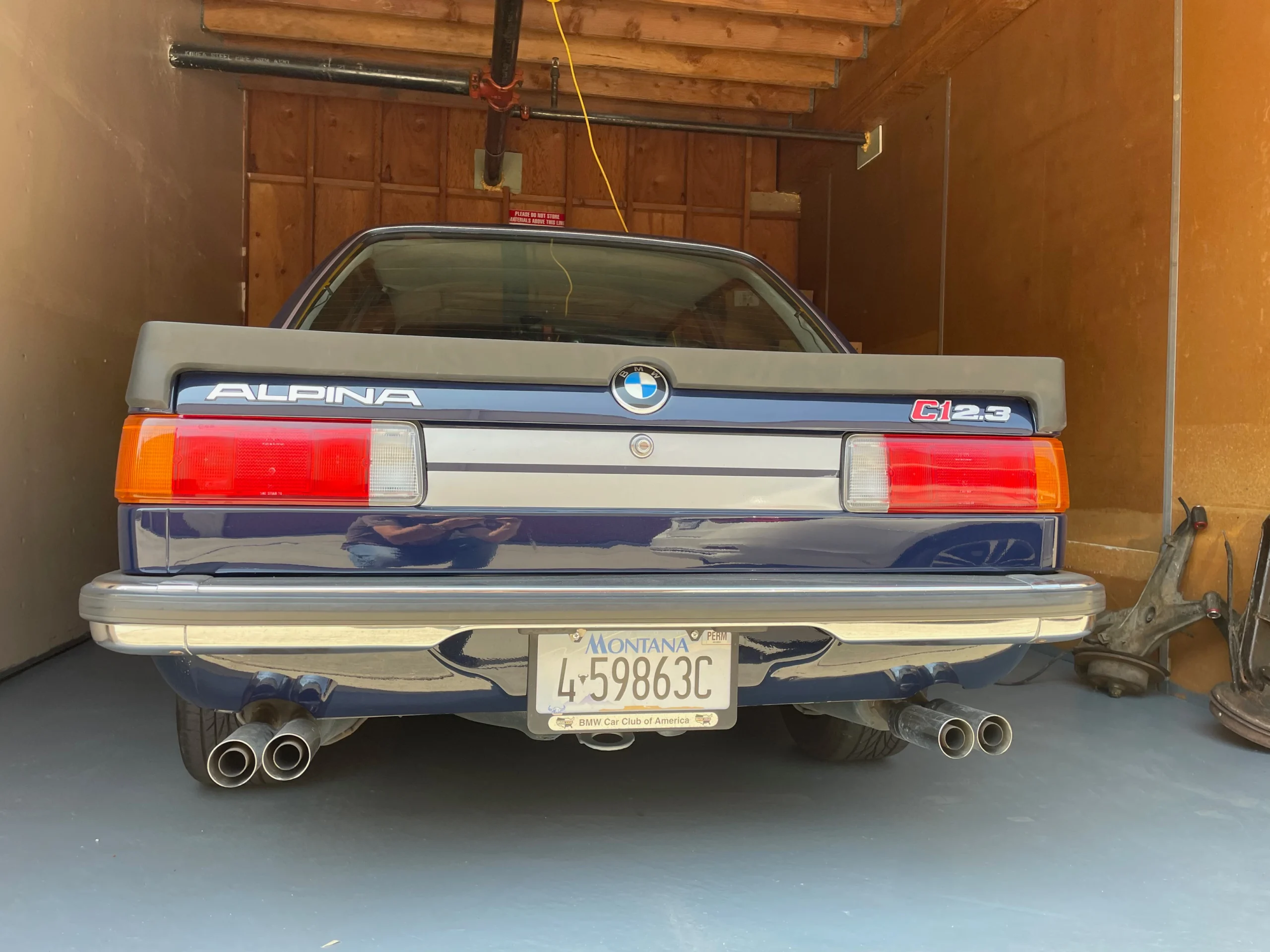
The little things were, well, little, but also made the car more enjoyable or presentable. First was to affixing the Alpina emblem and the model designation on the back of the trunk lid.  A little measuring, blue painter’s tape and the emblems were on. They look good, although I suspect the C1 2.3 emblem is for an e30 and larger than the e21 version. But you get what you get and this was the only one I could find.

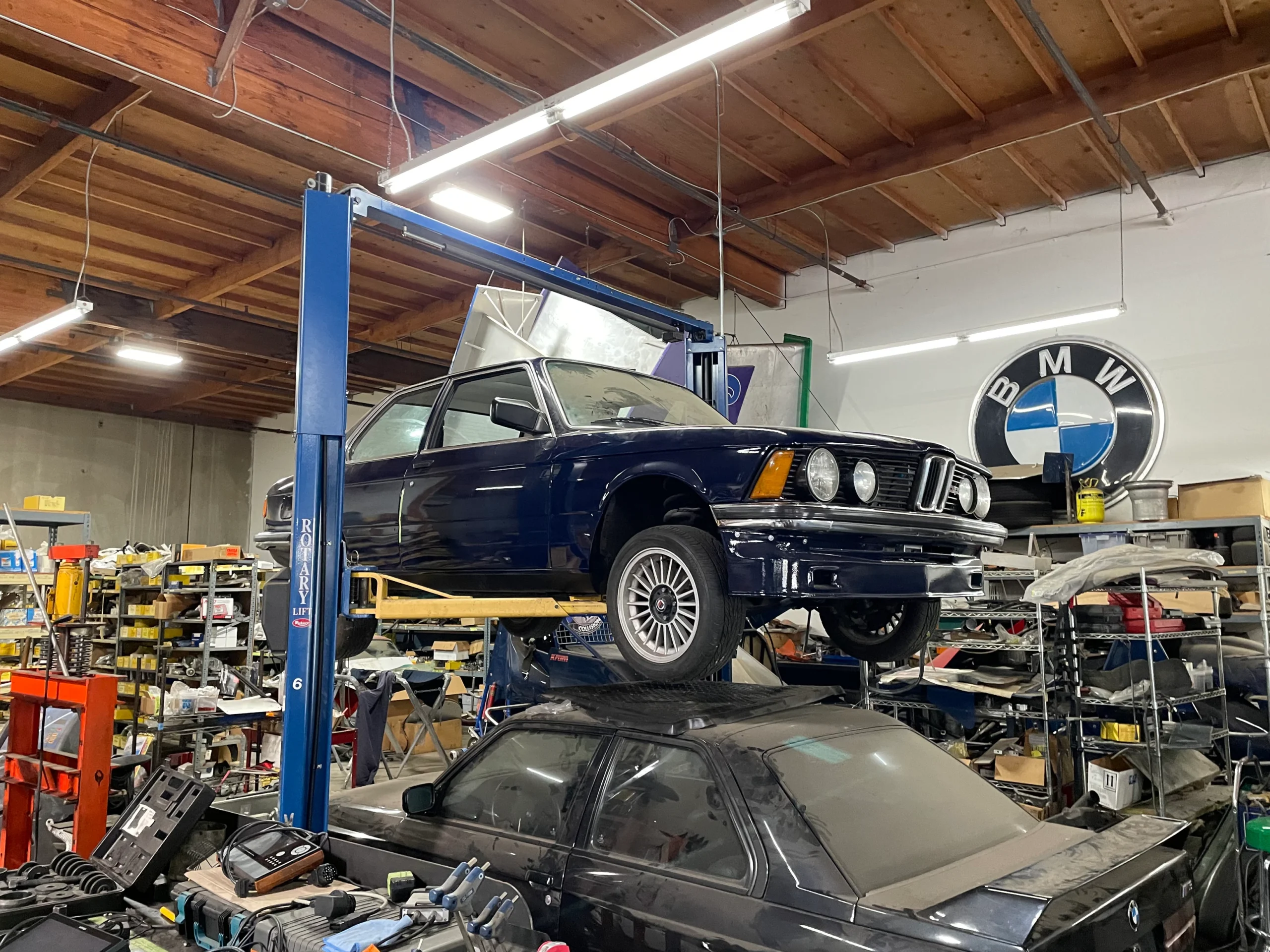
Then I drove the car up to Santa Rosa and dropped it off at North Bay Bavarian. The did a bunch of stuff that was above my paygrade. They put in an adjustable suspension, both front and rear, to get rid of some the excessive camber and caster.
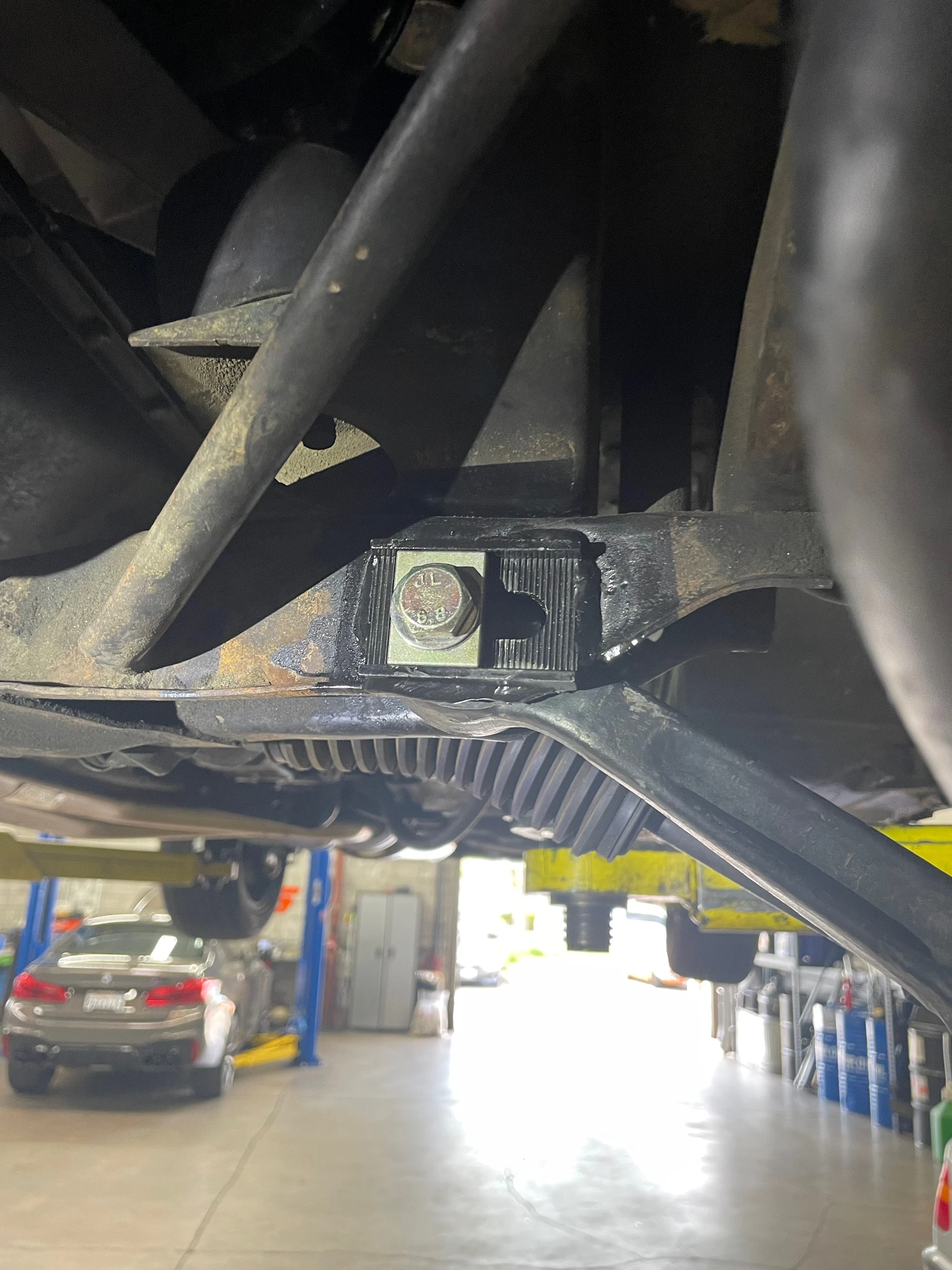
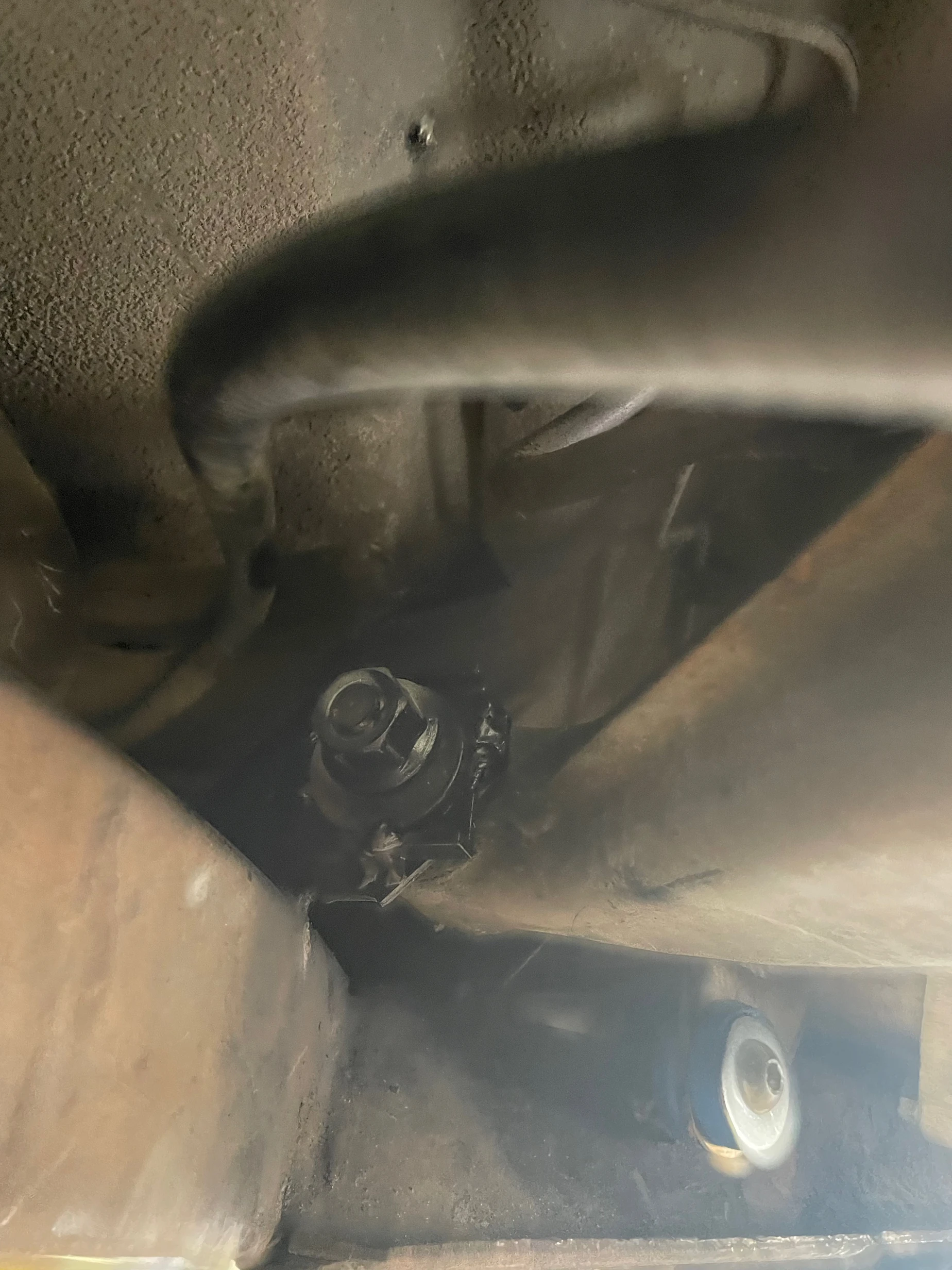
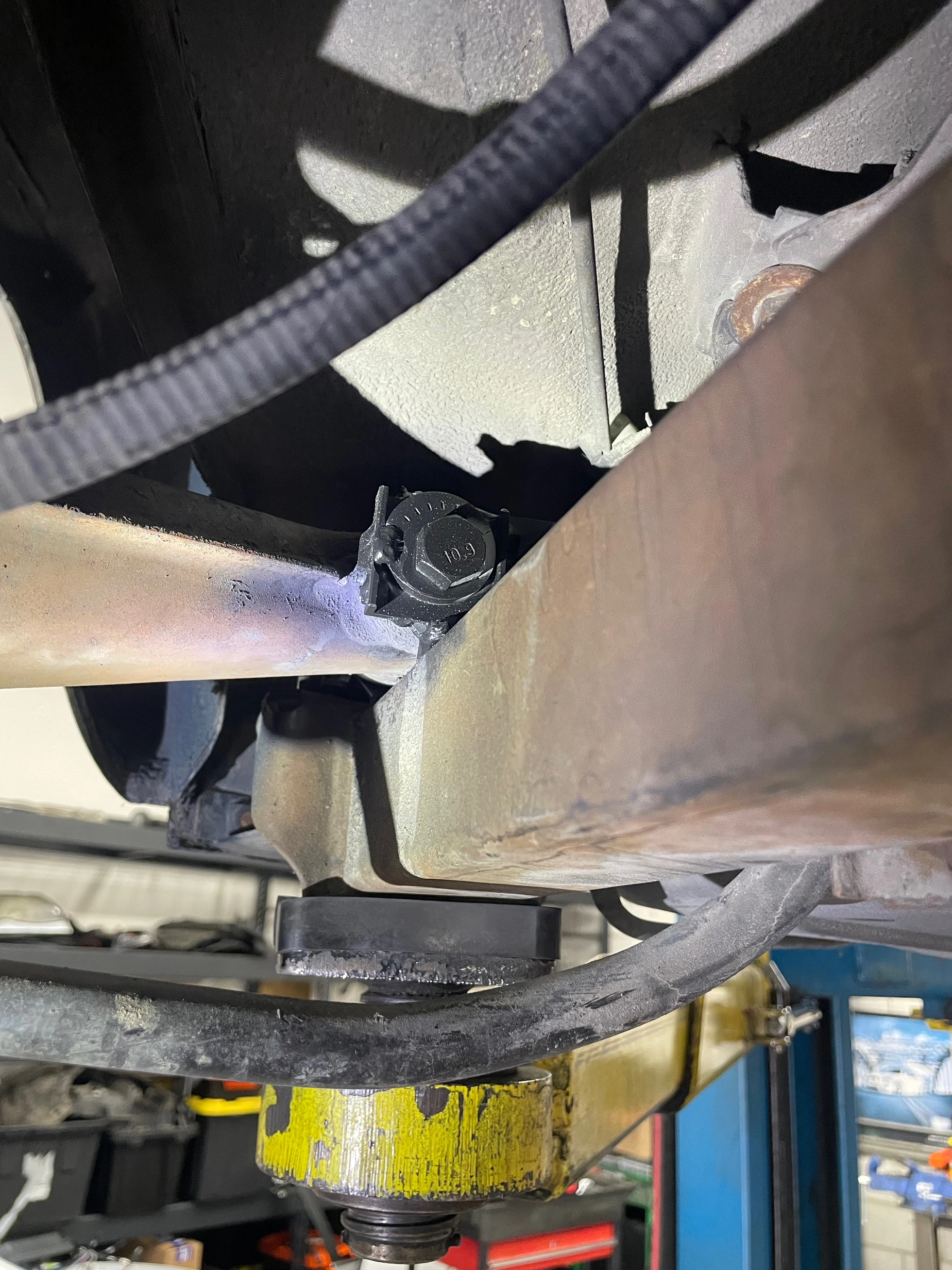
They dialed in the fuel injection and attached the heater controls so it actually has some climate control. And they chased down some wiring gremlins. They even got the speedo working. For a day or so. Then the transmission speedo gear crapped out again. Oh well! Not sure if the replacement was also compromised–it was a used piece as it’s NLA form BMW–or if there is an issue inside the transmission.

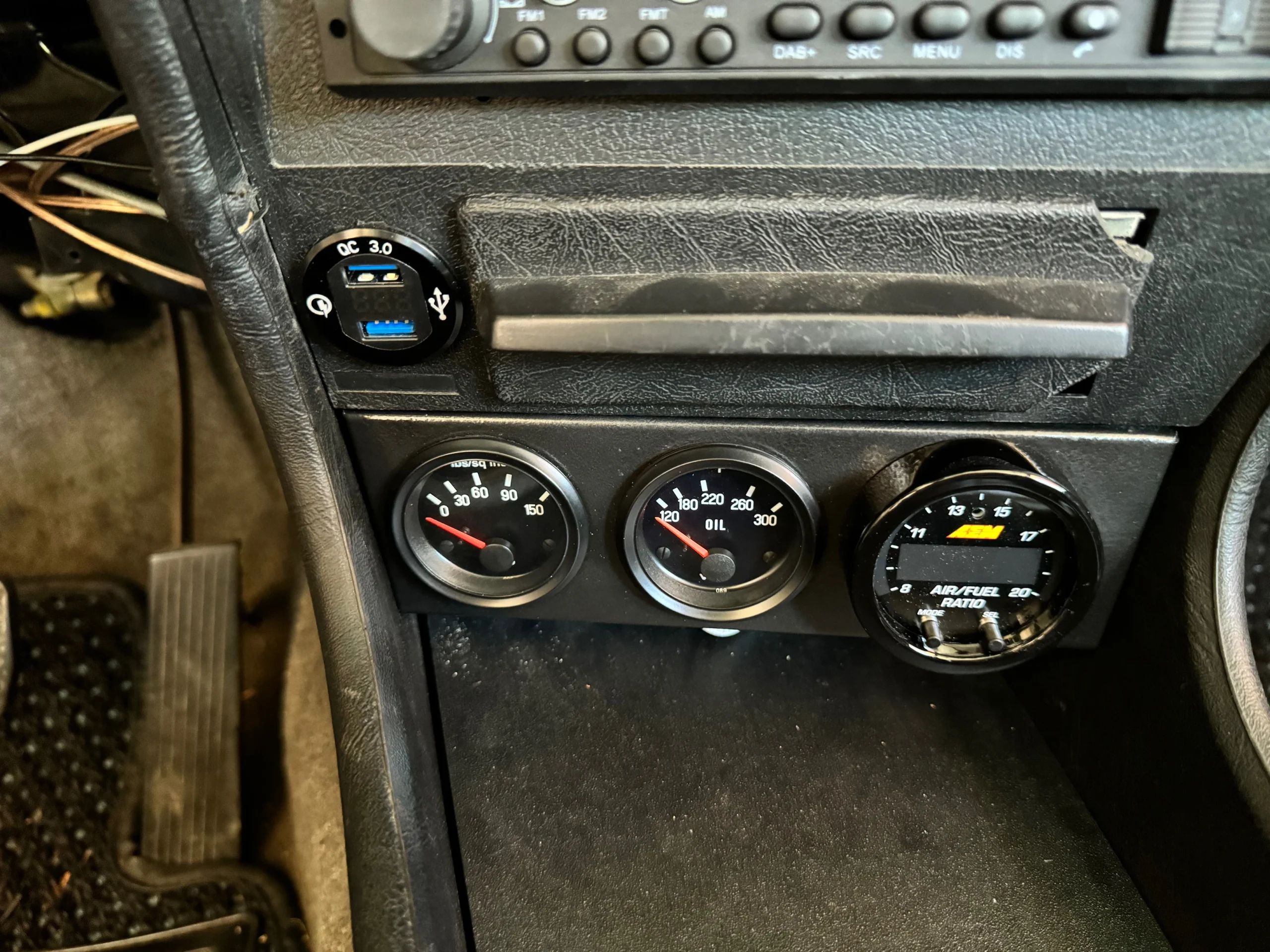
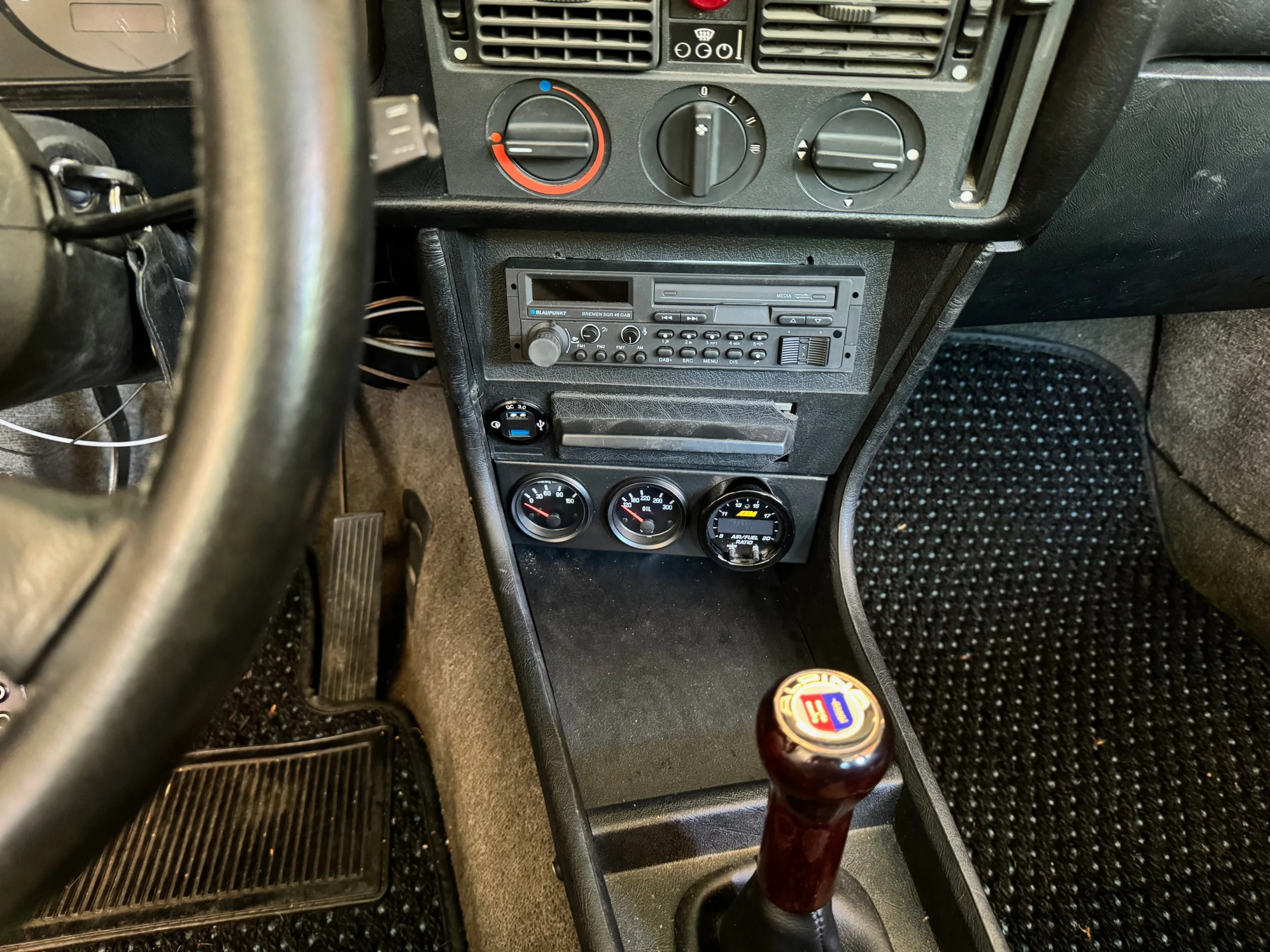
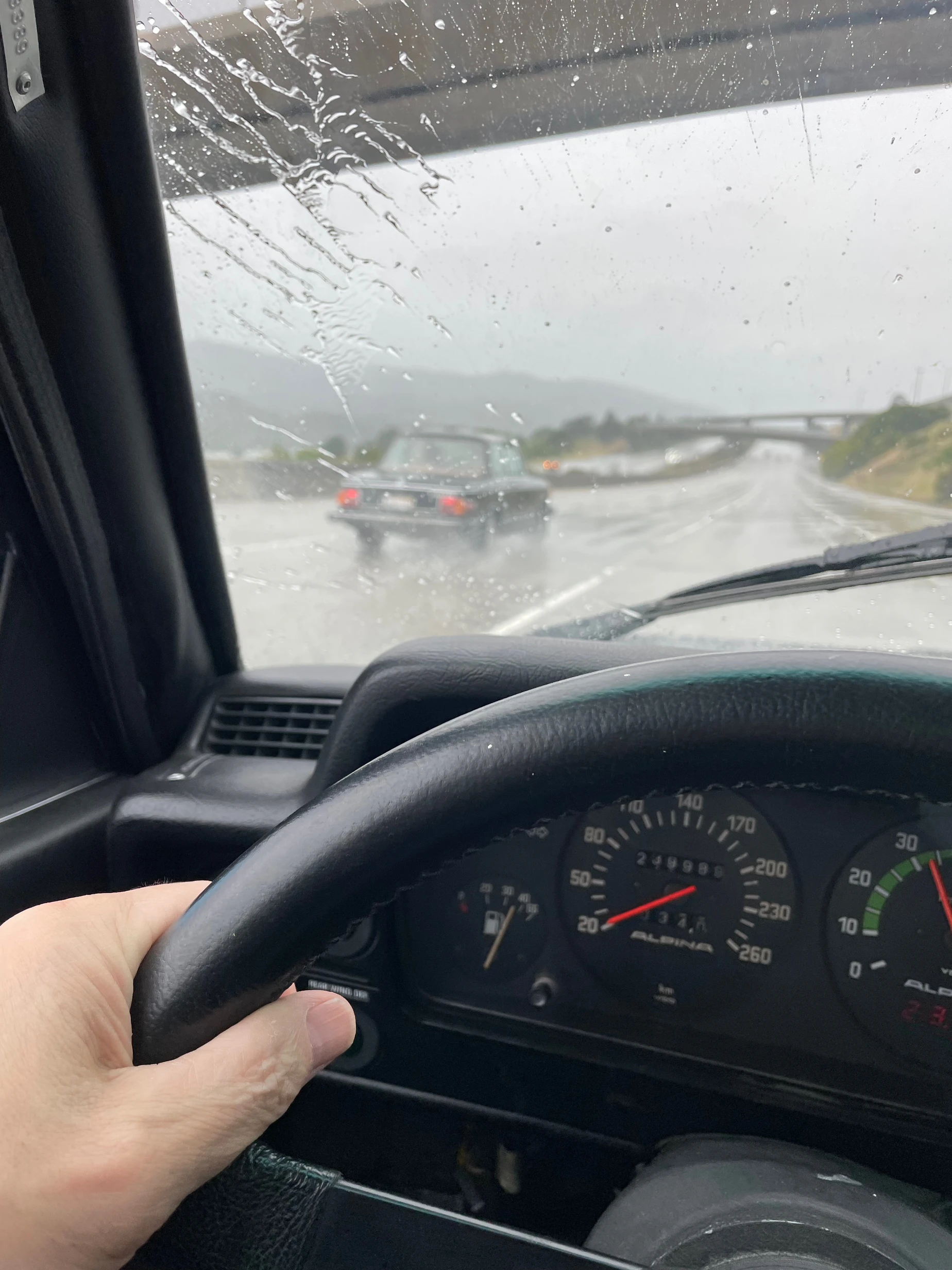
I’ve also been slowly getting the auxiliary gauges installed. I was going to use all VDO gauges for oil pressure, temp and voltage. But I decided to have the two oil measurements and an air-fuel ratio gauge instead of my usual voltage. The air-fuel ratio gauge doesn’t  match the VDO gauges but it’s provides some important information—at least for now, while making sure the fuel injection is all dialed it. I may later switch in the voltmeter if the air-fuel ratio gauge proves less useful in the long run.

Once installed the oil pressure gauge was vexing me. The idiot light would flicker on idle and the pressure seemed low, around 30-40 PSI. After a bit of troubleshooting, I realized that I used an old sender I had left over from another project and that was a 0-80 PSI gauge whereas I was using a 1-150 gauge. The new sender is on order and the problem should soon be solved.
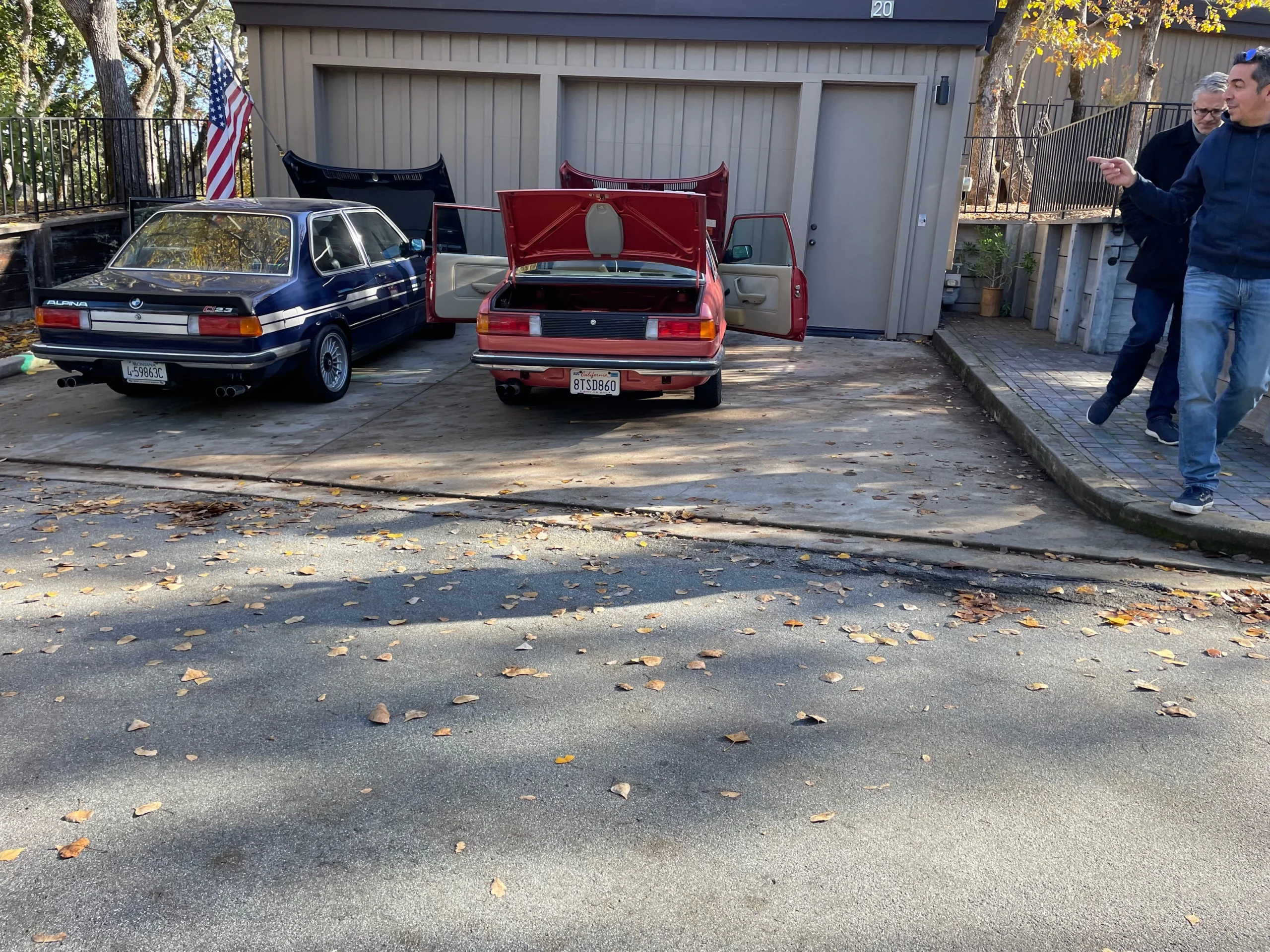
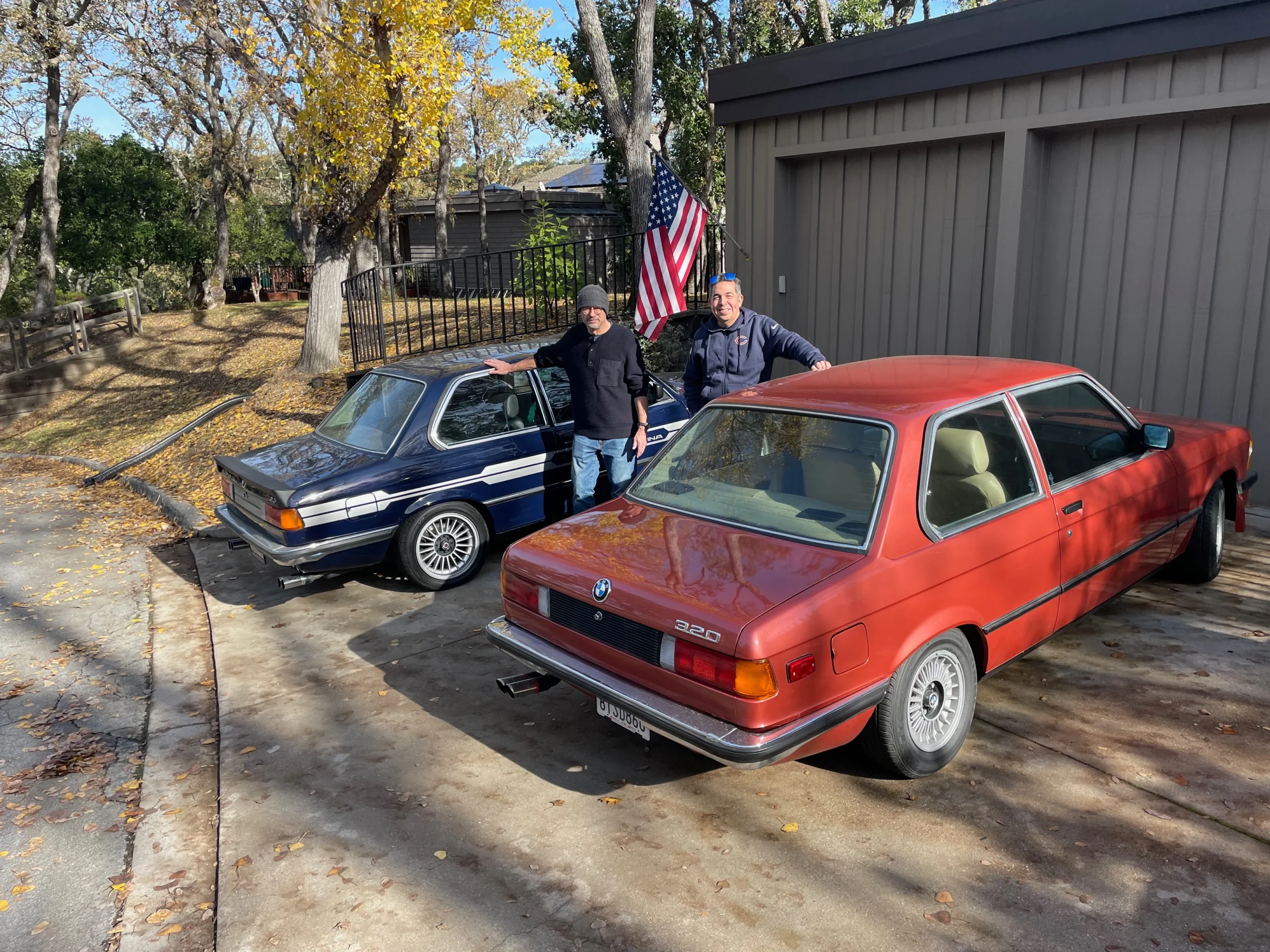
And then there was some socializing. Before the car went to North Bay Bavarian, my friend Ricardo (his project blog is here: https://www.ricardoe21.com/) came by with his 320i; he’s going to be swapping in an m20 and I wanted to give him an opportunity to get behind the wheel of an m20-powered e21. We got to compare cars, drive each other’s and talk e21s.

Later, I braved the heavy rain to take it to the Bay Area 2002 Swap and Show, but the rain was so bad the show was canceled shortly after I arrived.

The good enough but not good enough was an interesting development. My mission since the pandemic started was to get the car out of the shop in Sacramento and running.  That was accomplished, with much labor and many posts here, about a year ago. Since then, I’ve had time to digest what this car is and what it isn’t.

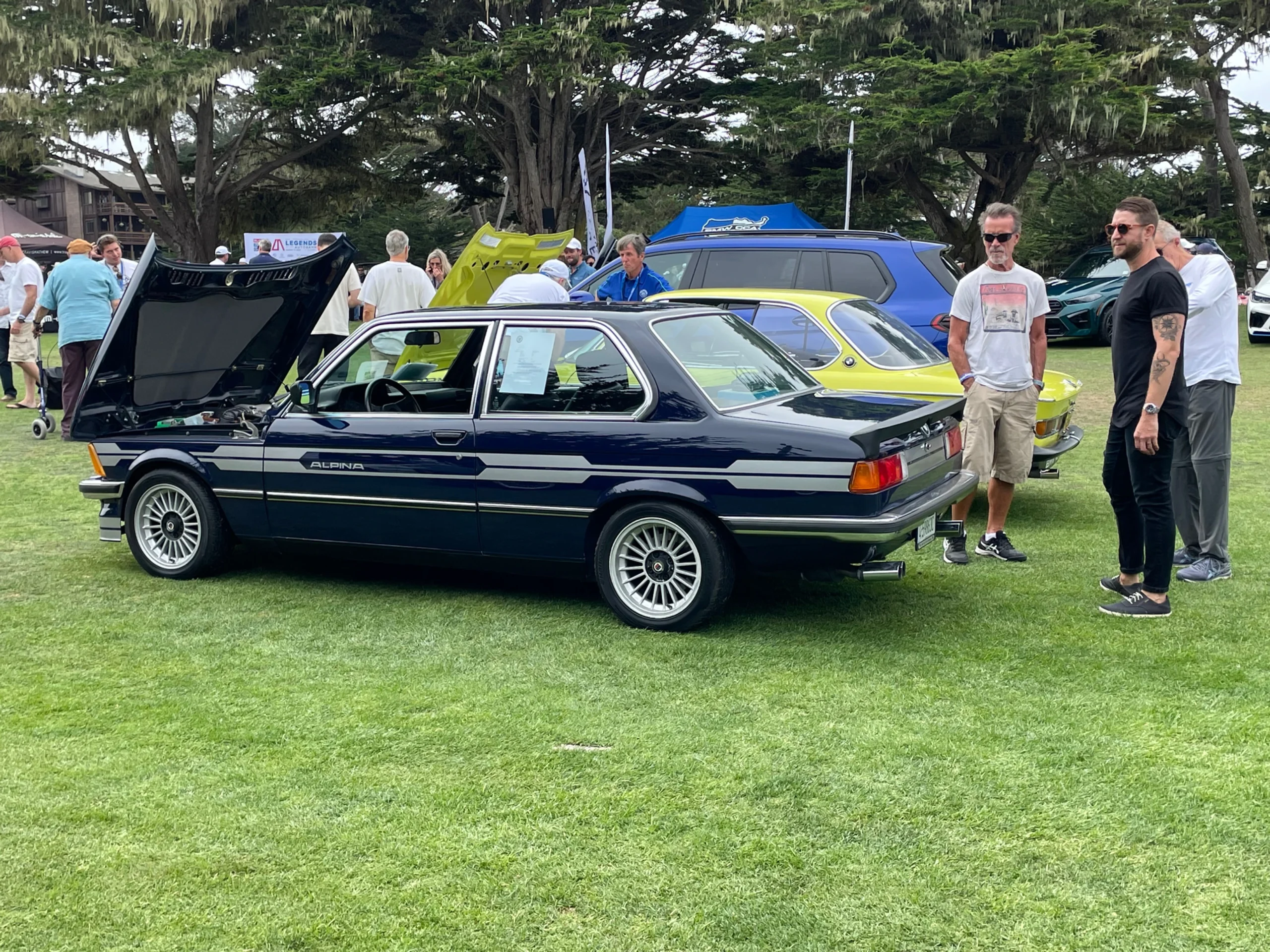
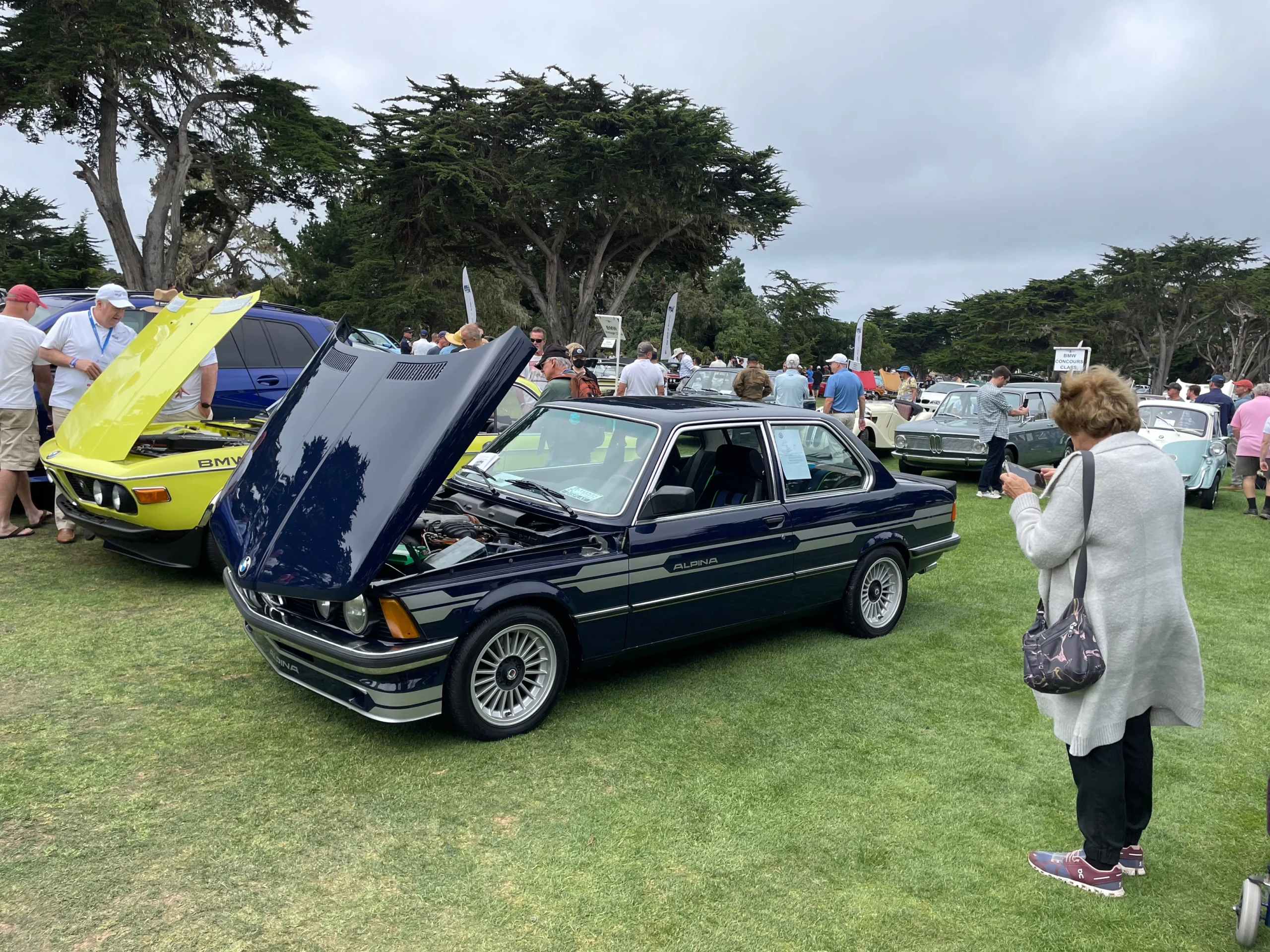
I’ve restored a bunch of vintage BMWs, mostly 2002s but also did a lot of improving on my e12 B7 Alpina. But none of them were that nice, which was fine with me; I like drivers, not show cars. And this car with it’s 2.8 liter engine and close ratio 5-speed is certainly a driver. But the paint is pretty nice. Not great, but a solid nice! Yes, there are flaws, but it’s shiny and looks great with the Alpina stripes. As e21s go, it’s a very solid build. It’s a nice car, a step or two above the usual drivers that I build. The getting-it-running-and-let’s-see-what-we-have approach that I had over the past several years has begat something a bit better than what I’m used to creating and, frankly, I was at a crossroads with the car: it was either time to pass it along to someone who would pay me a bunch of money for a rare and nice car or acknowledge that a sane person would never sell it but would instead drive the piss out of it and fix some of the hangnails. I took the latter route.

The beauty of this car is that the paint has enough flaws that it shouldn’t be squirreled away from the world in a climate-controlled garage but is nice and shiny enough that, well, it draws a lot of attention—and, most importantly, not so nice that I’m afraid to drive it and get another paint chip or two. With that in mind, there was work I did before that was good enough—good enough to get it running and evaluated—but wasn’t good enough for what it is I discovered after that evaluation.

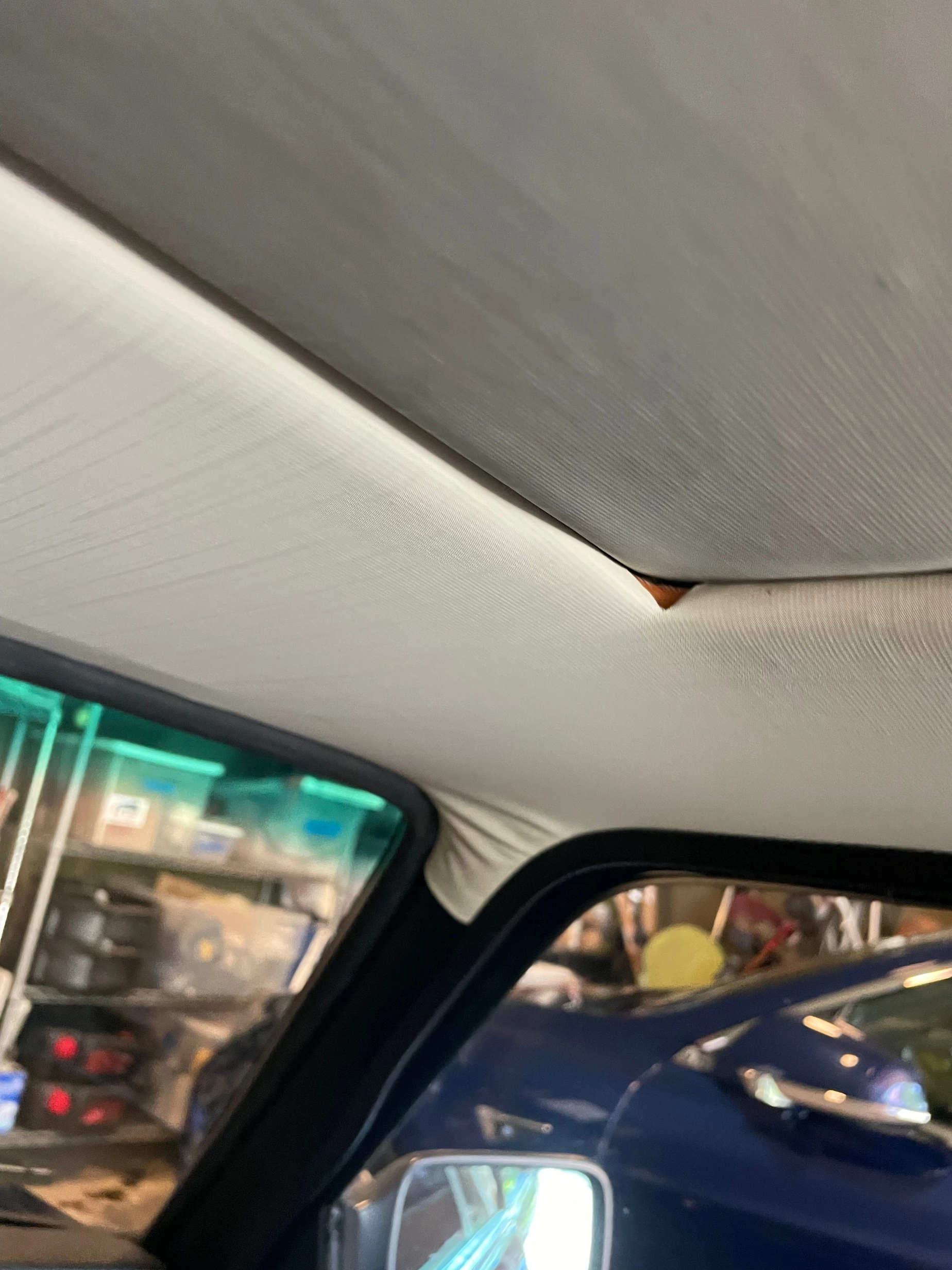
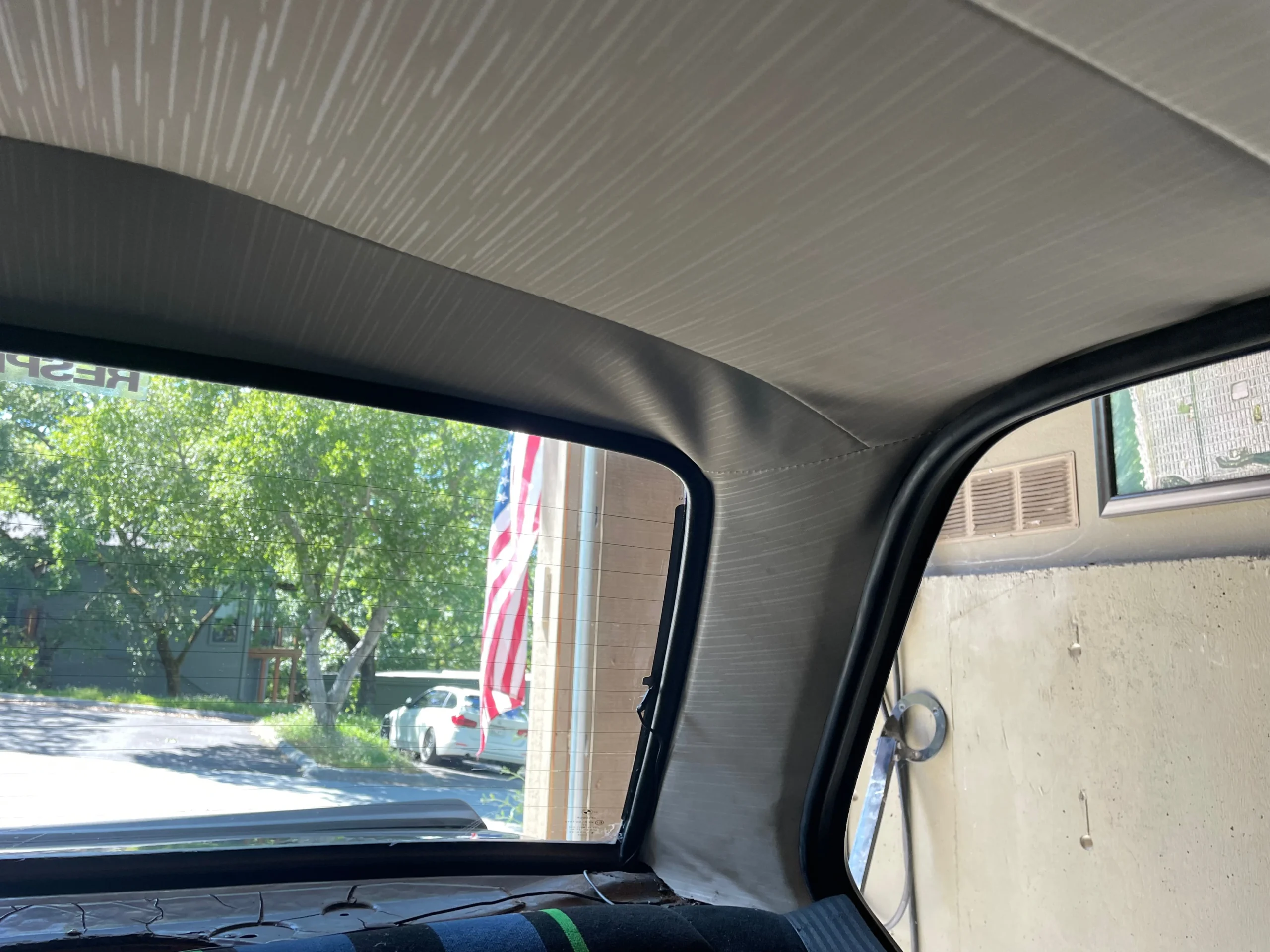
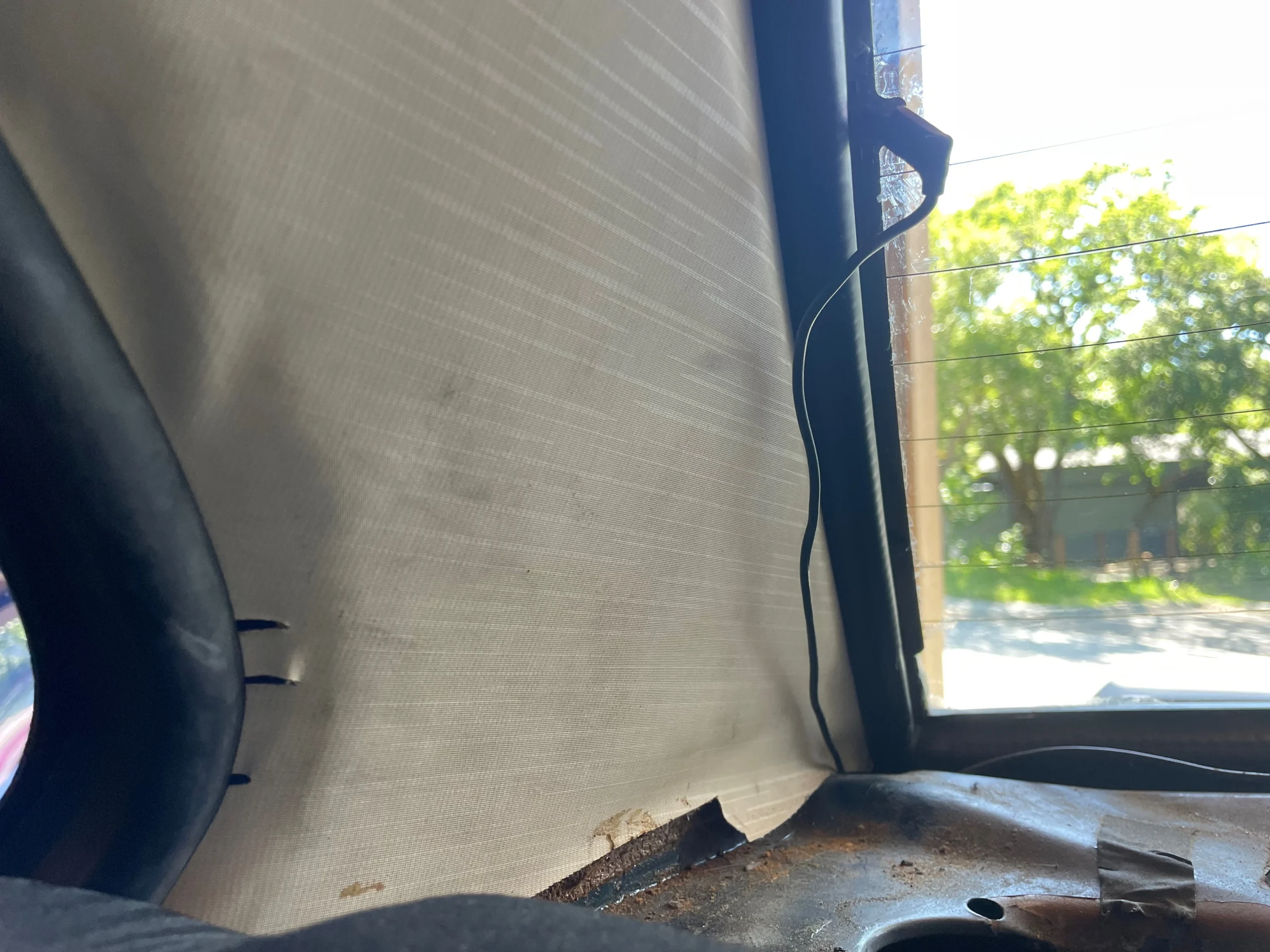
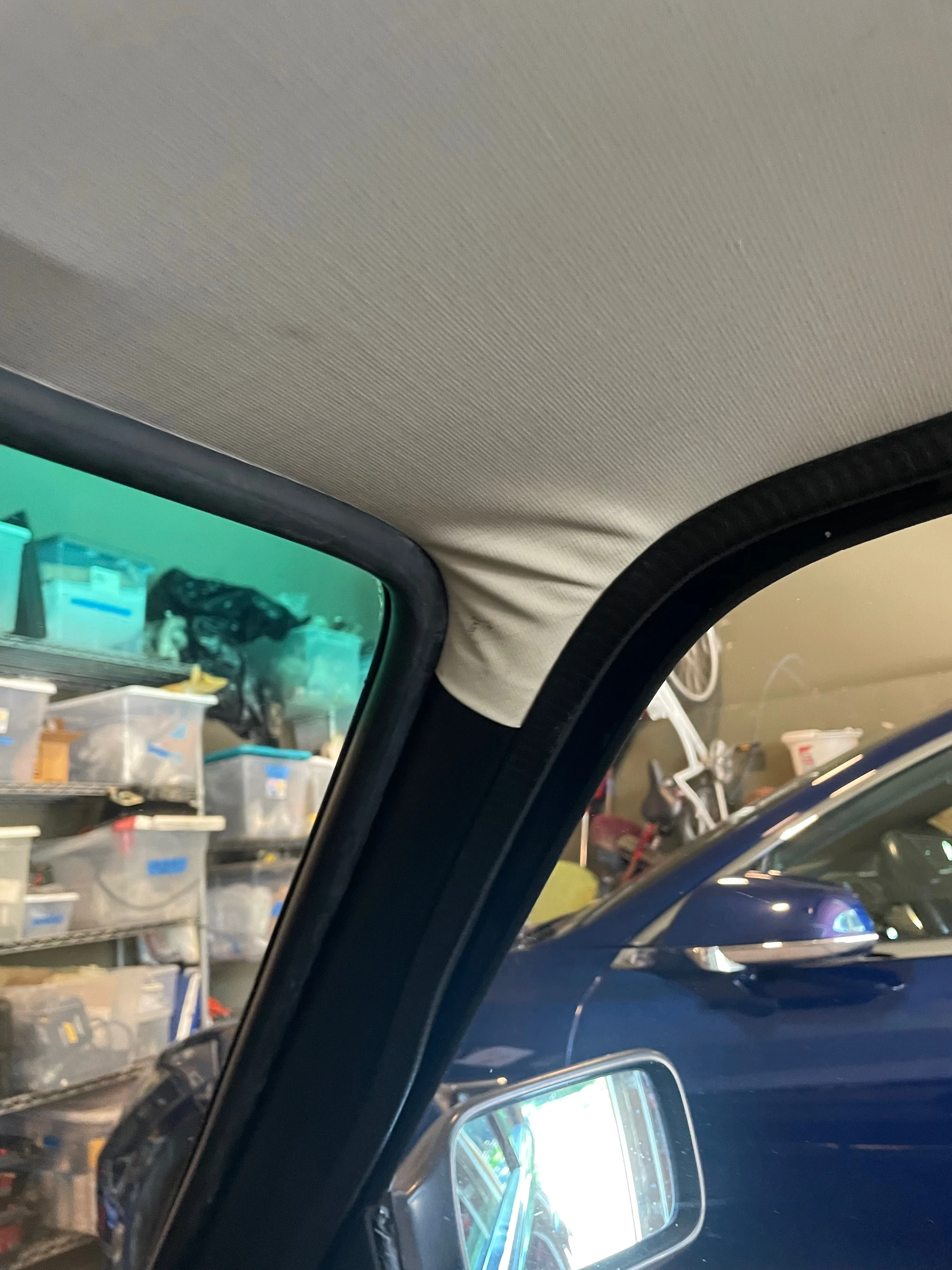
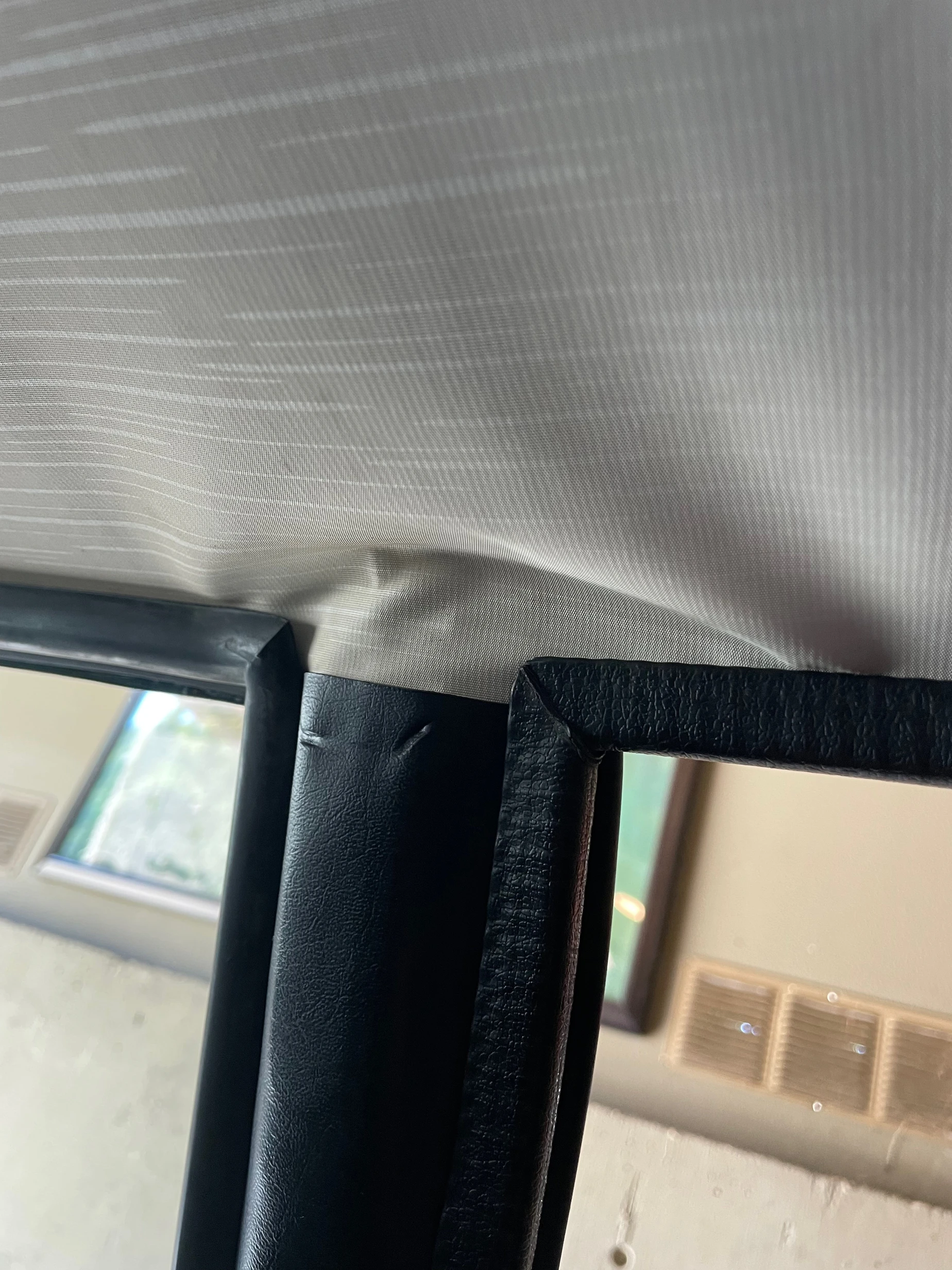
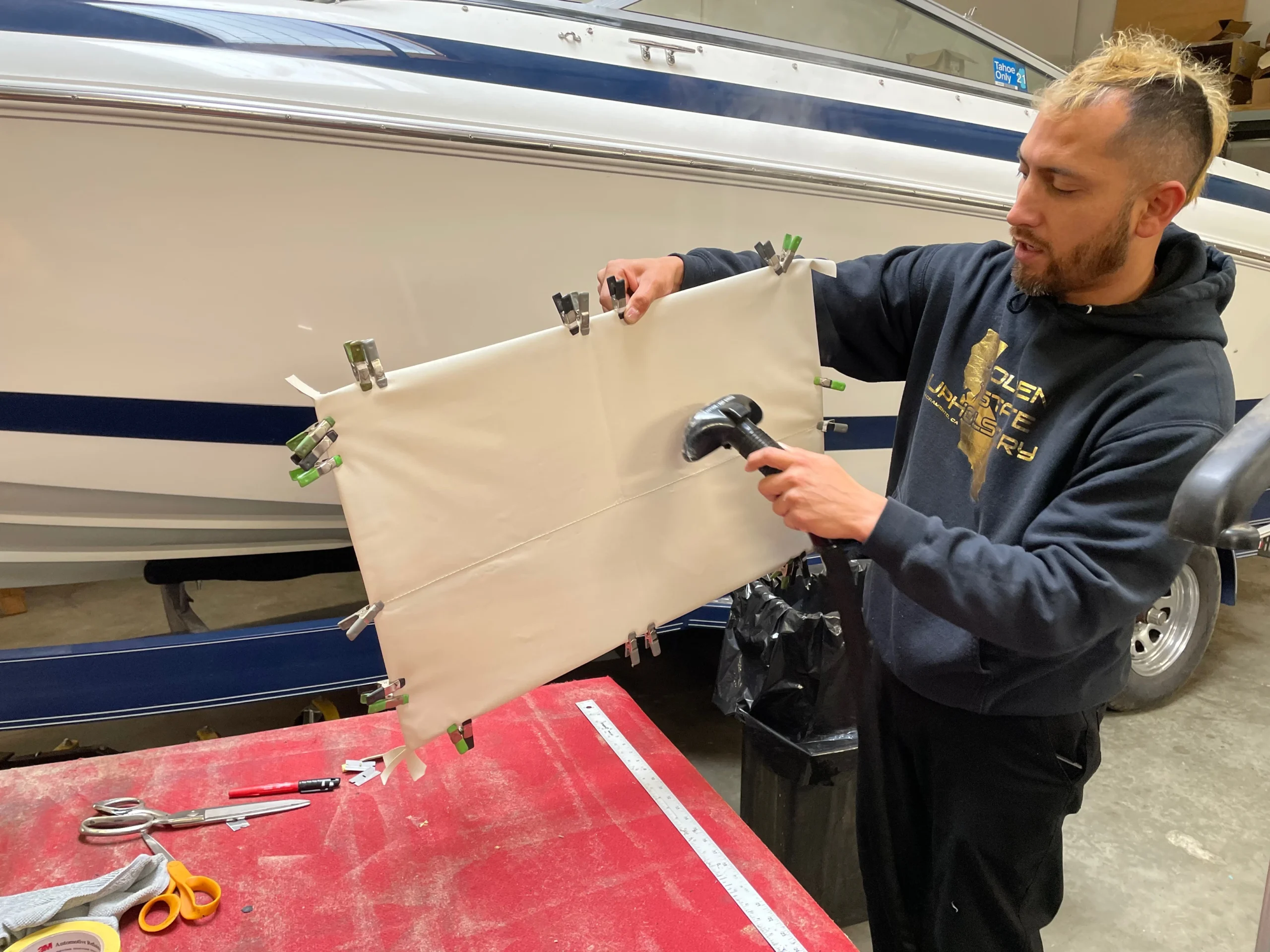
So, what did I redo? I had the headliner replaced by The Resto Shop; the original installation had flaws—the cuts for the corners were too deep and showed, plus none of the interior hardware, like grab bars and interior lights, were cut out. Finding the right place to cut for them without making mistakes was a fool’s errand so it was live with those inevitable flaws or redo the headliner; I choose the latter and they did it right and now all the interior hardware is in. (They did a bunch of other little things, too.)

The old headliner–you know, the one that was 3 years old–was clean but didn’t look so good. And I had no confidence that I’d be able to find where to cut for the grab bar screws or such.

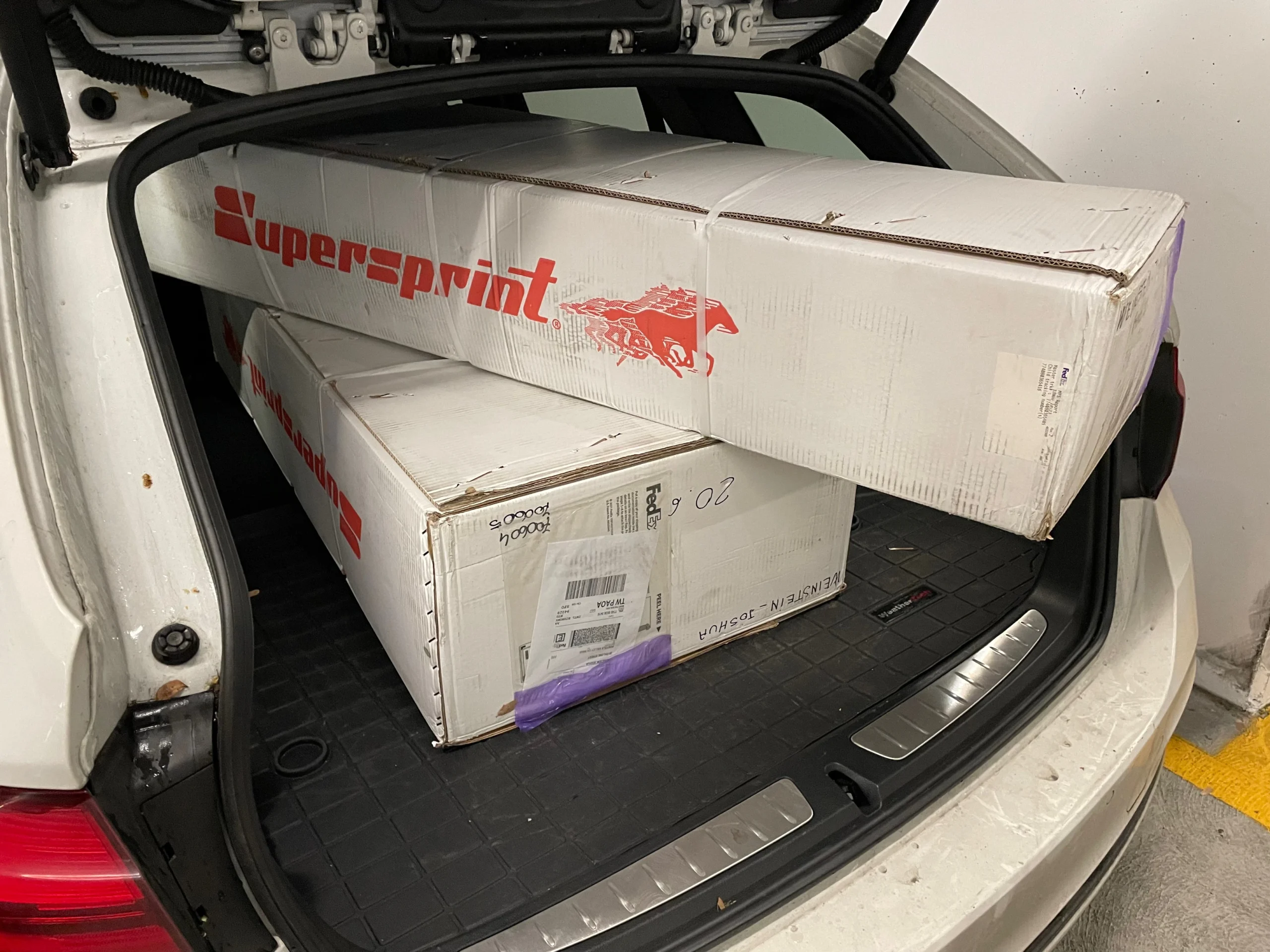
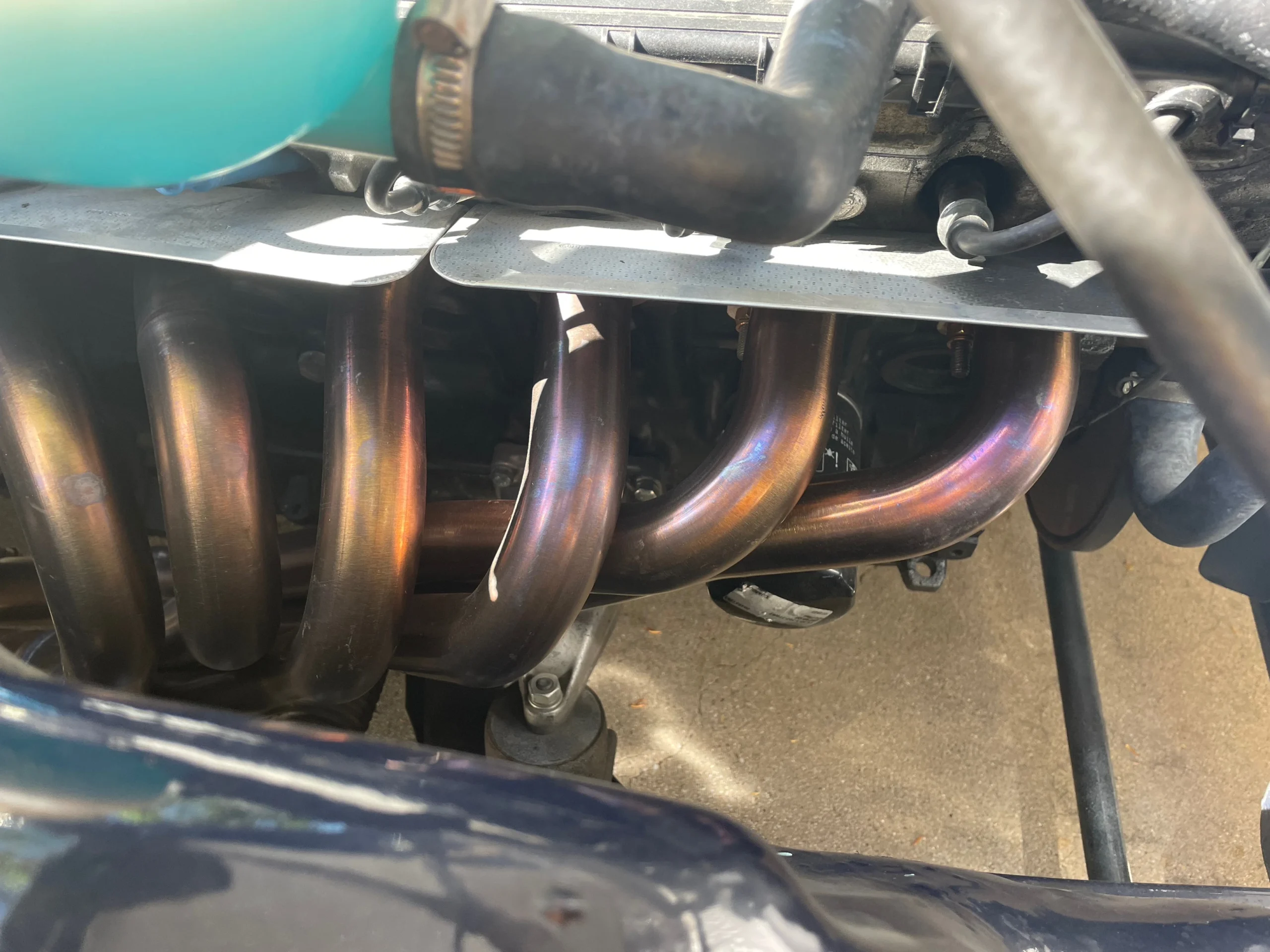
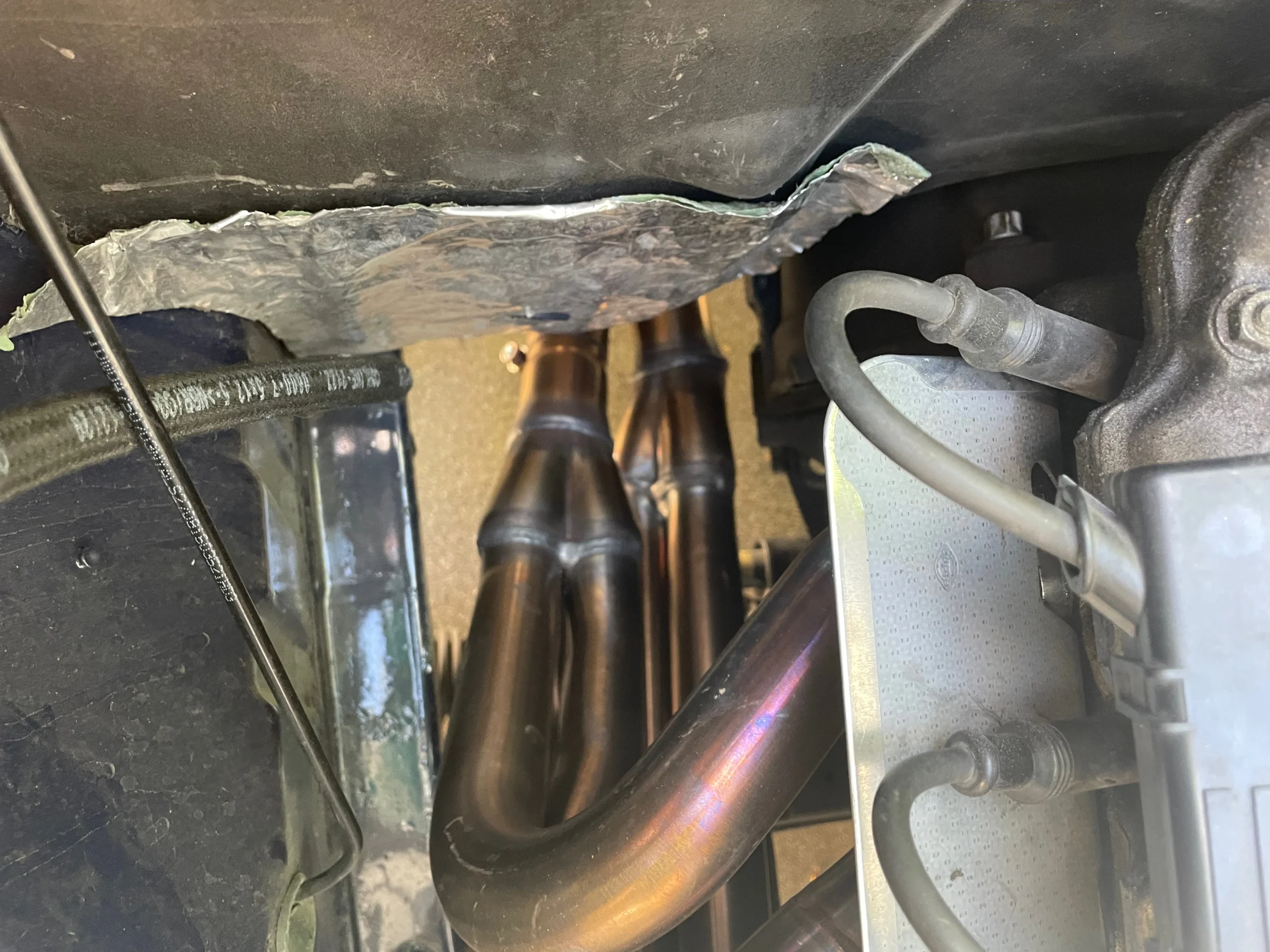
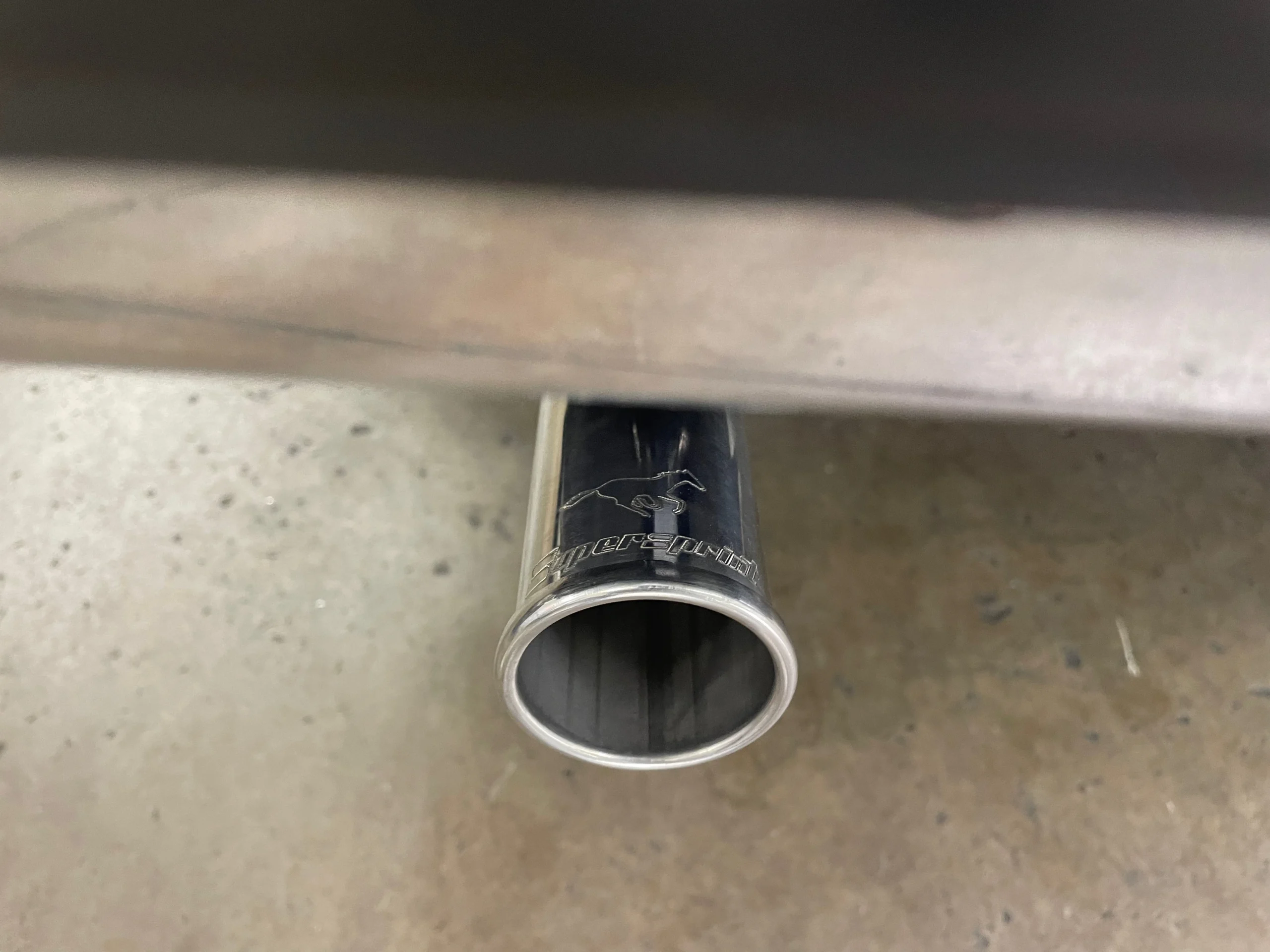
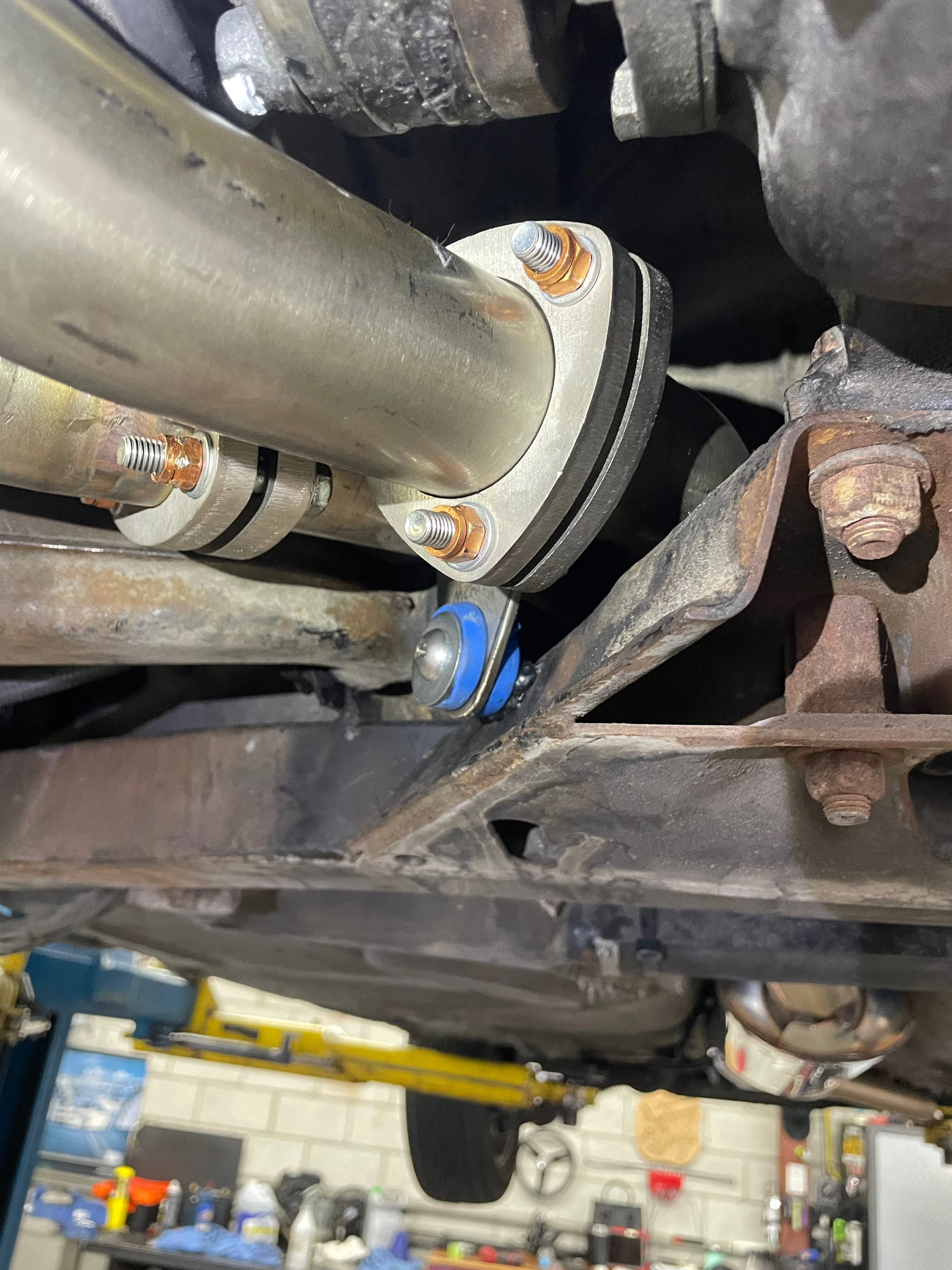
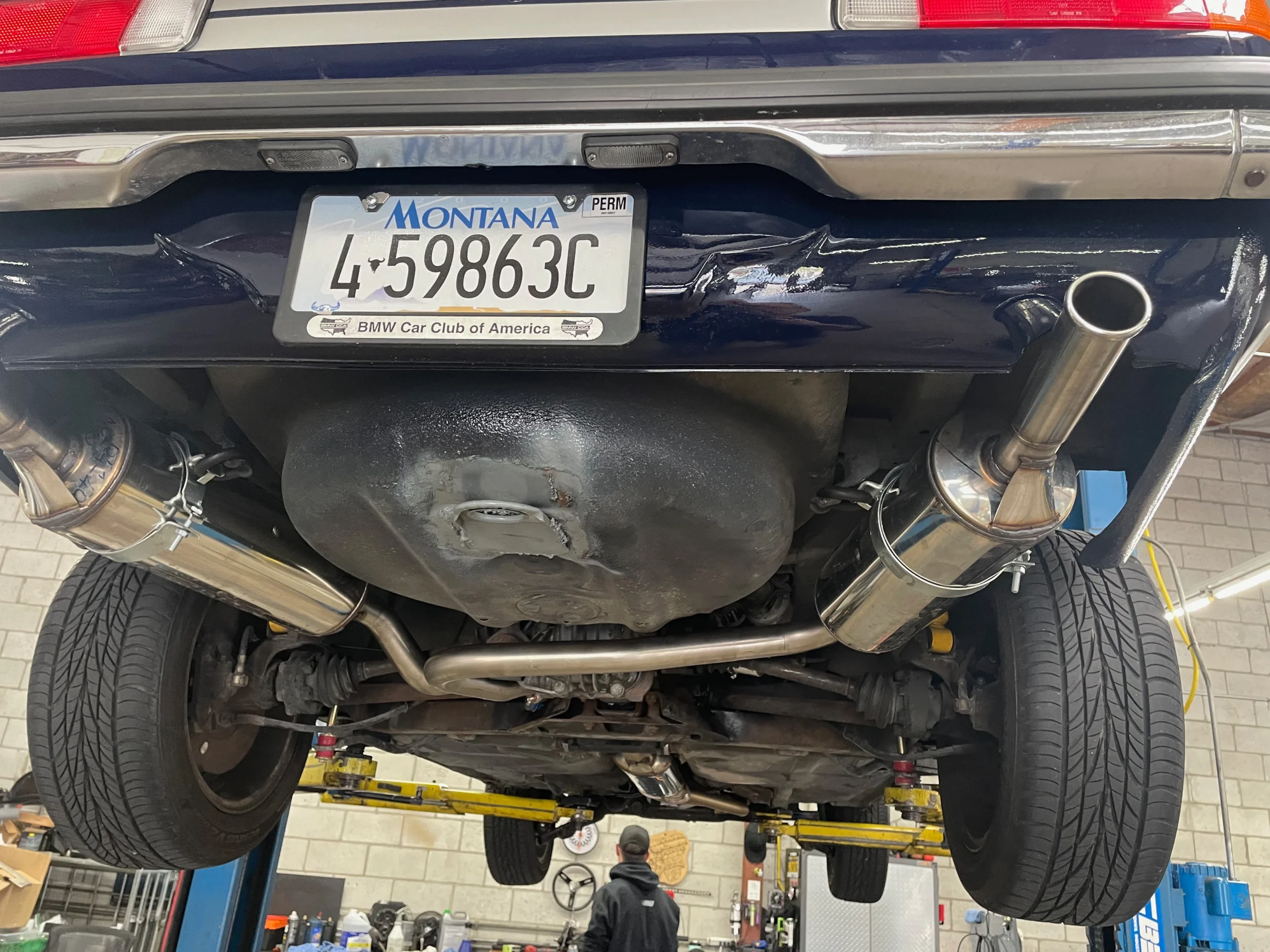
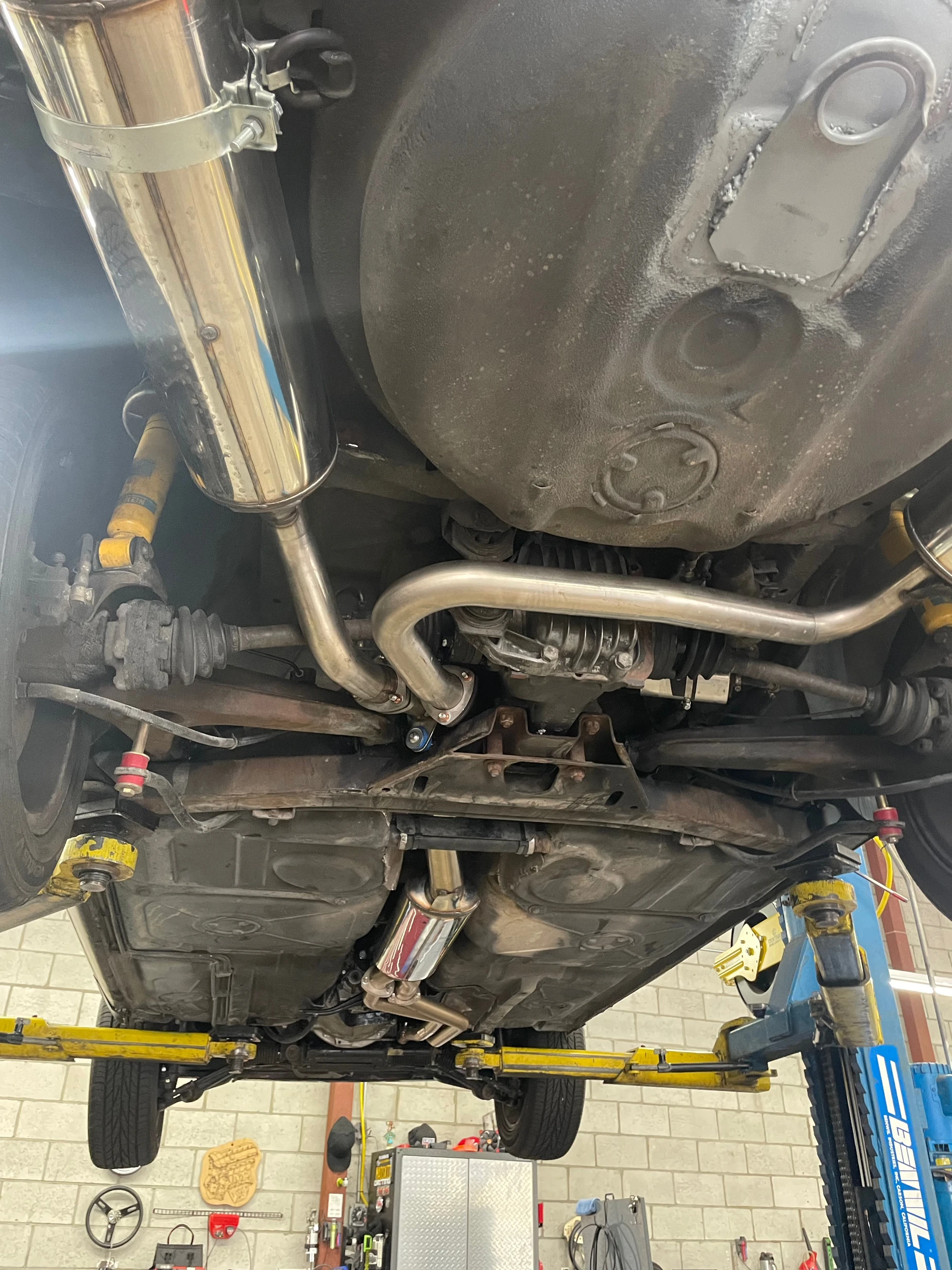
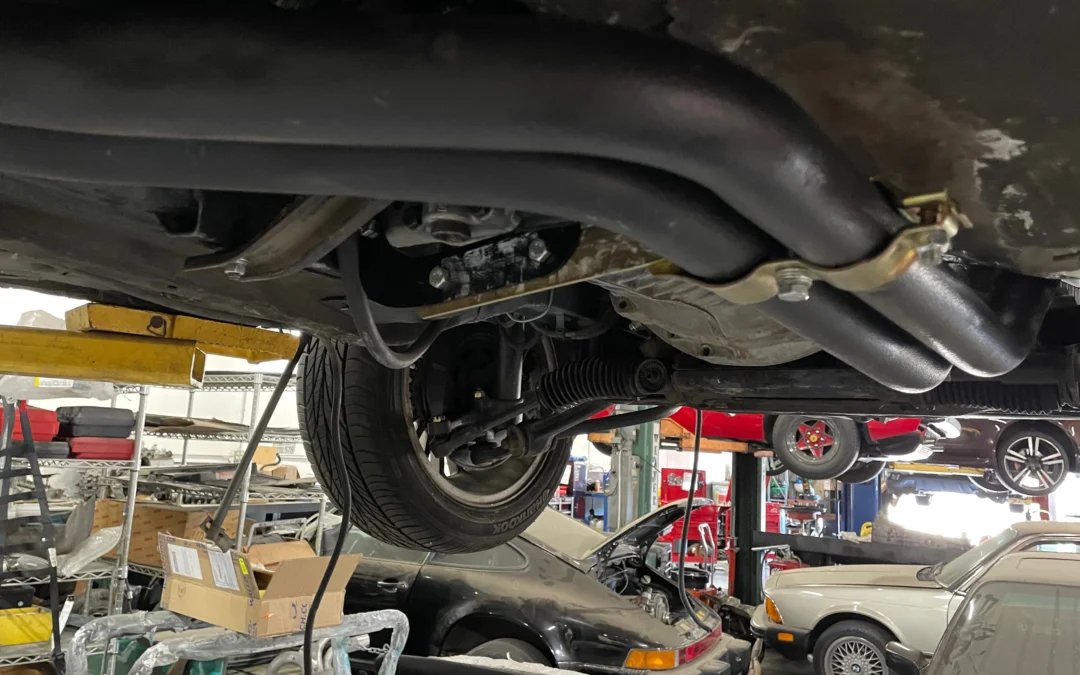
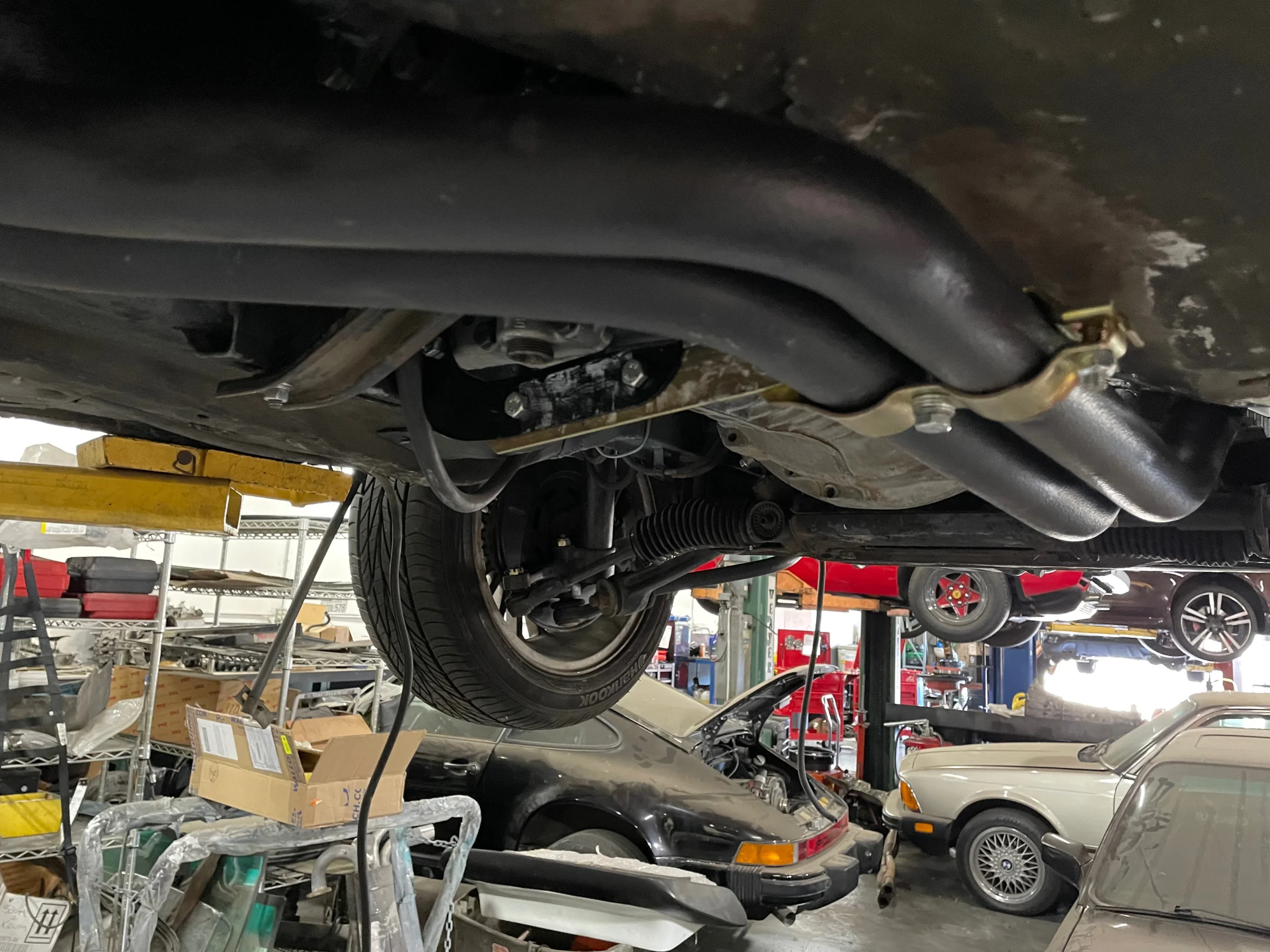
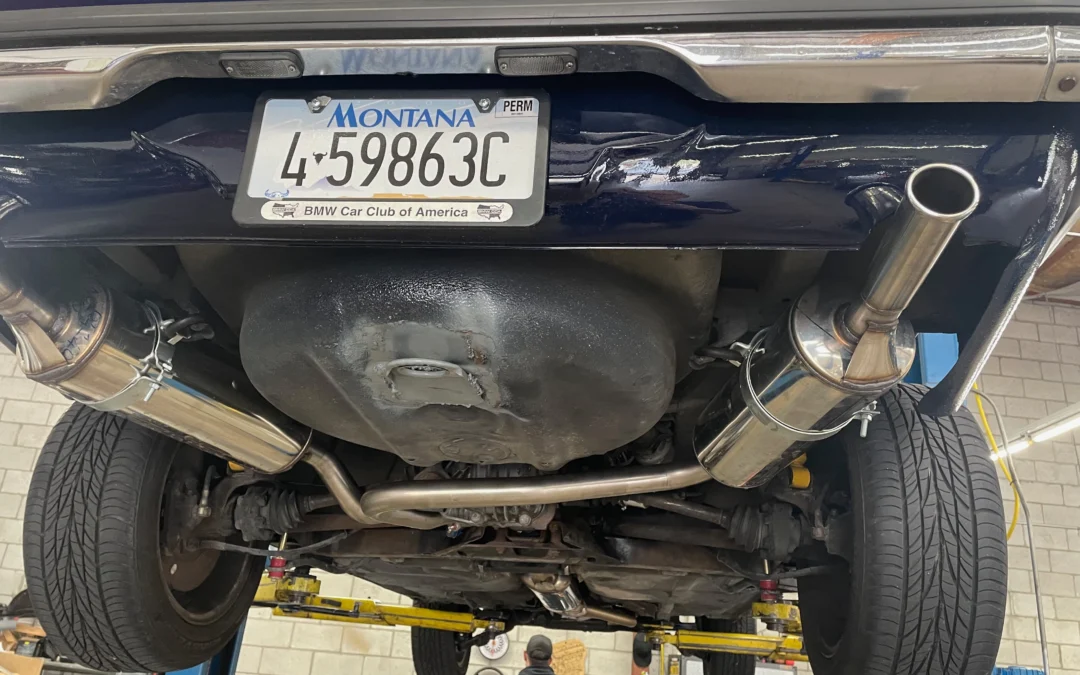
The next act of re-plowing fields was done by North Bay Bavarian; they install a new exhaust and headers. The car had a decent set of headers and an Anza or Supersprint exhaust that looked very aftermarket. Neither had large enough tubes to flow the exhaust from the larger engine. I found Supersprint made a copy of the Hartge 323i RS exhaust and headers, which is a high-flow system and, short of a genuine Alpina exhaust (which I couldn’t find), this was the next best thing. They look and sound great and seemingly flow more than enough exhaust.

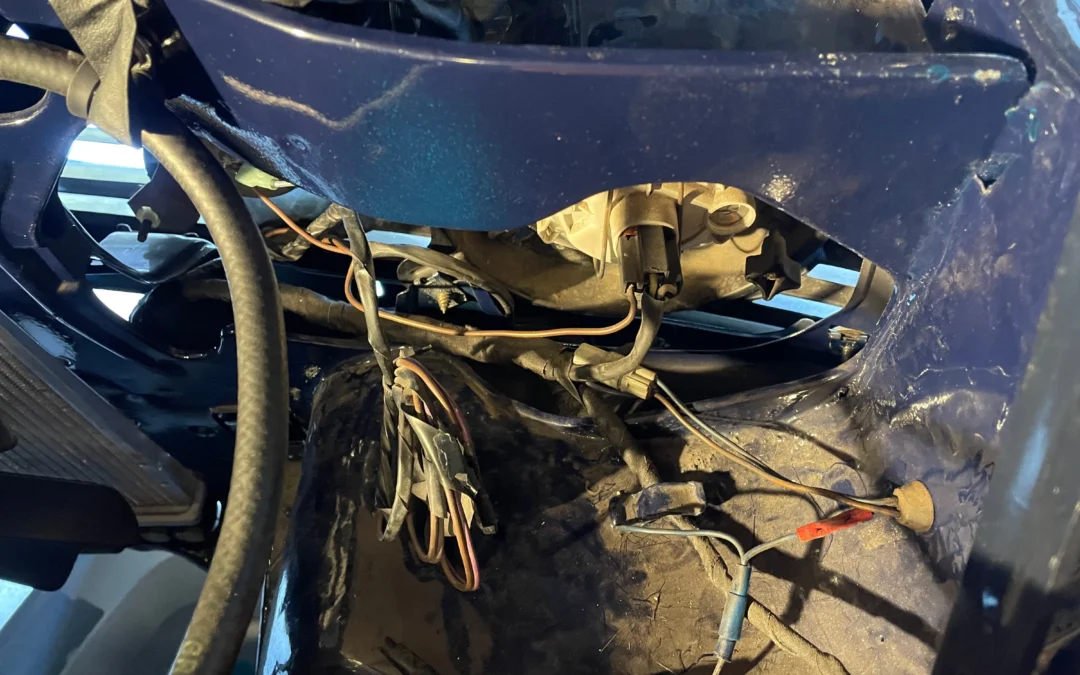
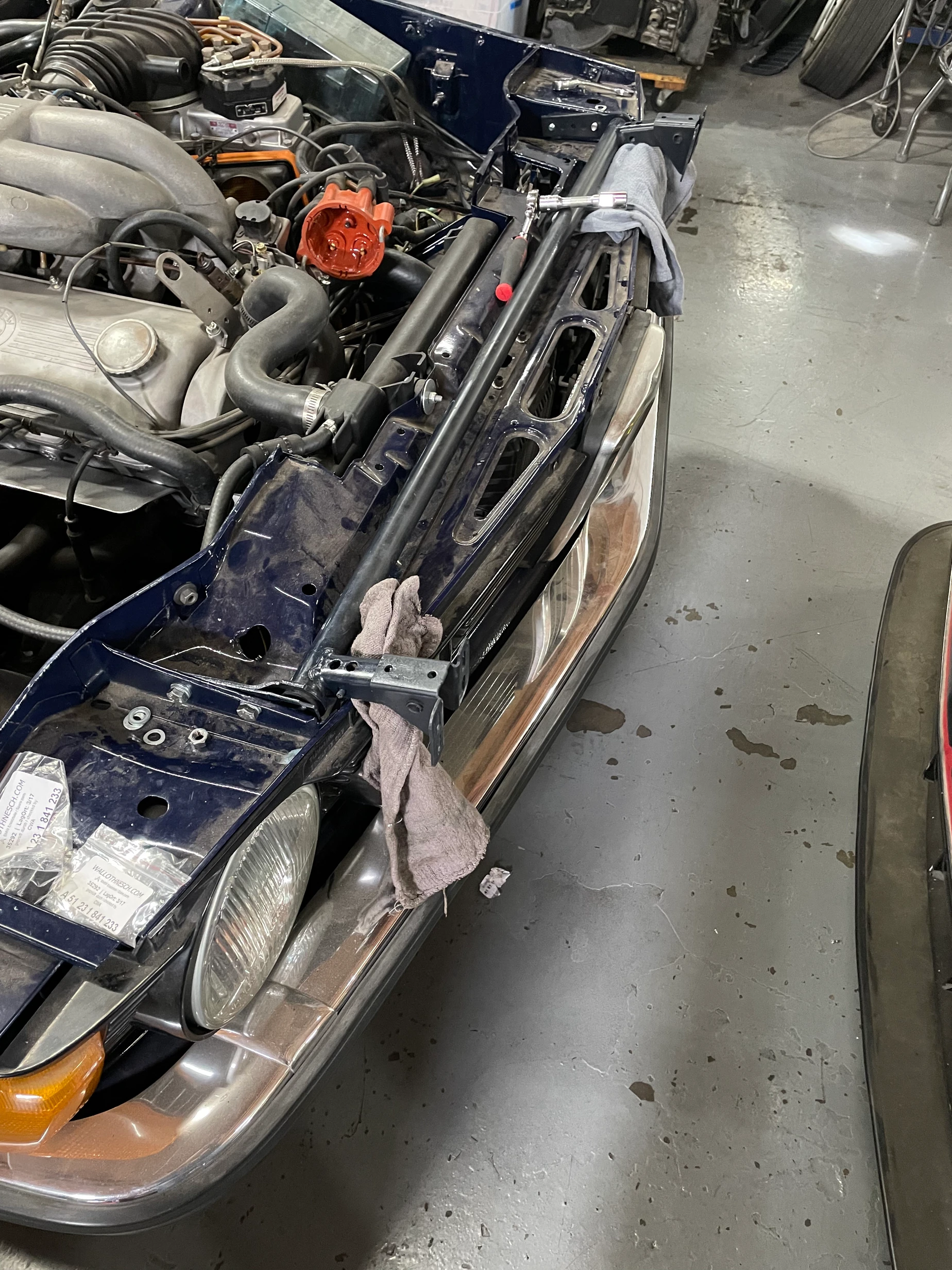
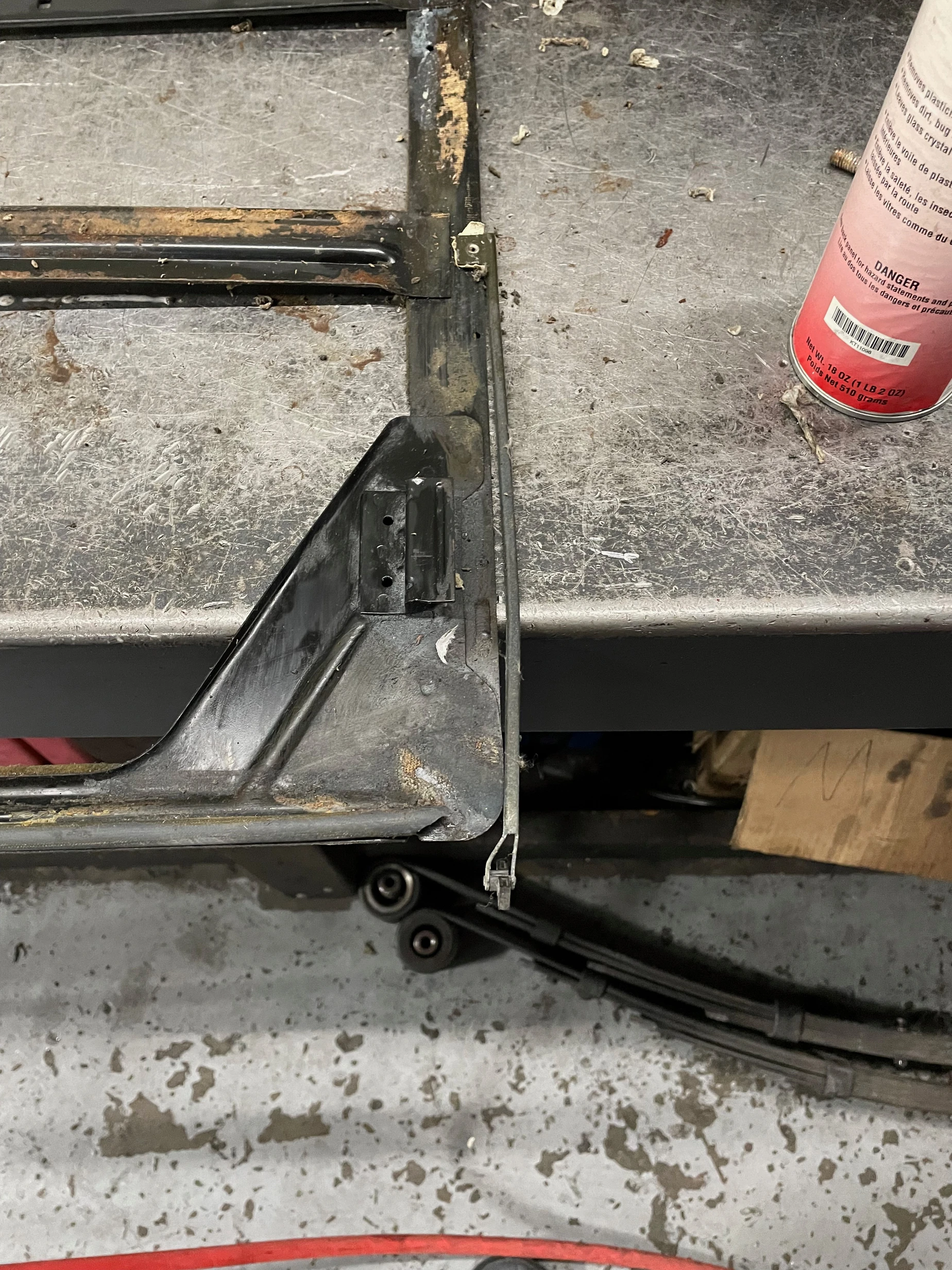
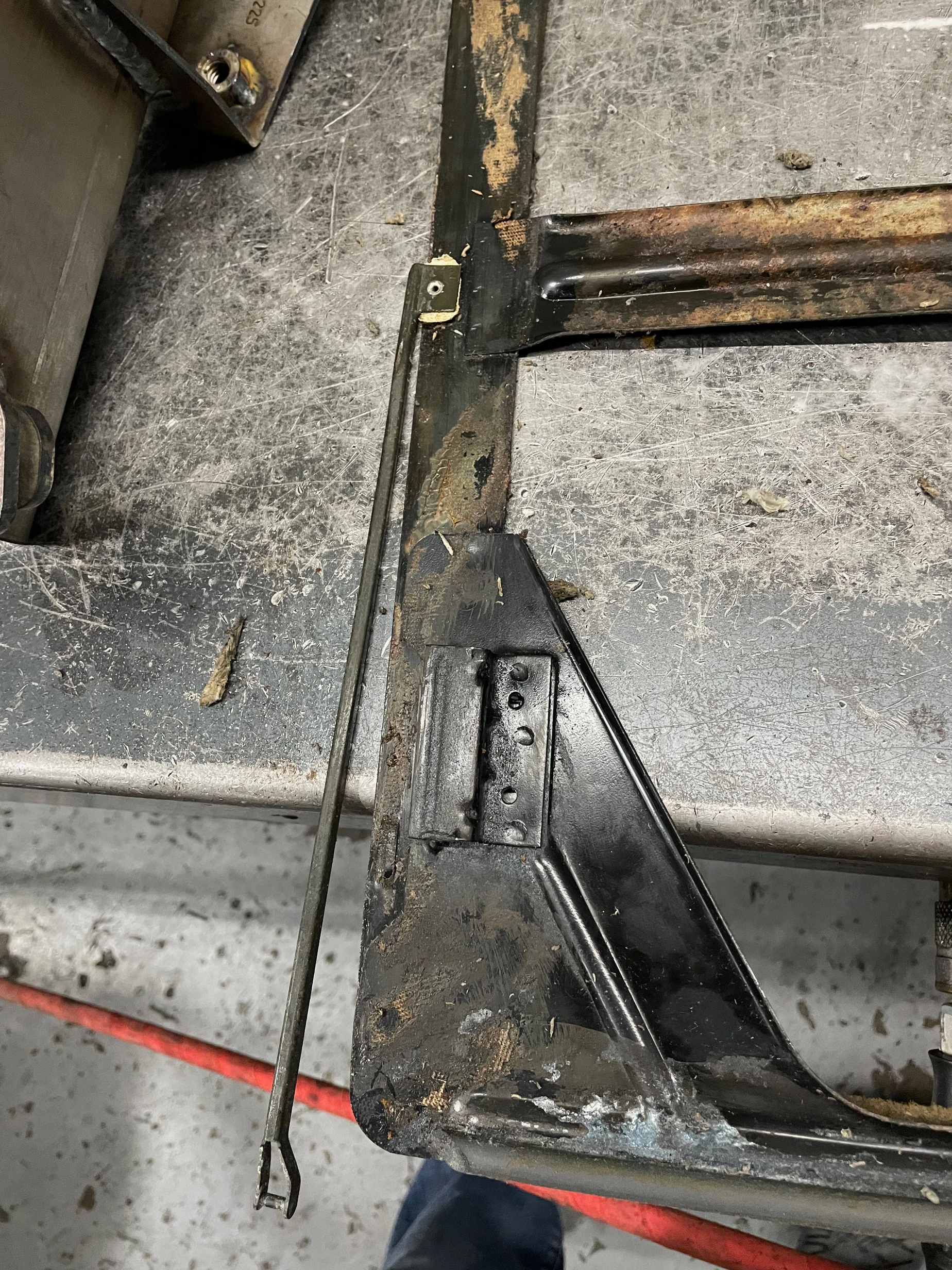
The last bit of redoing is in progress. The car is back at the auto body shop to correctly fix the rust that we ground out and covered up. While the prior repair was sufficient, it is ugly and there is a possibility that the rust will come back. The body shop will grind it all out and weld in new metal within the frame rail correctly. It will look factory and be fitting of what this car has morphed into.
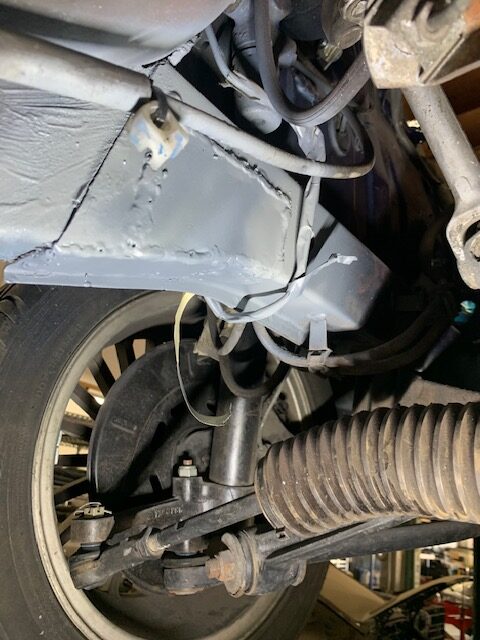
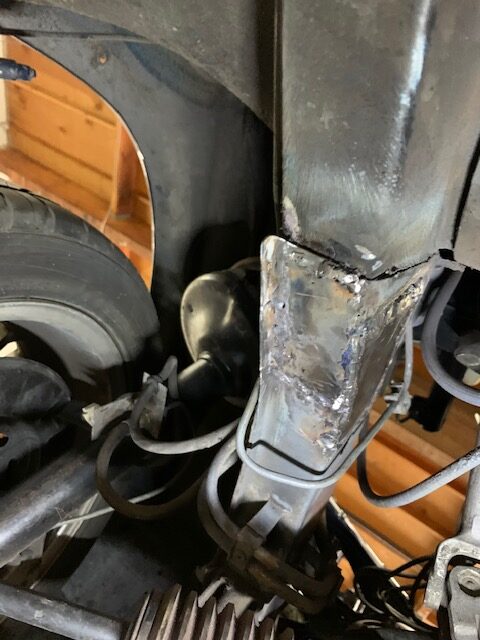
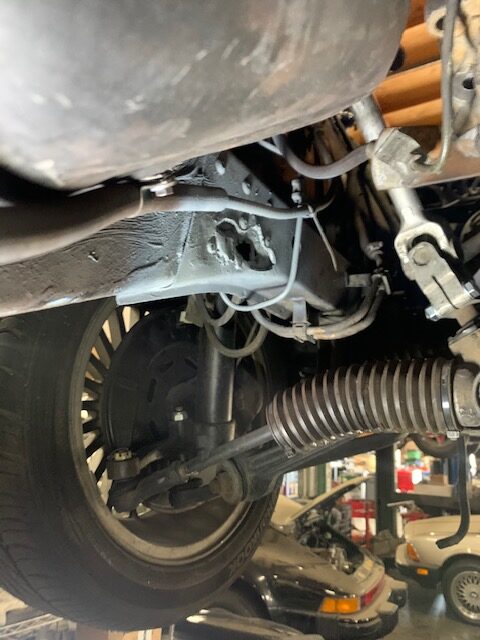
While in the body shop, the 3.22 Limited slip differential will be installed and a new (used) speedo gear in the transmission–so hopefully the speedometer will work. The new diff will lower the revs at freeway speeds and make the drive down to Monterey a bit more pleasant.
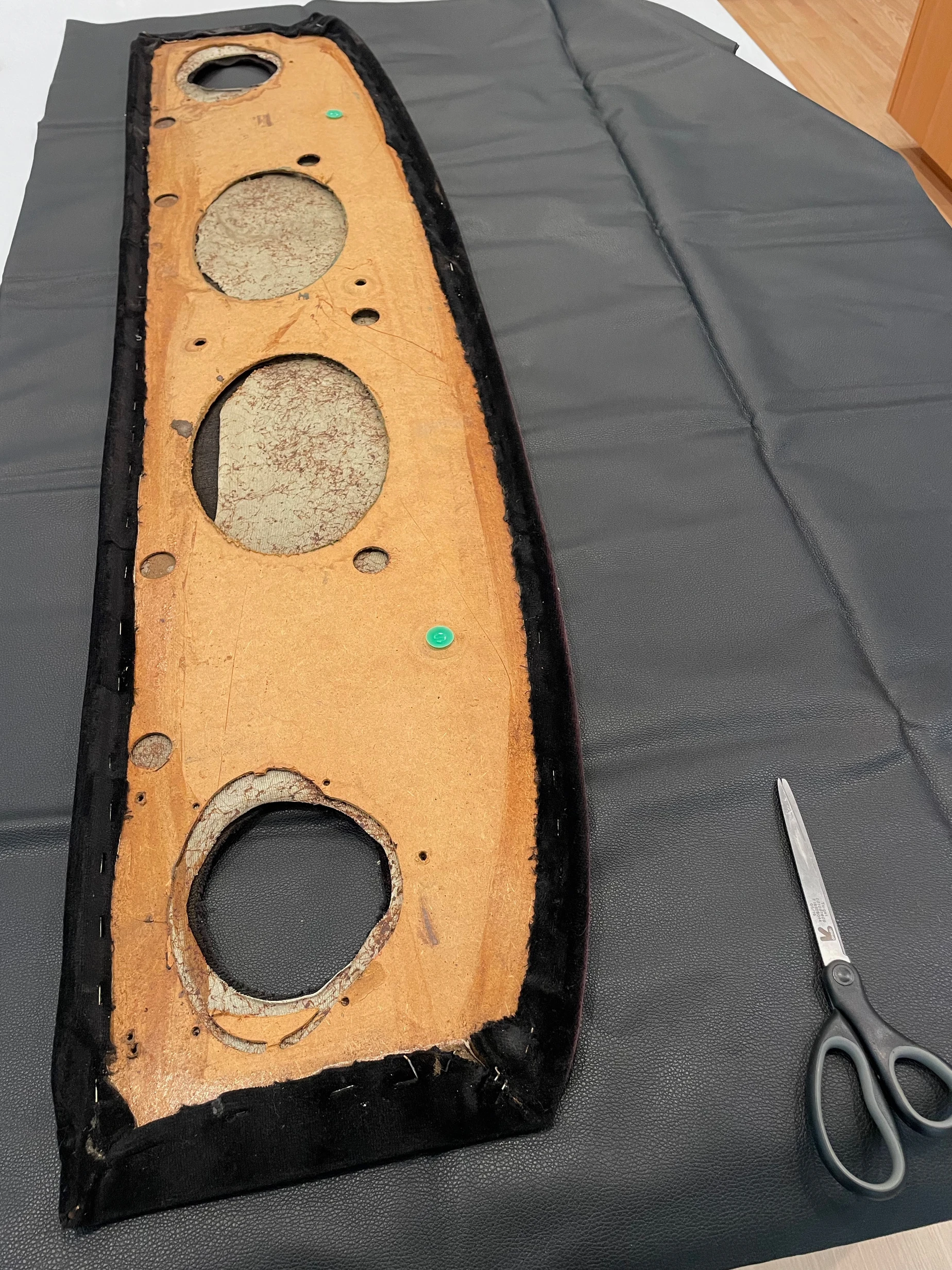
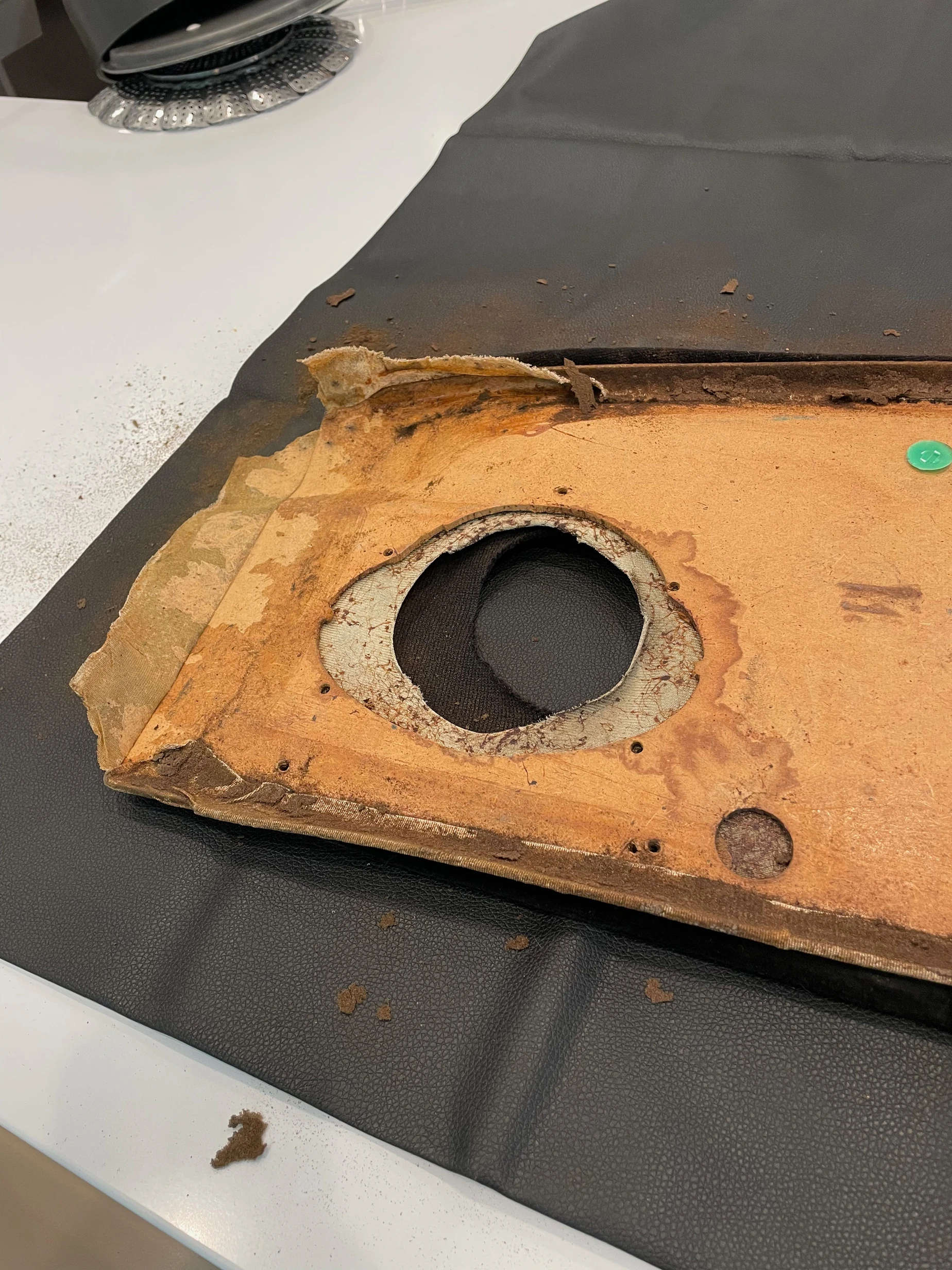
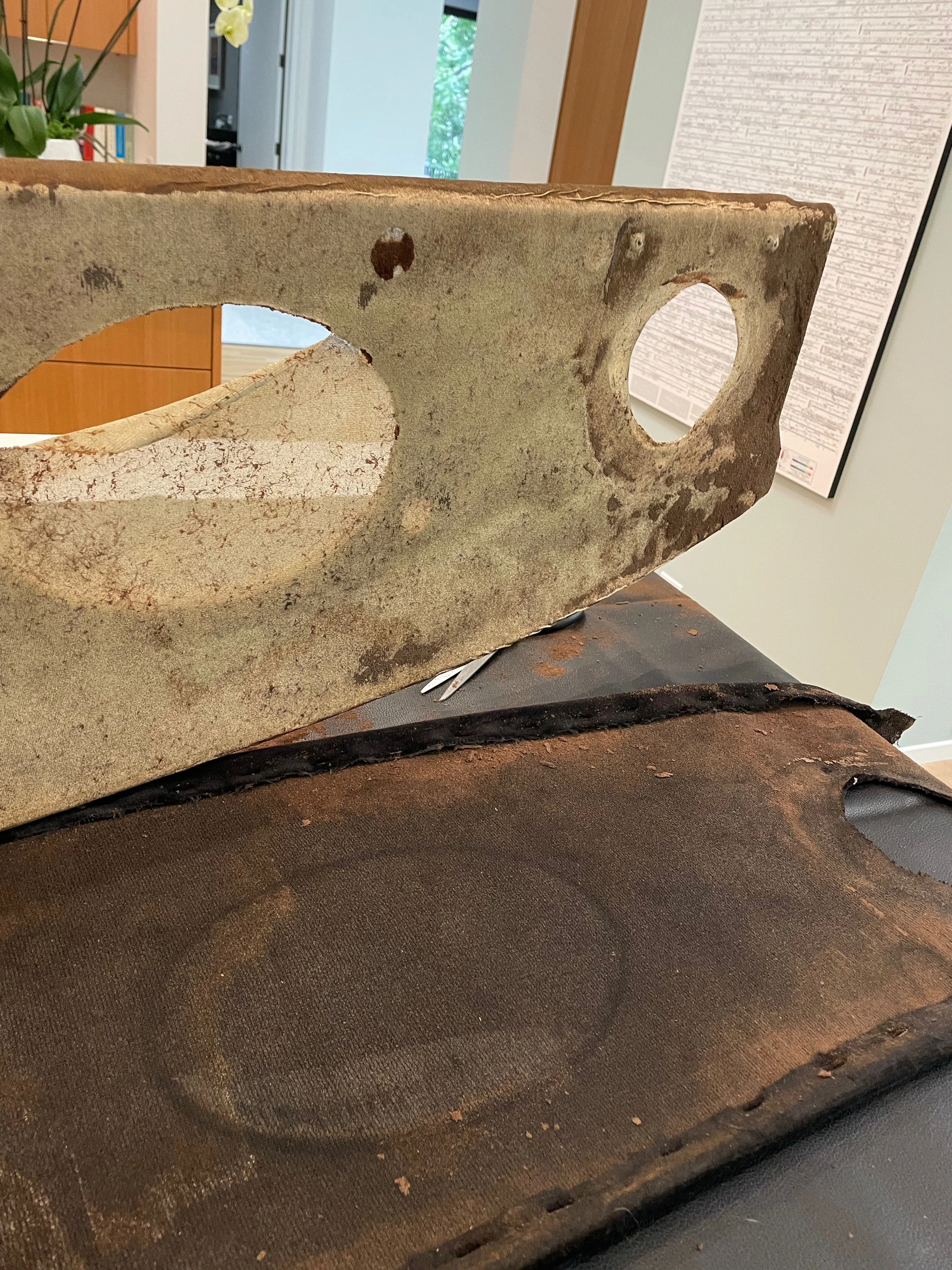
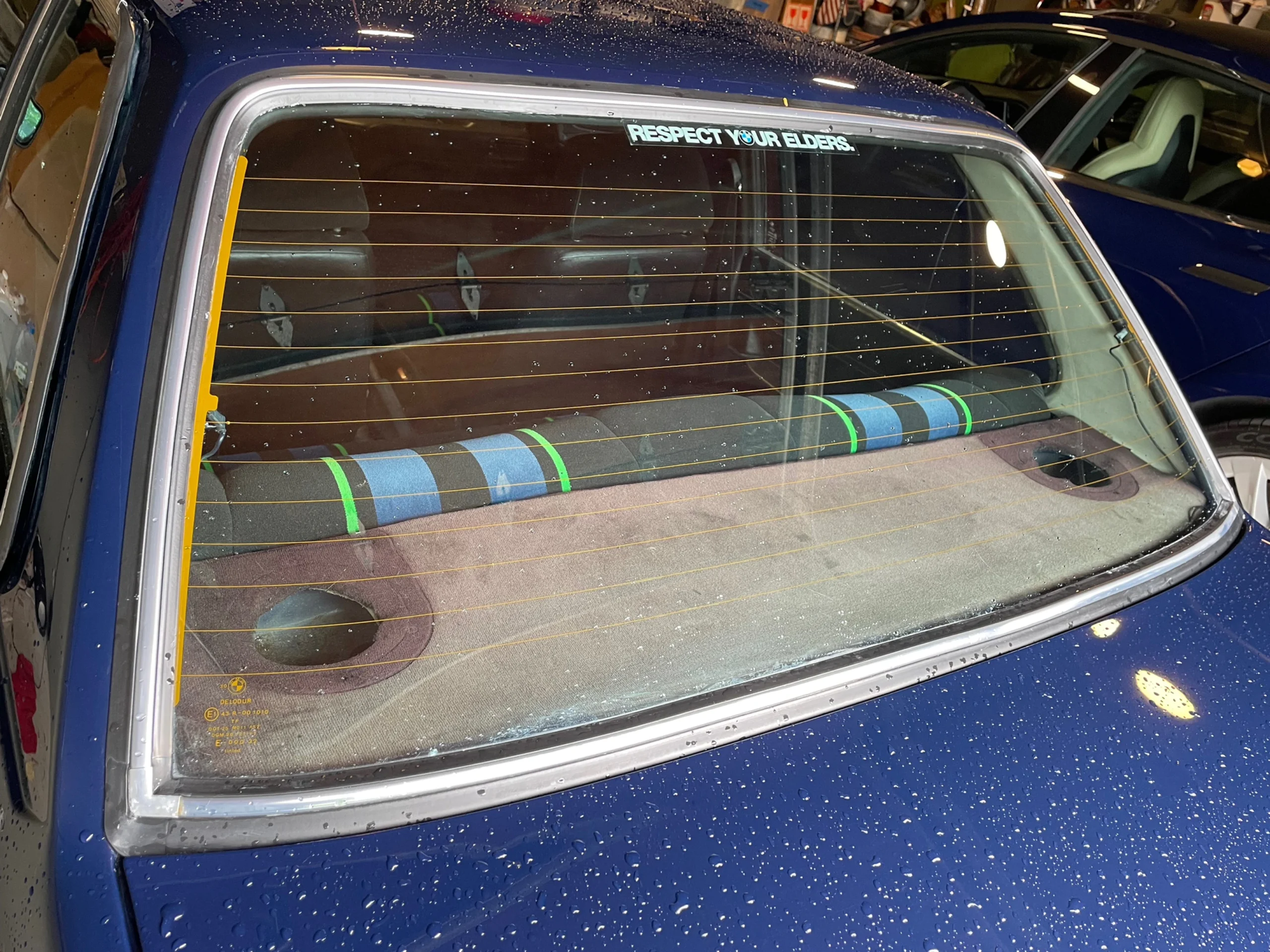
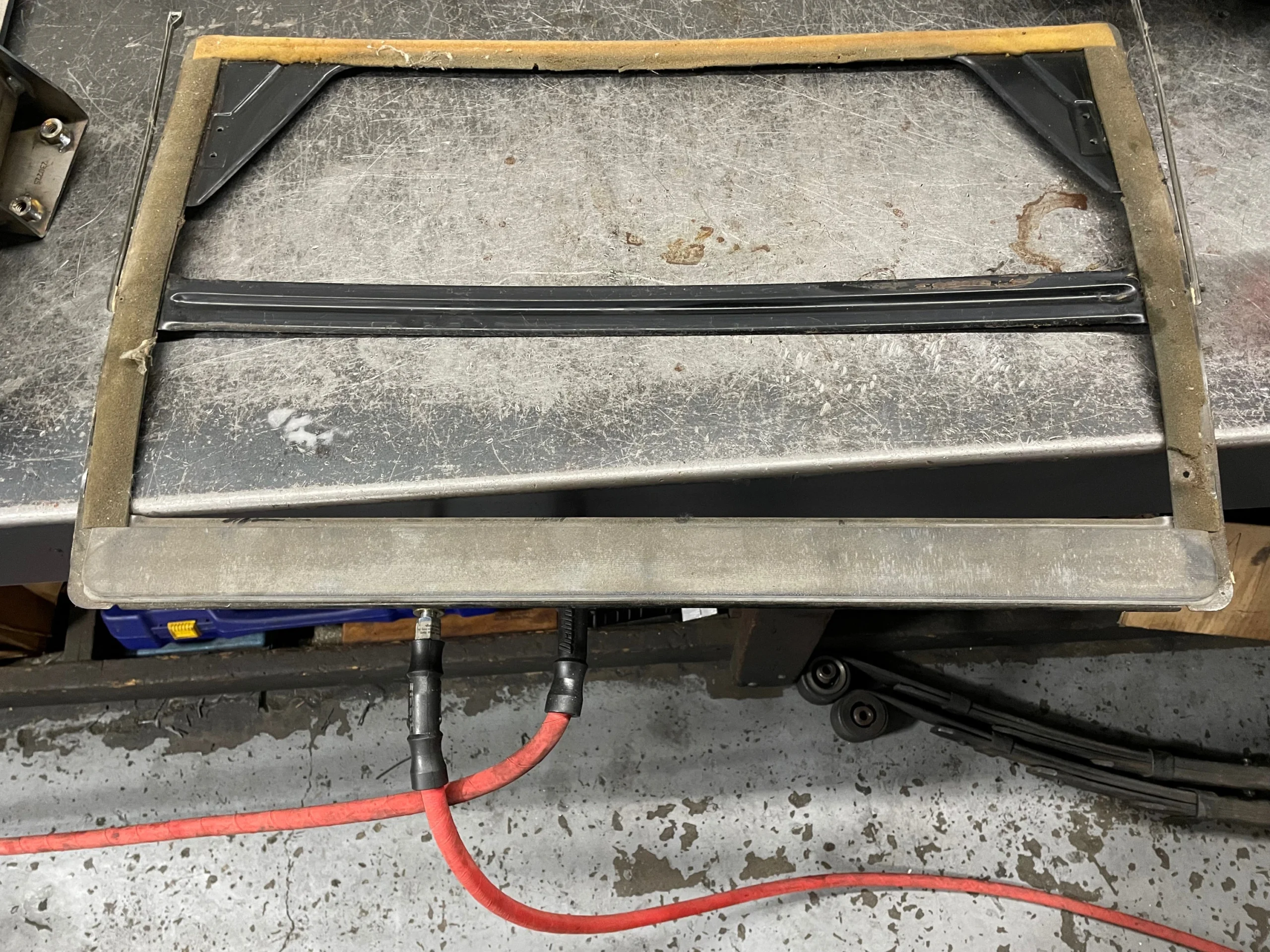
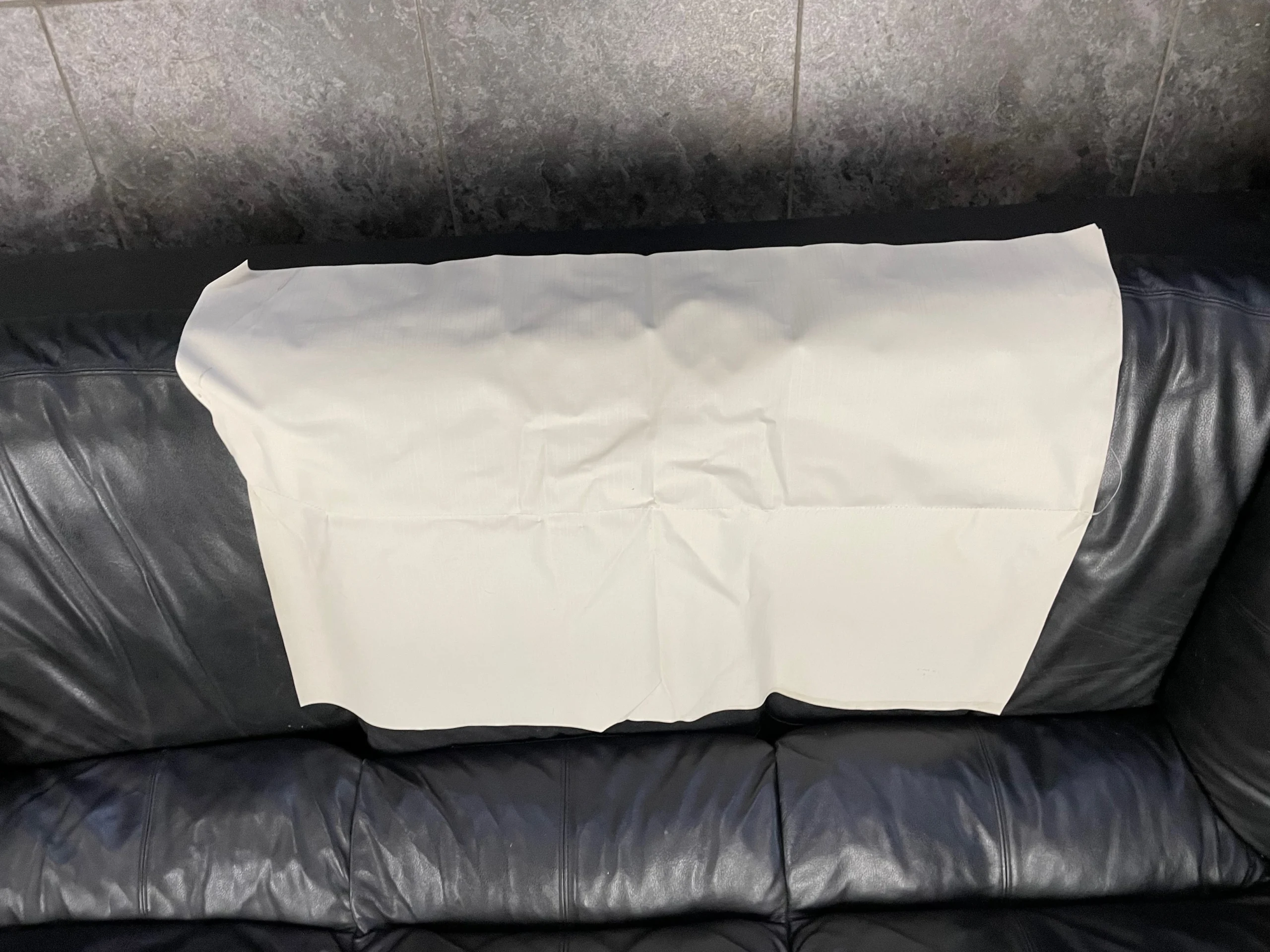
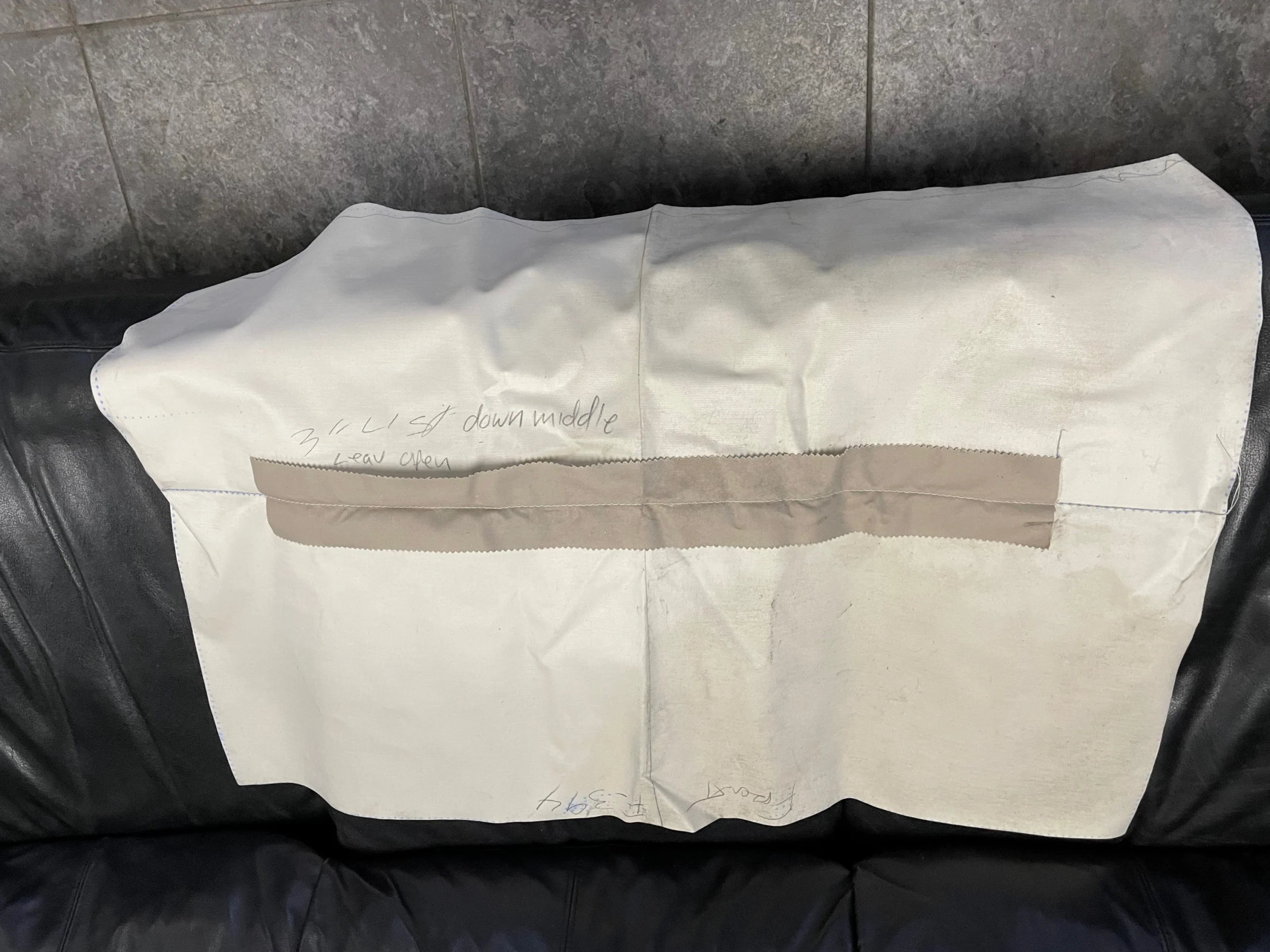
Also making the drive more pleasant will be a couple of frivolities I spent the last few weeks getting done: I installed a stereo and speakers and even replaced the ugly faded carpet on the rear hat shelf with some nice black vinyl.

It’s about a month until Legends of the Autobahn 2024 and, of course, I’m planning on going. Partly because it will be my last, most likely (we’re moving to the east coast and the car will be too far away from Monterey). But mainly to join the Alpina Corral again. This time the car should be even more fun to drive there but it still won’t have air conditioning—a luxury I keep vacillating on whether to (re)install…..


Do you know the way to …. Monterey?

Do you know the way to …. Monterey?

August 19, 2023

Six months ago in our last episode of this (seemingly) never-ending restoration, an important and emotionally pleasing milestone was passed: the car was running! The shop that got it started had a punchlist of work I wanted done, mostly road-worthy items (get it running, brakes working right, etc.) and some items that were vexing me, too. Like the heater ducting I couldn’t get installed, hooking up the heater control panel, and installing the finned differential cover.

I didn’t like calling them regularly because I didn’t want to be *that* guy and I knew I was lucky to find a competent shop that was willing to work on a vintage car on my time table: getting it ready in time for the 2023 Legends of the Autobahn, part of Monterey’s car week held every August. So, I’d drop by the shop when I was nearby—about once every week or two—just to check on the progress. When I wasn’t stopping by, it was pretty much radio-silence. I could live with that. The three weeks they said they needed to work on the car grew, which wasn’t really unexpected. And that, too, I could live with. We had a good amount of time until August.

Then, one random day I got a call from the body shop that was the next scheduled stop. The car had arrived. I’ll admit I would have preferred to have gotten a heads-up from the mechanics that they were done with the car. And I didn’t love it when I got to the body shop and saw that a few of the punchlist items weren’t done. But most importantly, the car apparently was running well enough and the heater ducting was in, although the control panel wasn’t. You get what you get and, again, I was lucky to find a competent shop that was going to help get it back on the road. Granted it was a drive of all of two blocks from one shop to the other, but I was very excited that the car was (at least semi?) roadworthy!

A punchlist was also provided to the new body shop, The Works in Santa Clara. Top of the list was to color sand the paint thus “finishing” the paint job that started six years ago. (Recall, the car went to my friend’s body shop in Sacramento for paint in 2017 and halfway through the job that body shop closed. I spend much of the early pandemic driving up to Sacramento reassembling the car from the semi-competed painted job.) The Works was hesitant to color sand paint applied by a different shop and there were several areas that they would have done differently; most of their concern was not knowing how thick the paint was and whether they’d burn through to primer while color sanding. But they took the job as long as I understood the risks. Among the more pressing items on the punchlist: installing the heater control panel, the finned differential cover, the rear spoiler and the Alpina stripes (or Deko kit as Alpina calls it).

At this point, I have to apologize: I try to include a lot of images of the progress because as much fun as it is writing (and reading) about the steps taken, pictures are the best was to chronicle the project. But because the car was in other’s folks hands, there are no before and after images of these important milestones. Alas.

When I got a call from The Works to tell me they were almost finished, I stopped by and saw the car. The color sanding was great I think and, even though there were a few spots where they burnt through the paint, they are very small and something only I would worry about. The rear spoiler looked great but at first I was a tad disappointed by the stripes. Not that they didn’t look good, but there was about an inch overlap where they mated the various pieces together. Having never really looked at the stripes closely on my or other Alpinas before, I wondered how the pieces were mated together. (When I got to Legends and saw the other Alpinas there, I realized mine was better than most so the disappointment dissipated.) Also, the heater control panel and finned differential cover were not installed. But, all in all, the progress was amazing and I was very pleased.

Still, I had not driven the car and I was unsure how dialed-in it was. So, I asked if I could take it up and down the block before they finished the few things left and washed it up. Of course they said yes and, although it needed some work—the idle was too low and the steering wheel off kilter—it ran well and seemed like it would make the drive home in a few days. This drive, as short as it was, was the first time in six years that I was behind the wheel in this beast!

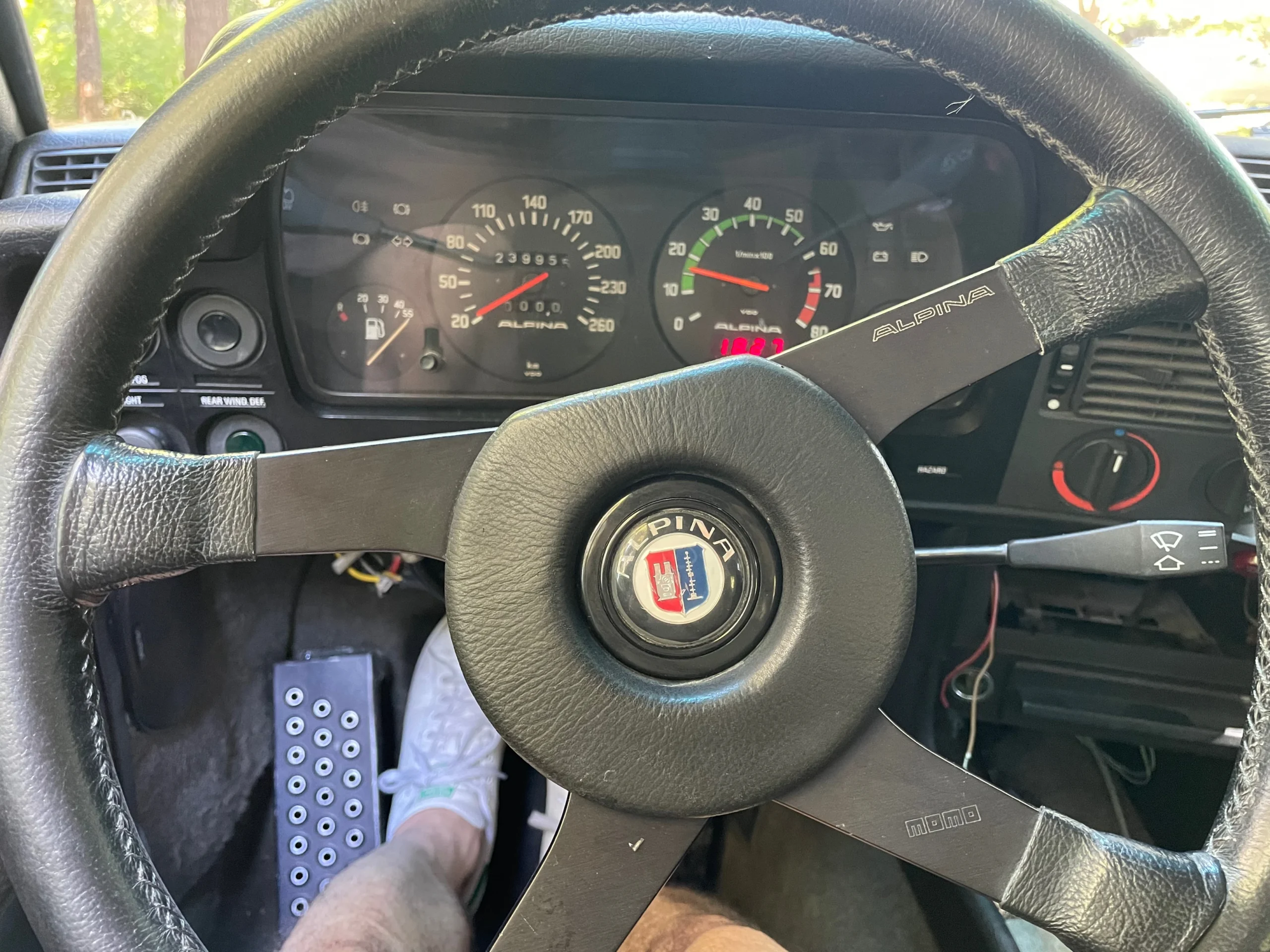
The next week, I picked up the car. The idle had been adjusted, the car washed and exterior detailed. I noticed the gas gauge read full and I was impressed the tank had been filled. Once I hit the road I saw the speedometer was not working and the gas gauge bounced between full and empty when the turn signal was on; for the latter, I suspected the fuel sender or turn signal wiring was grounding out. I stopped for gas on the way home and she drank up 12-plus gallons. So much for a reliable gas gauge and full tank!

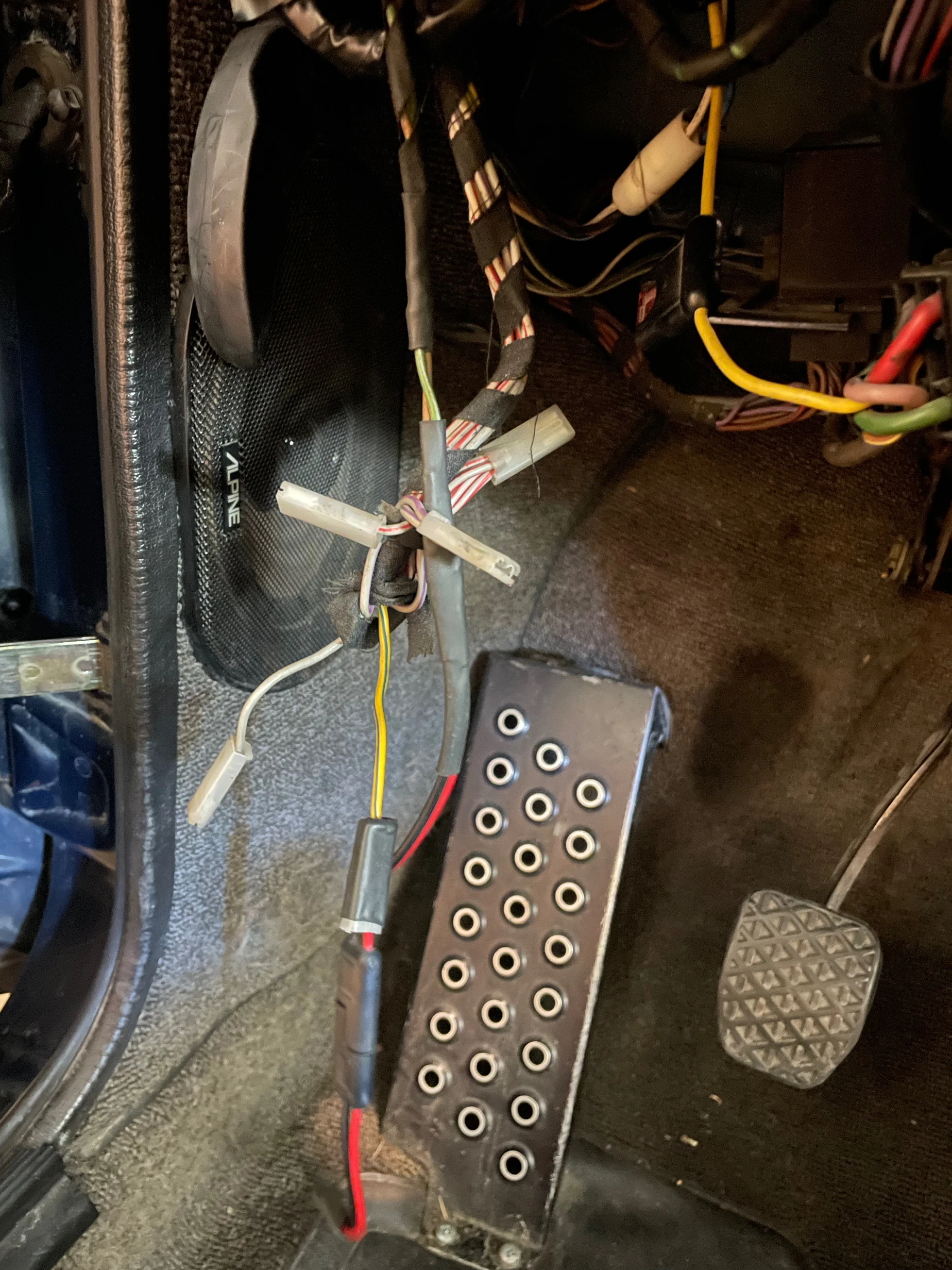
Once at home, I put in the heater control panel (not hooked up, but at least there’s not a big hole in the middle of the dash!), tried to run down the short grounding out the gas gauge (no success), swapped in my extra speedo to see if that cured the problem (it didn’t; likely the speedo cable or the fitting at the transmission), cleaned up wiring issues under the dash, attended to many, many little details, and tried to straighten the off kilter steering wheel.
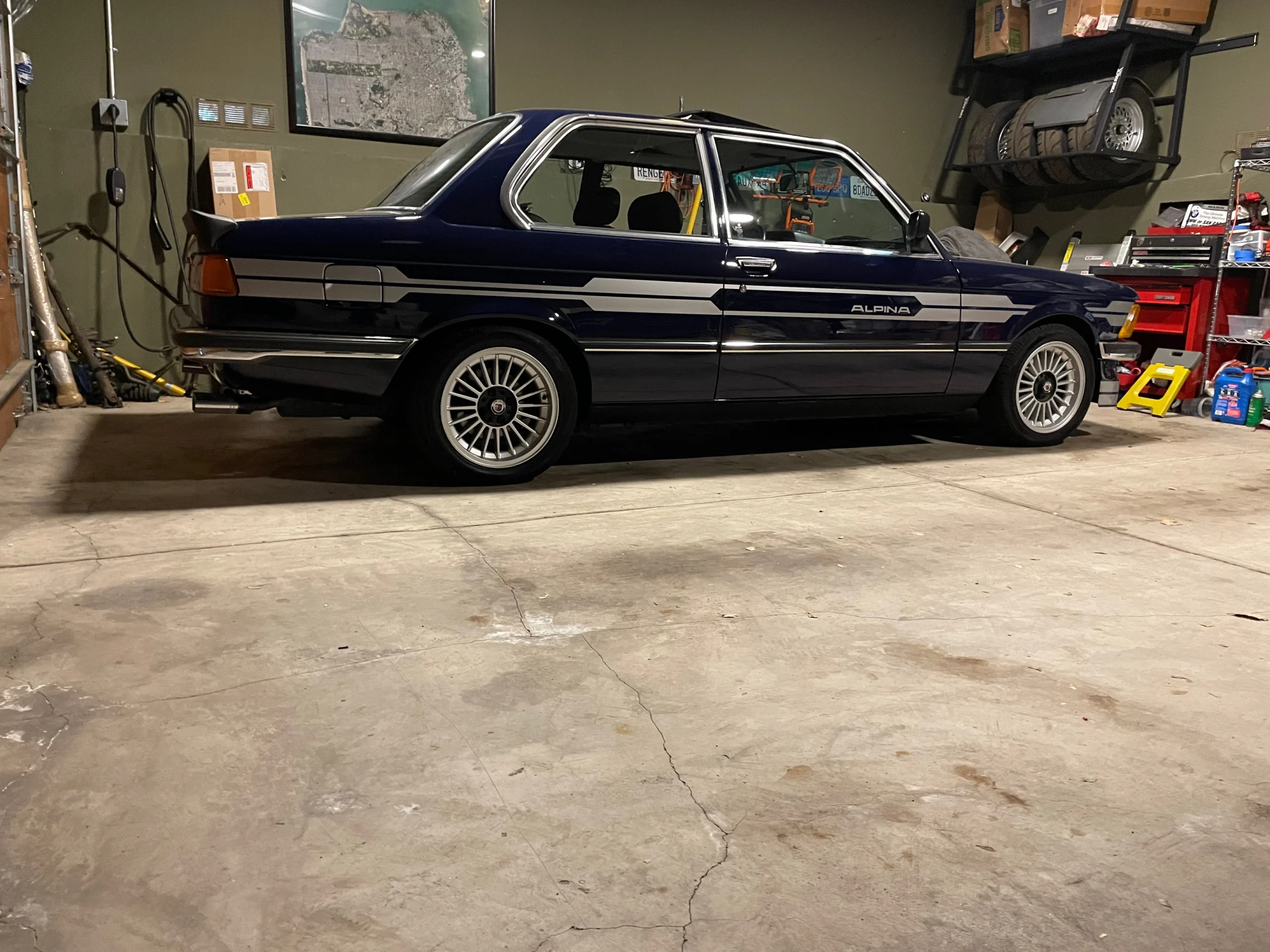
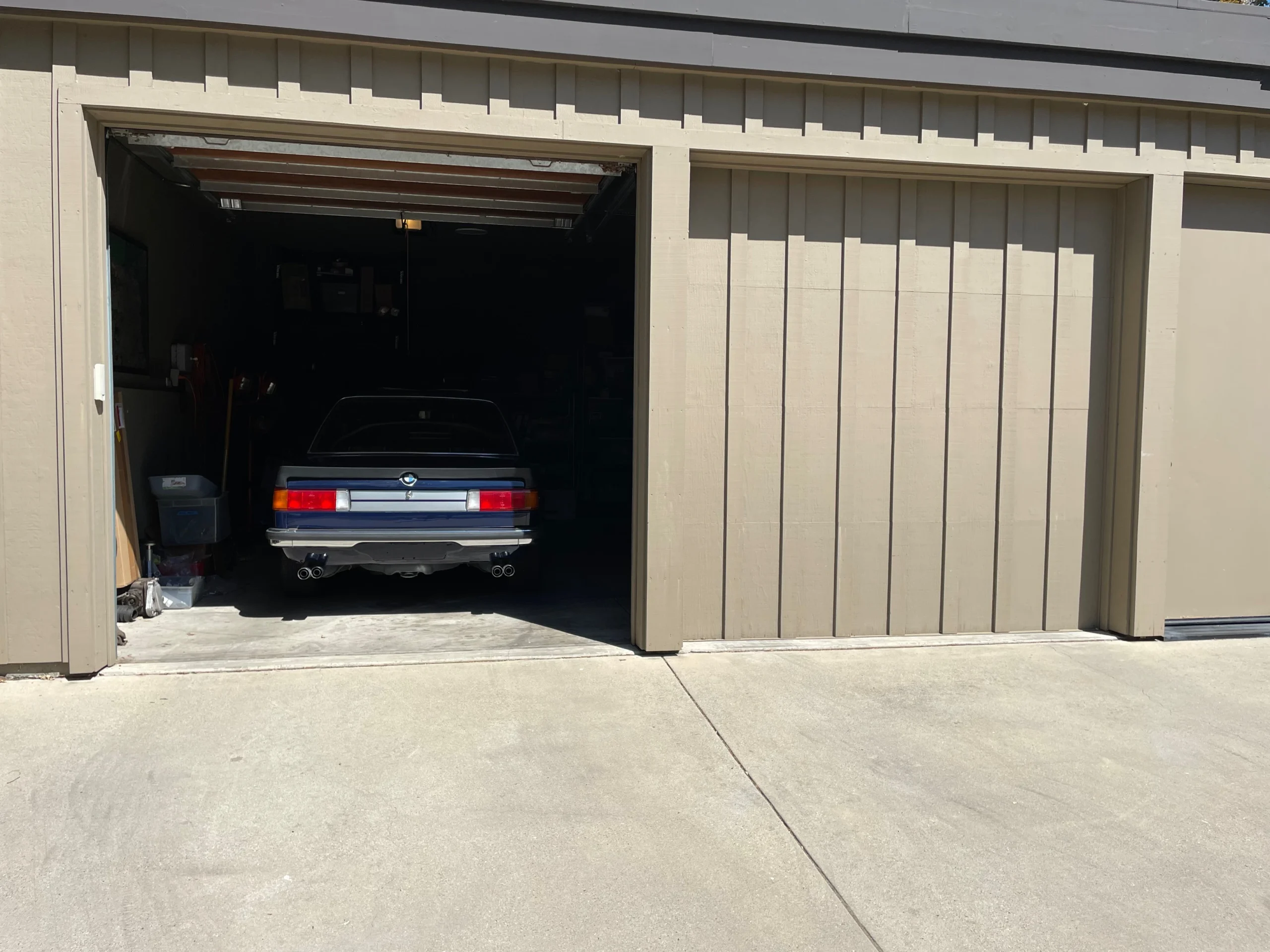
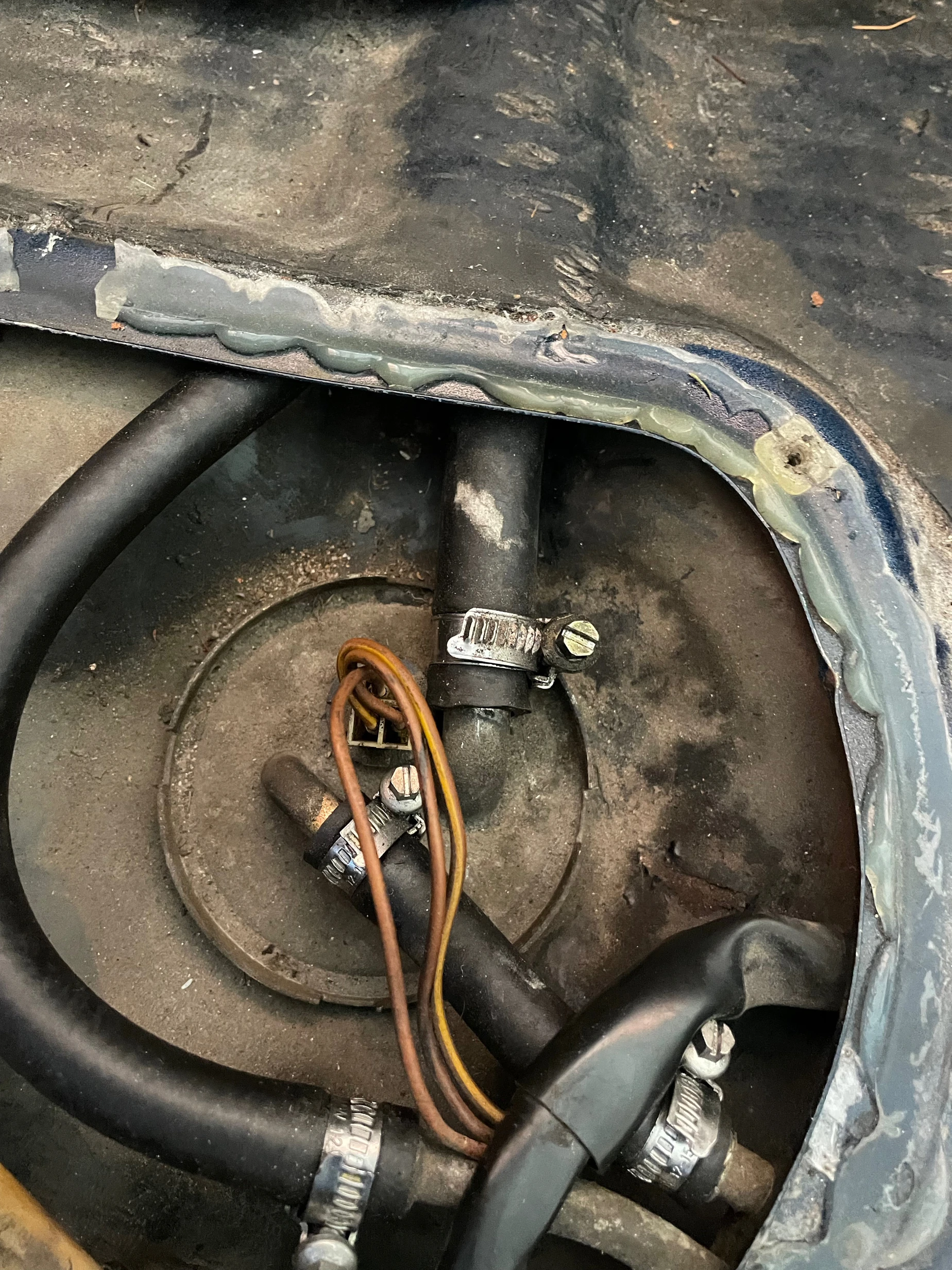
 

The last one proved more difficult than anticipated; every time I moved the wheel to the spot that seemed like it would be properly oriented, it needed more adjustment. Time was running out (I left for Monterey the next day at 2pm) when I admitted to myself it needed to get aligned. Luckily, when I called my local shop at 4:45 they squeezed me in after I explained when and where I was going. I dropped the car off and got the call the next day that it was ready at 1:30. They were able to take out a bunch of toe but the caster was slightly off on one side—it will get new control arms soon in hopes of remedying that issue. Nonetheless, the steering wheel was straight and the car tracked almost perfectly. We were off to Monterey….

Driving to Monterey—yes, I know the way!—was joyfully uneventful other than the Bay Area rush hour traffic (which seems to start at 3pm) and the heat. Judging from the slight smell of gas in the cabin, the car was running a bit rich; I had no fuel gauge or speedometer (thank you Waze for telling me my speed); and for the first half of the trip I regretted removing the air conditioning at the beginning of the project so many years ago. Because of the heat in the valley, I took the coastal route (slightly longer but the curvy roads are more fun, too); once over the Santa Cruz Mountains the heat dissipated and my dreams of a/c receded. Oh, and this car is FAST and fun. F. A. S. T.

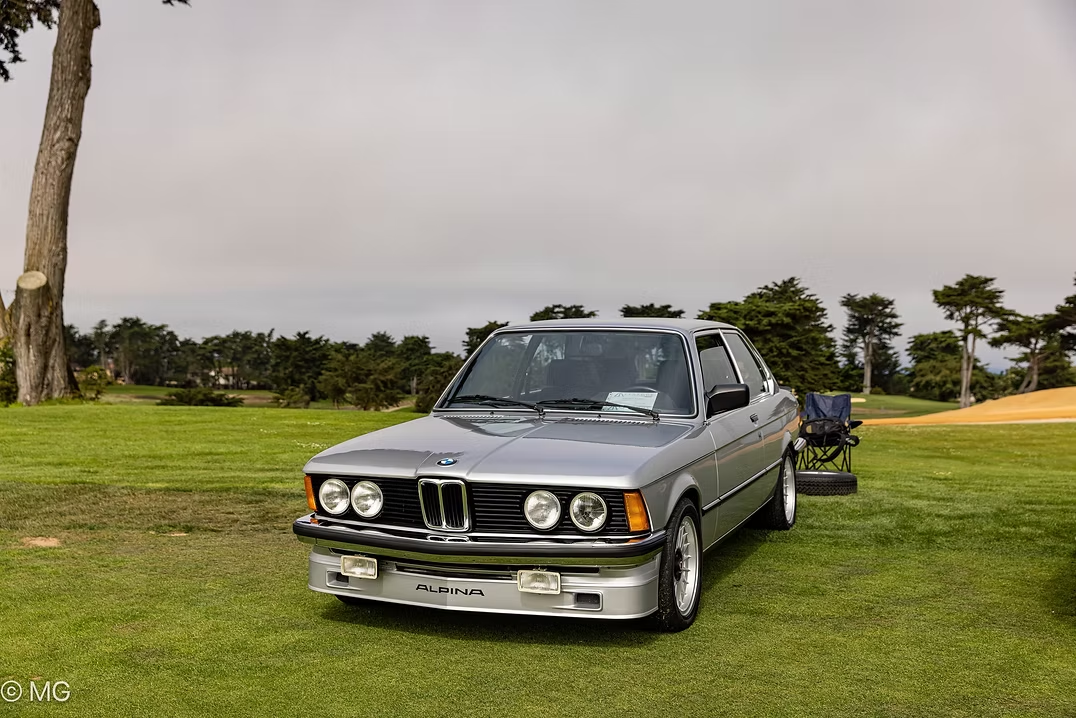
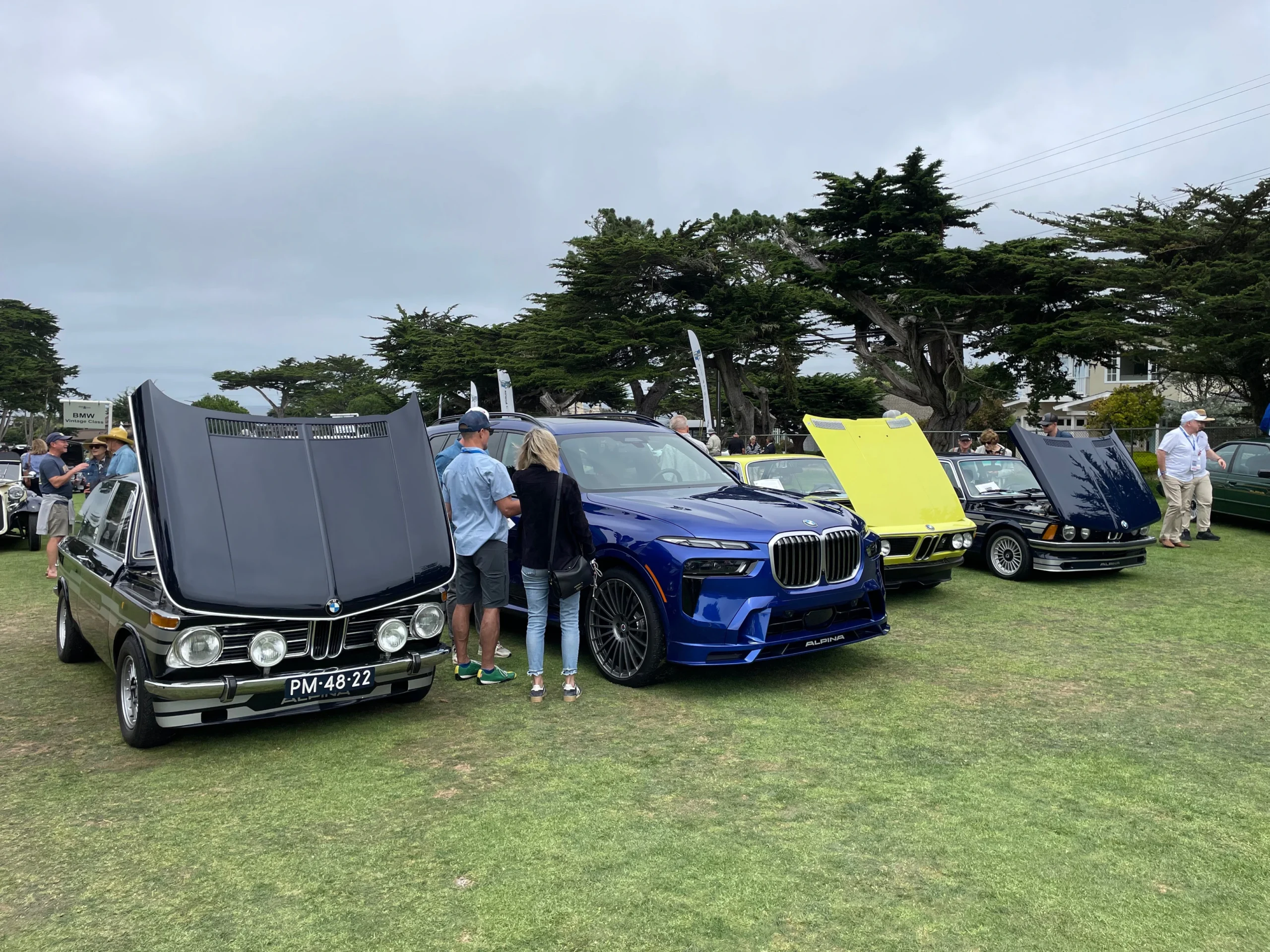
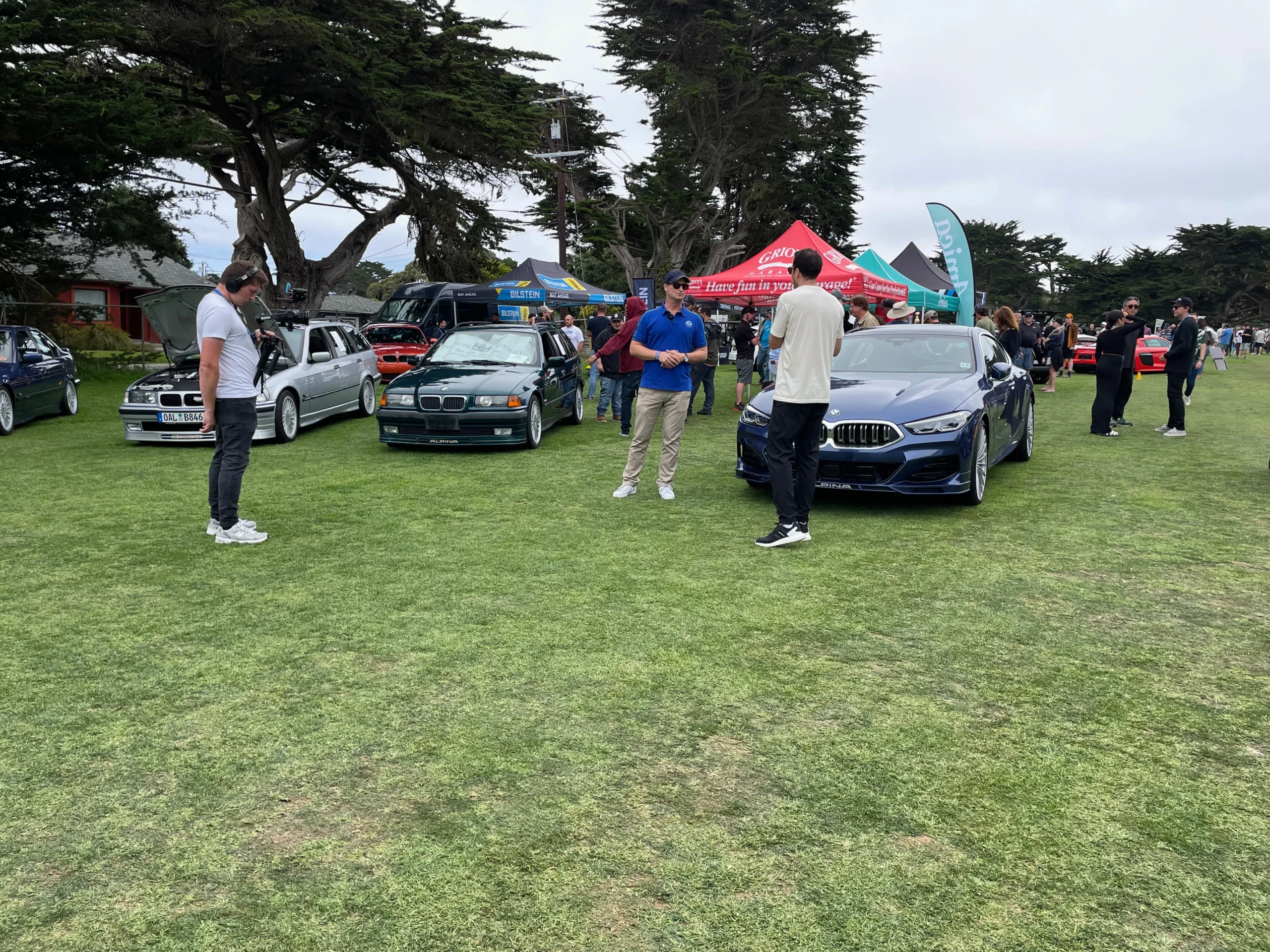
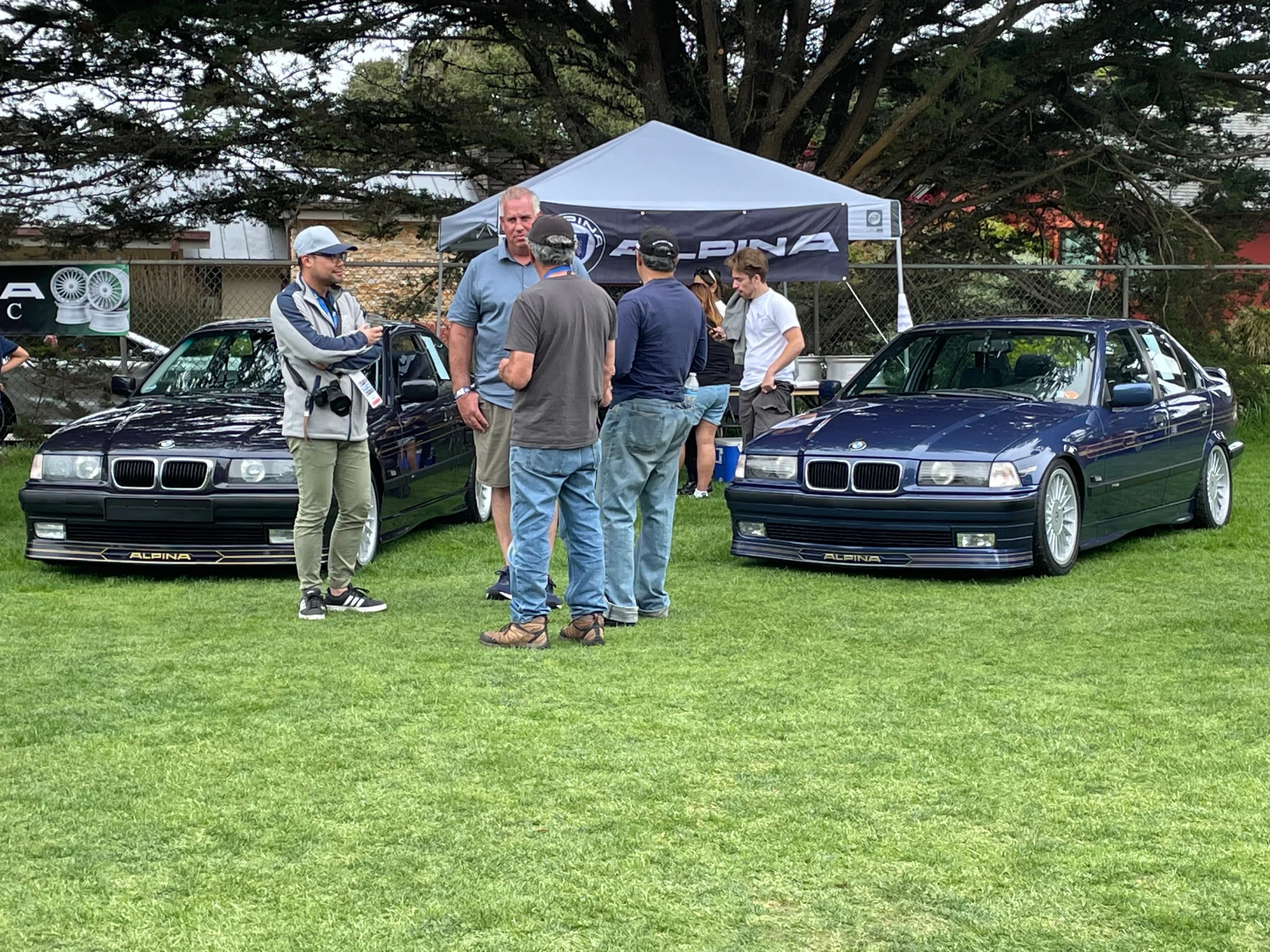
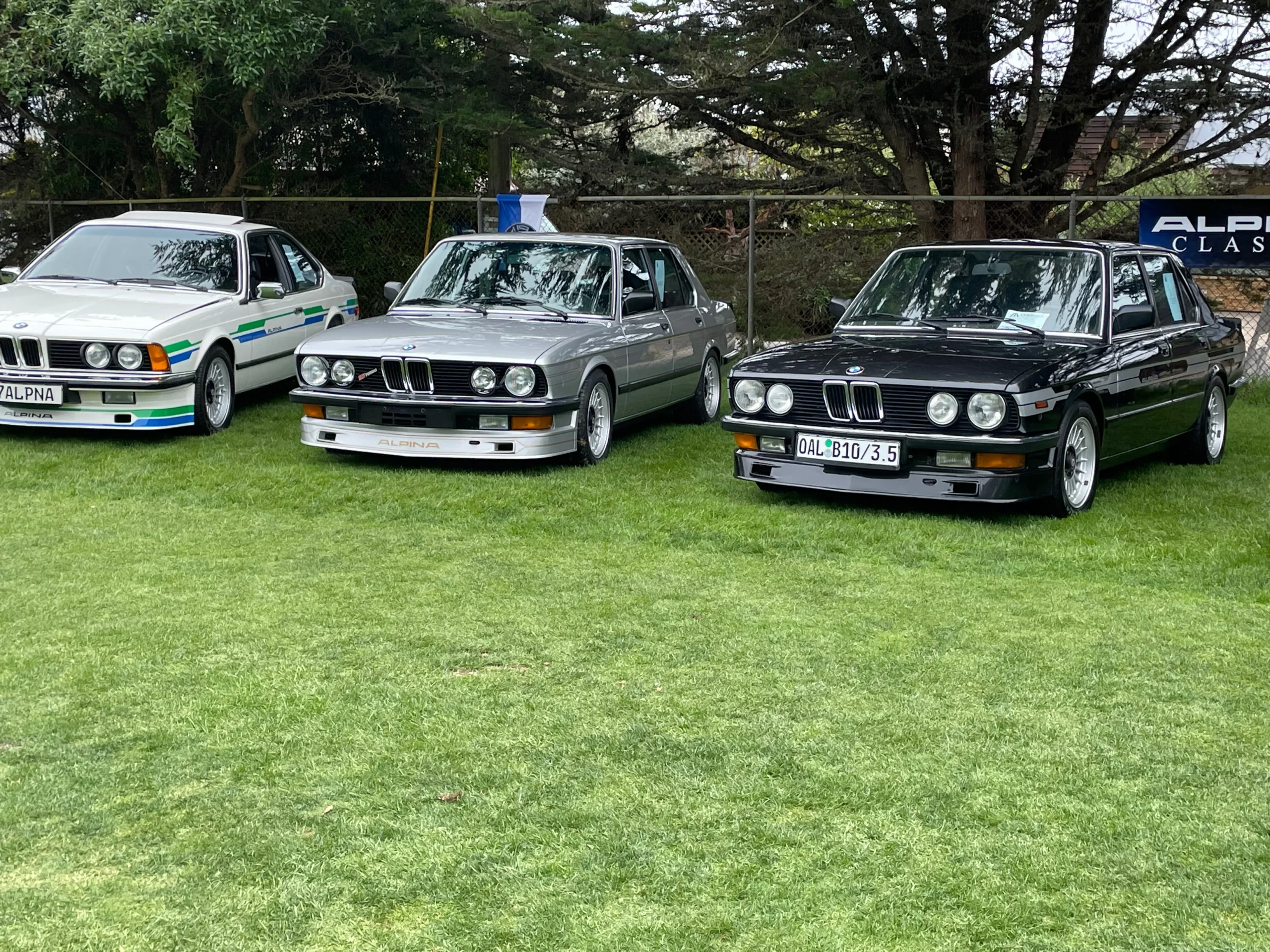
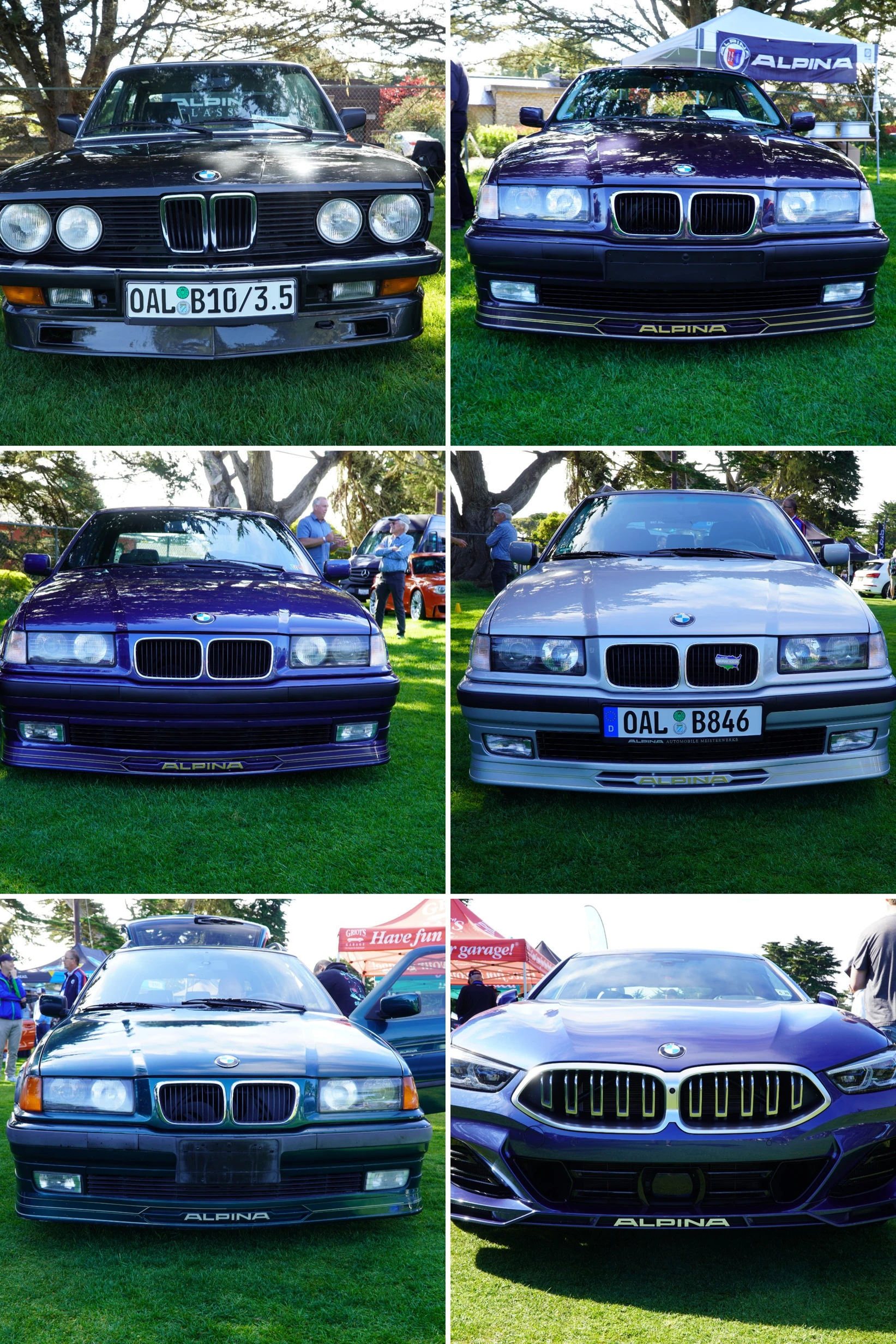
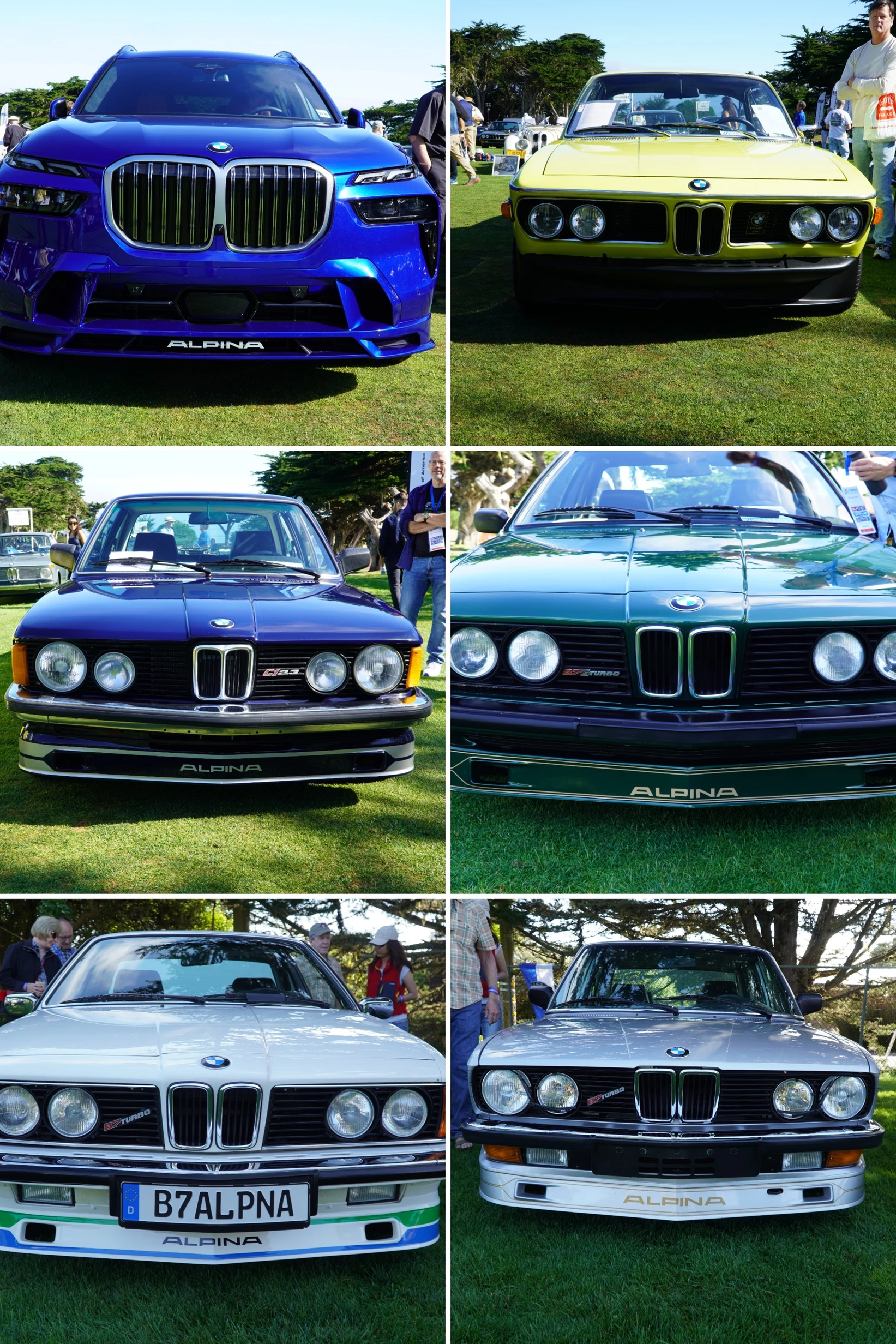
Once there, the Alpina section at Legends did not disappoint. In addition to mine, there was a Golf yellow 1972 B2 (based on an e9 3.0 CSL), two 6-series B7Ss, three e28 5-series (2 B7 and one B10), a bunch of e36s and even some new(ish) Alpinas. But I’ll let the pictures and videos do the talking below.

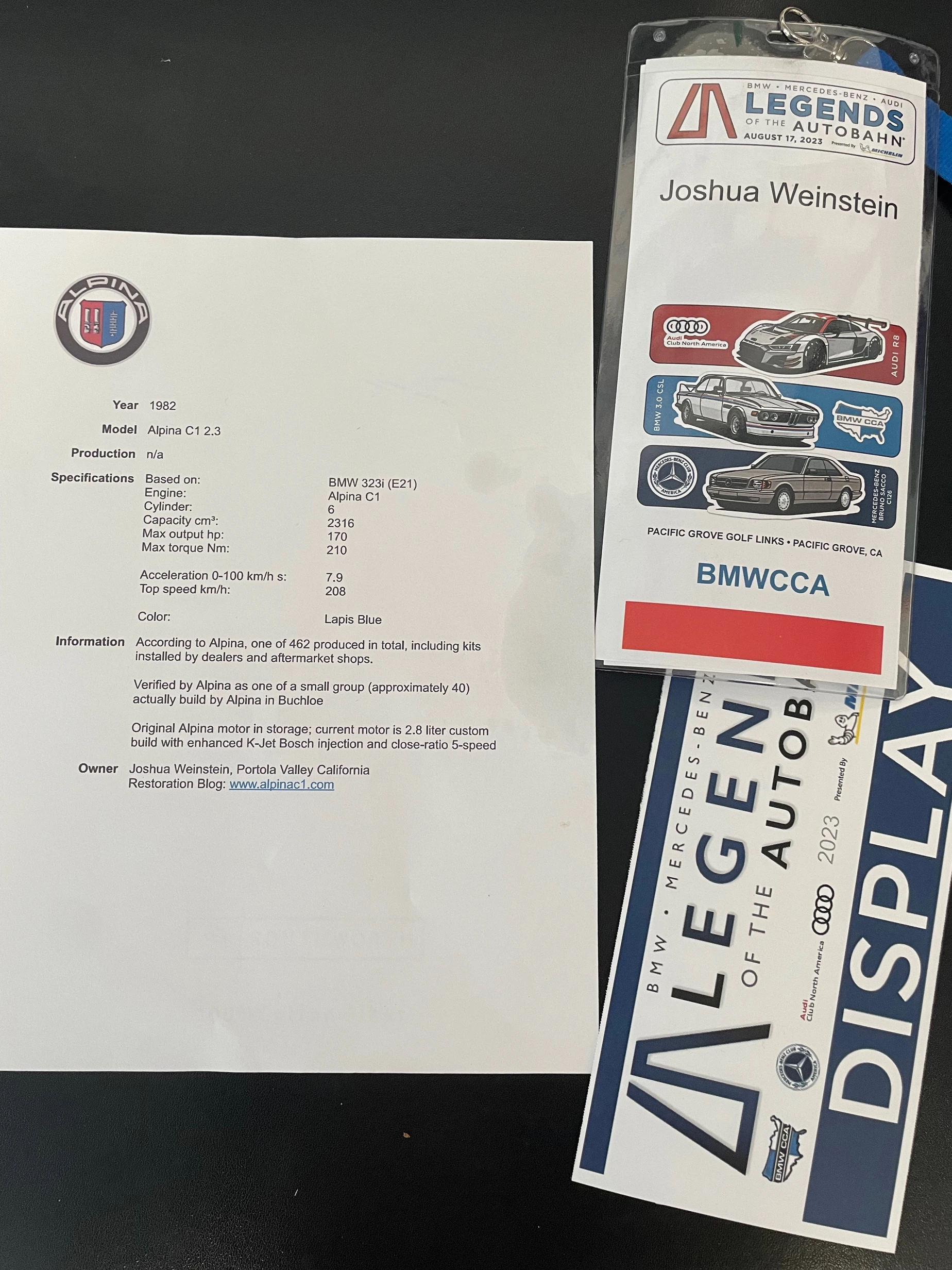
Swag

Alpina tribute 2002, huge genuine Alpina truck, stunning genuine B2, and our hero:

Our hero and the stunning Golf Yellow genuine 3.0CSL B2 (Alpina truck in the background)

Some of the other Alpinas:


Pics from the Alpina event organizer; yours truly and our hero (right to left):

Collage of all the Alpinas at the event:


BMW CCA video featuring Matt the USA Alpina representative: https://www.instagram.com/reel/CwadJiuJcPy/

Bimmer Life article about Legends in general but also featuring a few of the Alpinas: https://bimmerlife.com/2023/08/18/legendary-legends-of-the-autobahn/

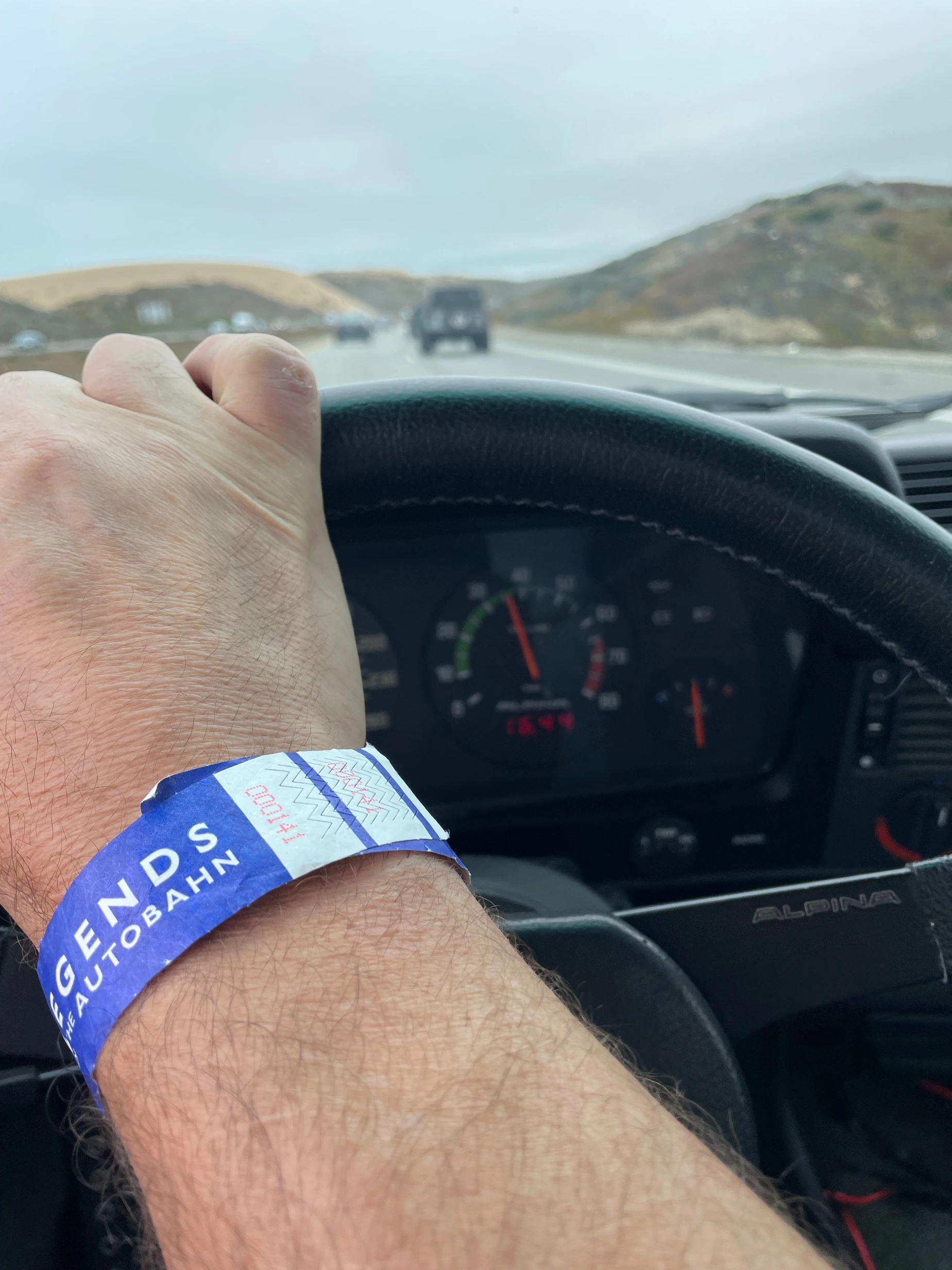
The drive home:

The plan is for even more Alpinas at Legends next year. By then I’m hoping to finish up several of the details that haven’t gotten the necessary attention, and maybe even the bigger things, like a working speedo and gas gauge, dialed-in the fuel injection and an operational heater control panel! Who knows, I may even reinstall the air conditioning so I can take the more direct route next year.

IT’S ALIVE! IT’S ALIVE!!

IT’S ALIVE! IT’S ALIVE!!

The fatigue of this project—and my 1972 Inka touring restomod project—have weighed on me. So much so that the slow but steady progress I was making during the pandemic has almost abated. And, if not for the intervention of others, who knows, it might have died on the vine. But it didn’t and, as alluded in the title of this post, it’s alive; the damn thing runs. Barely.


The car came home in April of 2022, and Spring was full of hope. After all, it was in my garage and instead of having to drive two hours up to Sacramento (and two hours back, of course) I could just saunter the few feet to my garage and tinker. And there was a lot of tinkering to be done.

So I tinkered. I took off the electrical tape someone installed in a fit of ugliness and re-wrapped the wiring harness with new cloth tape.
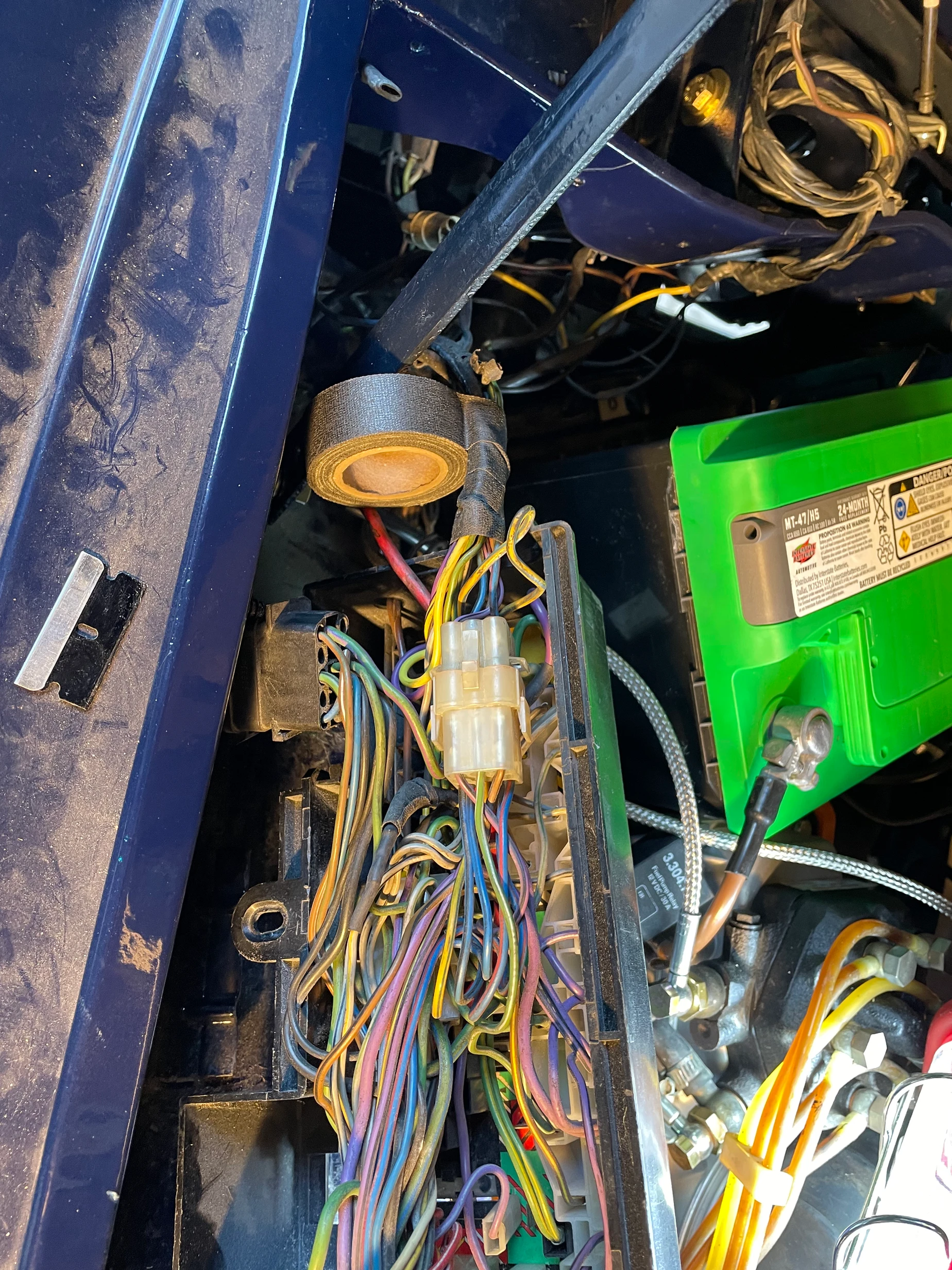
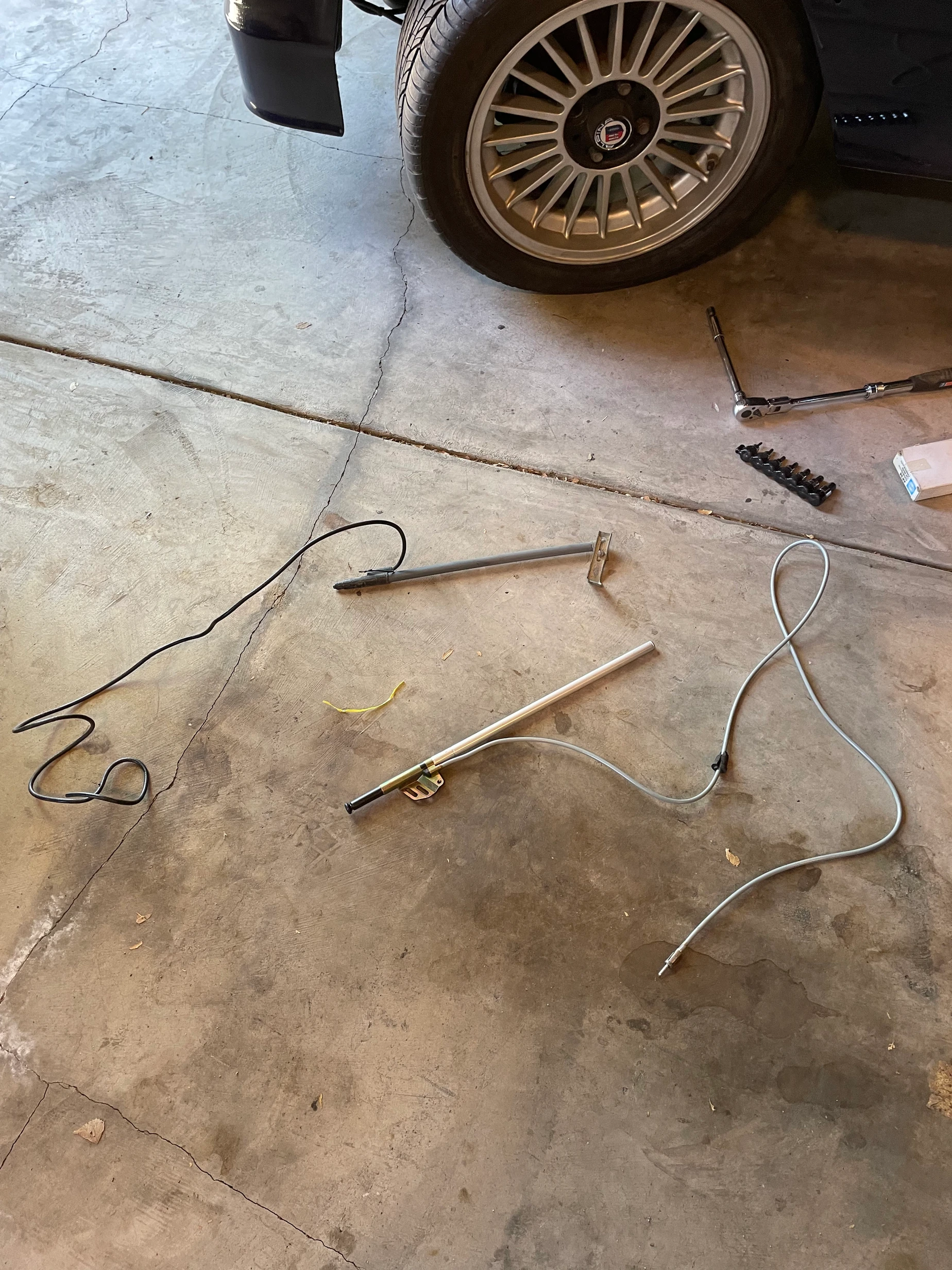
I take out the old, non-functional antenna and put in a new one (forget that there was no center console, let alone stereo in the car).
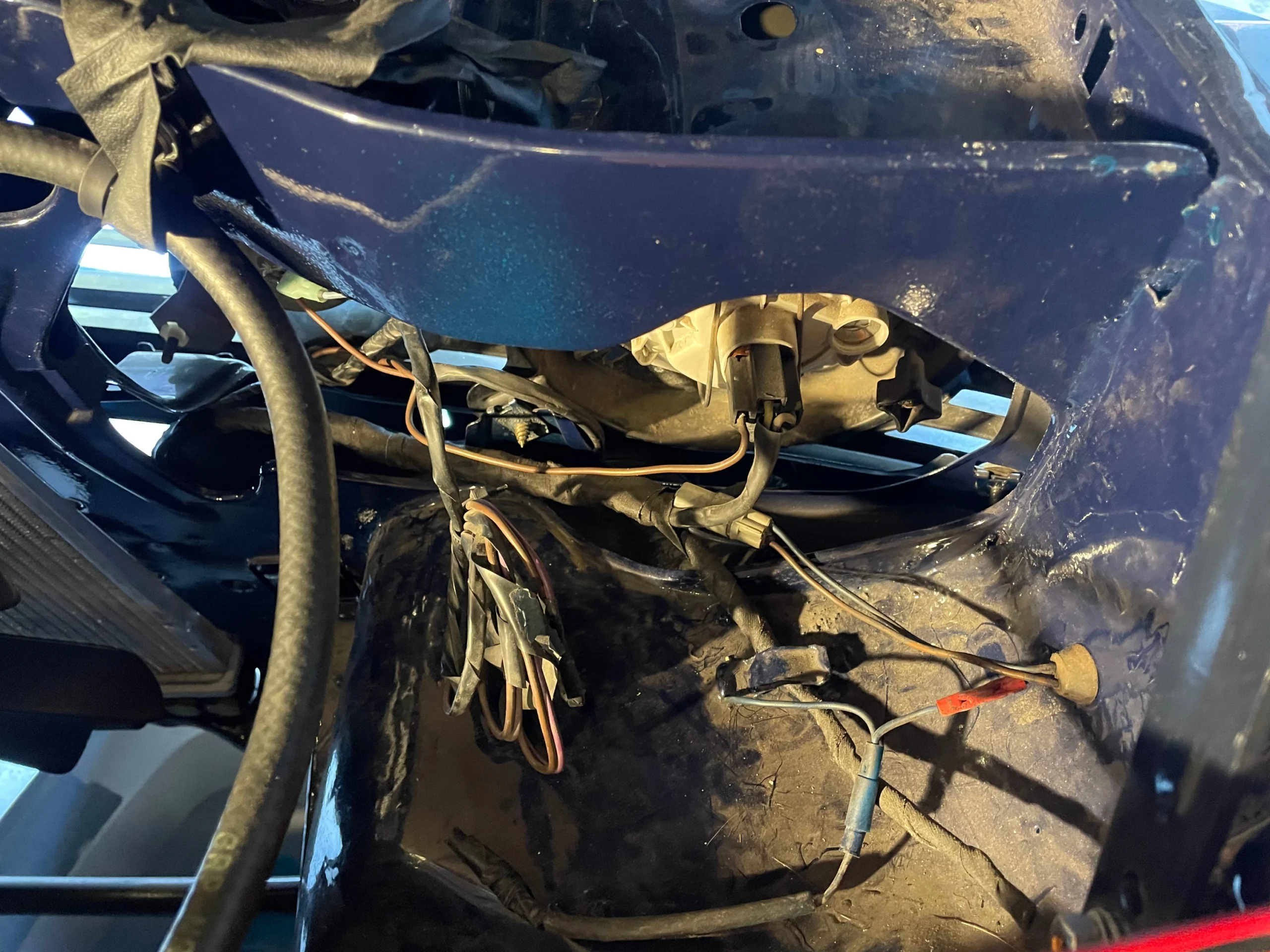
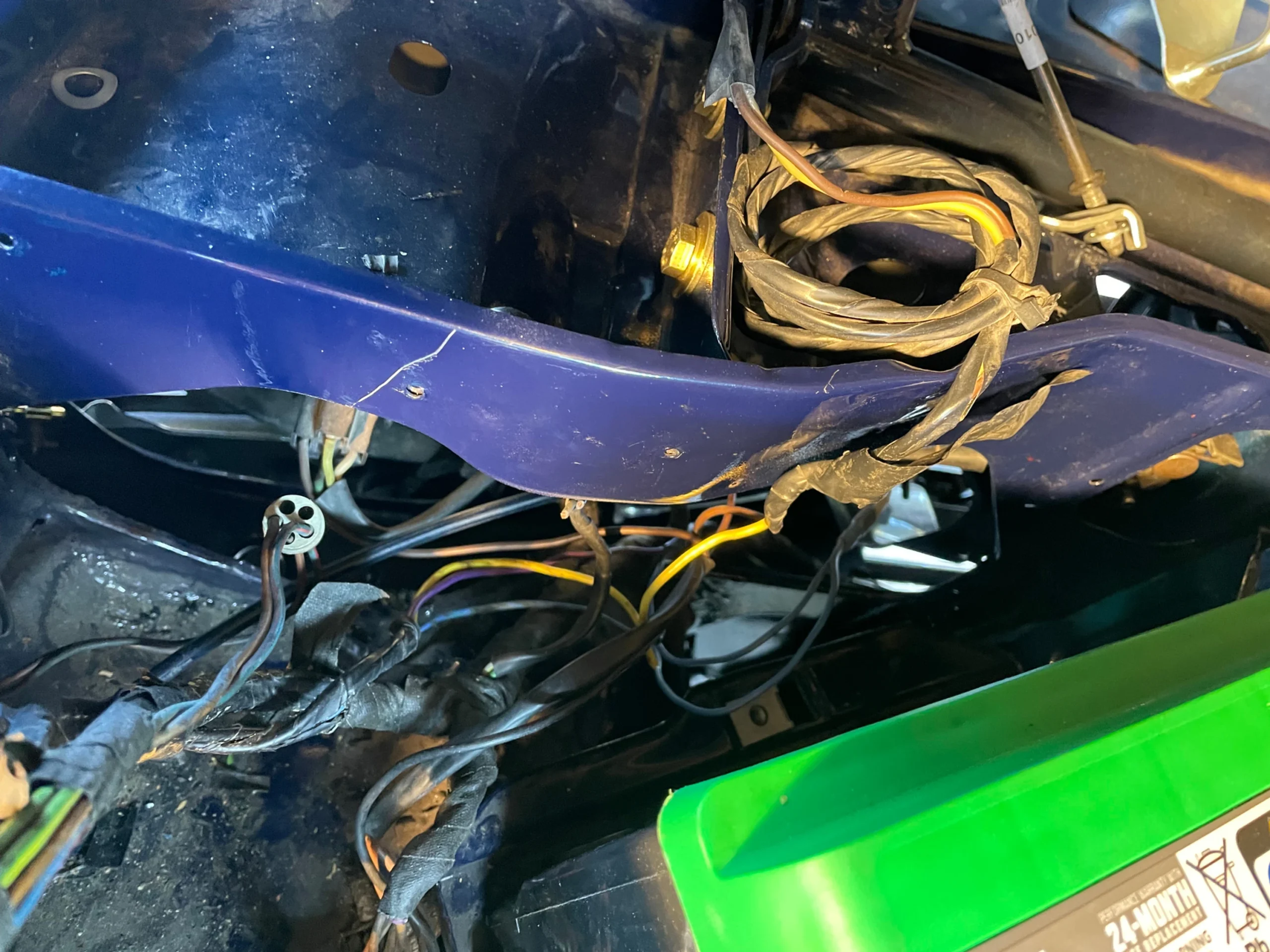
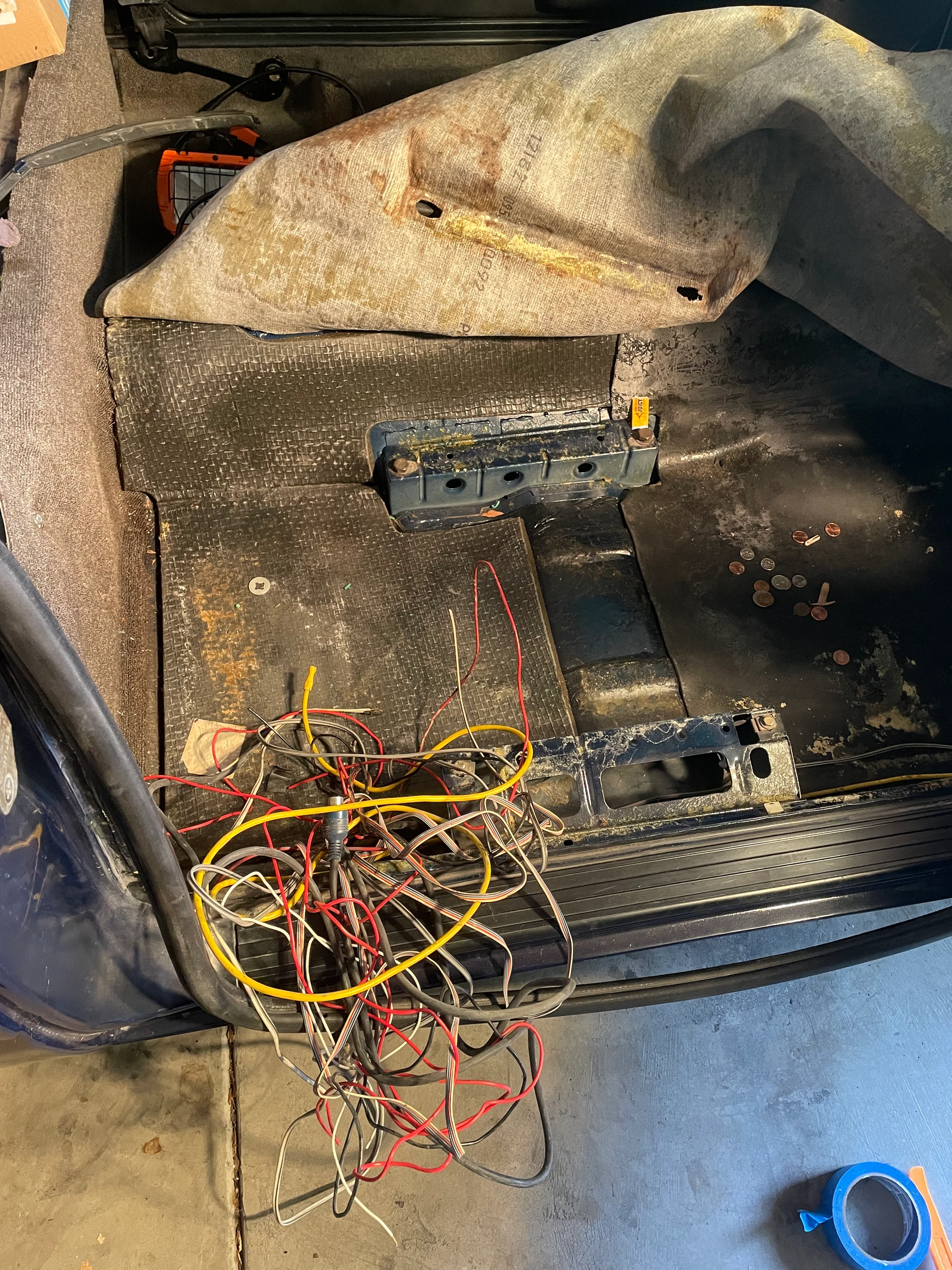
I traced down extra and errant wiring, cleaning messes in the engine compartment and under the dash.
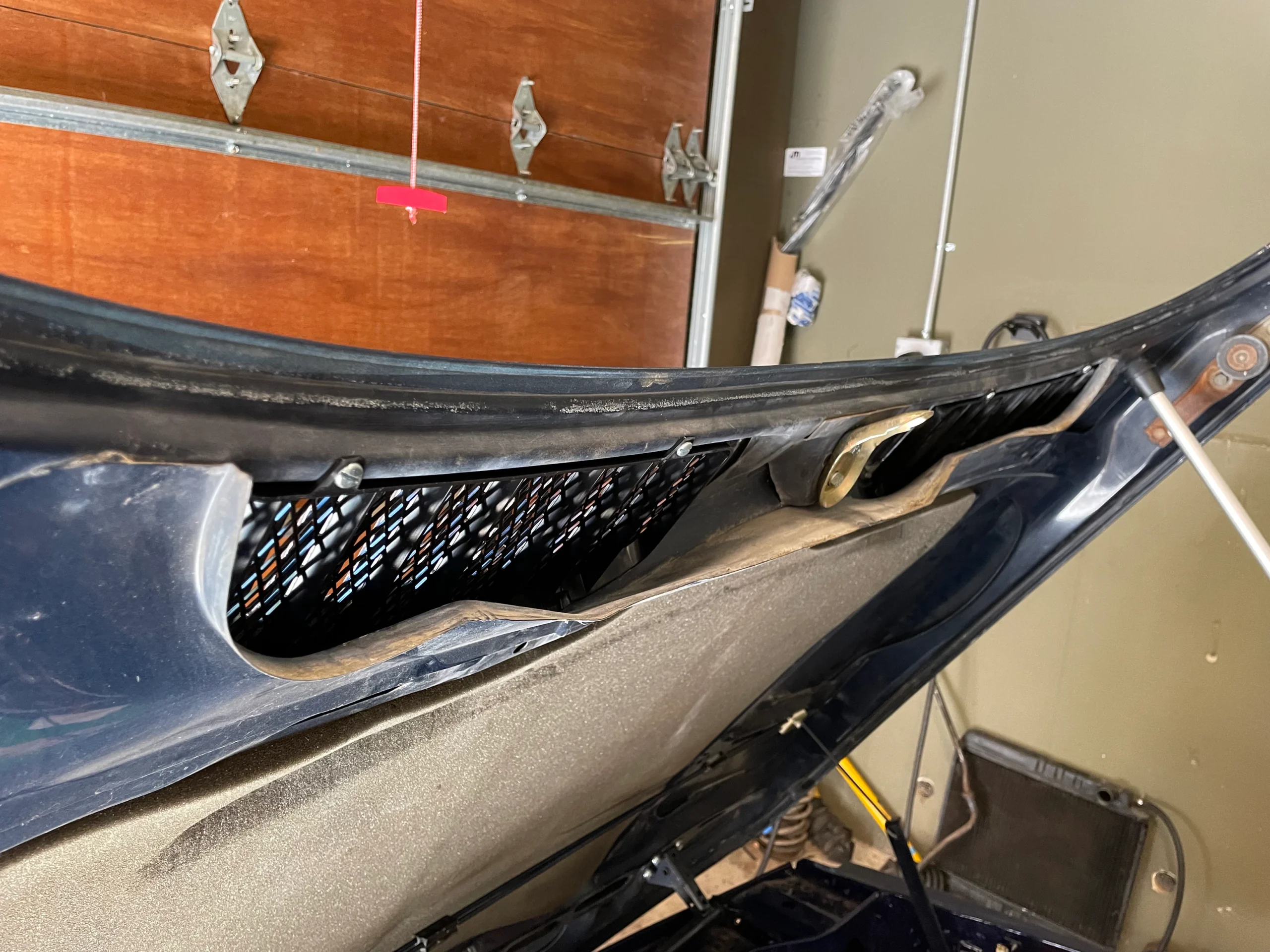
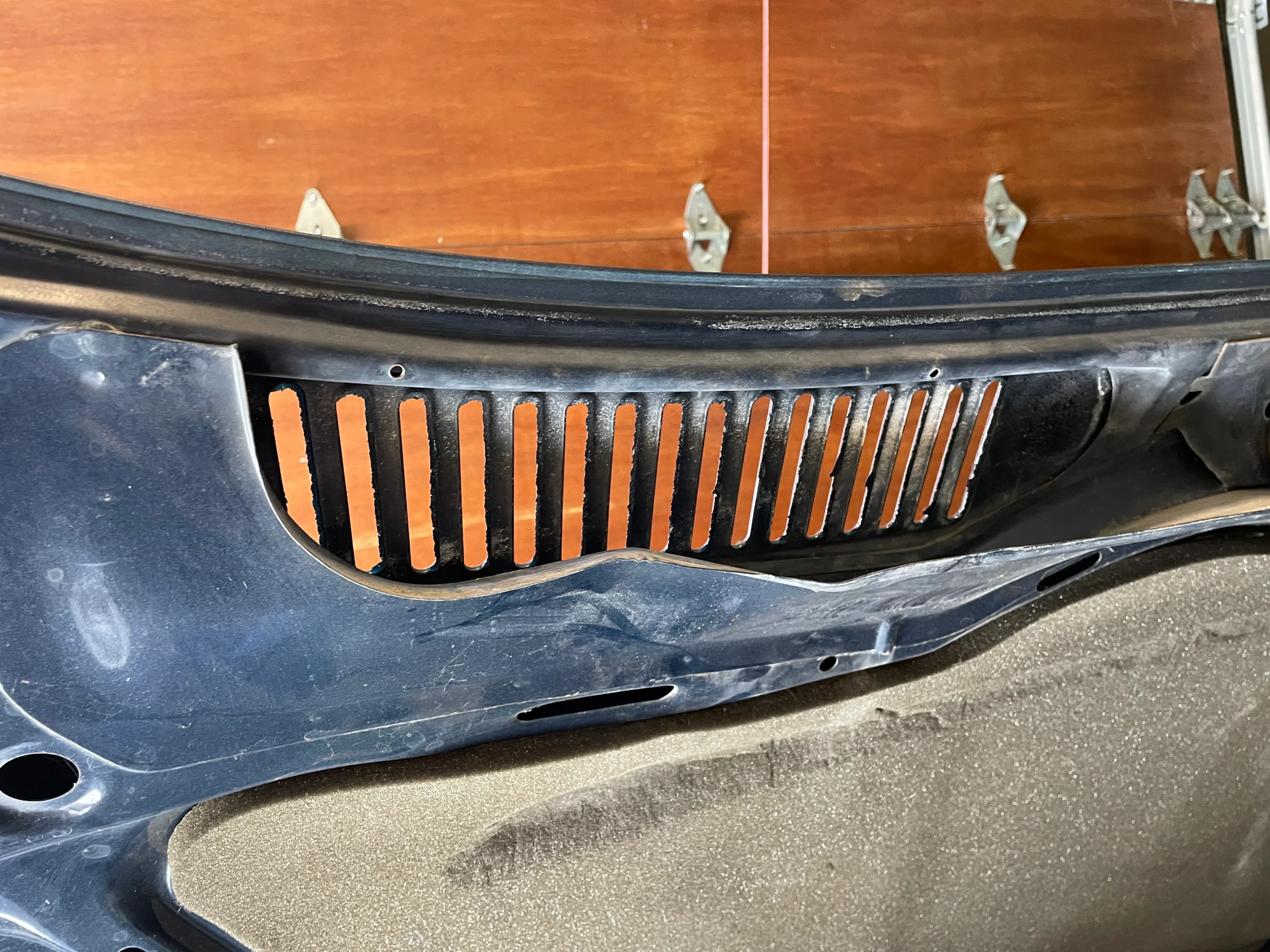
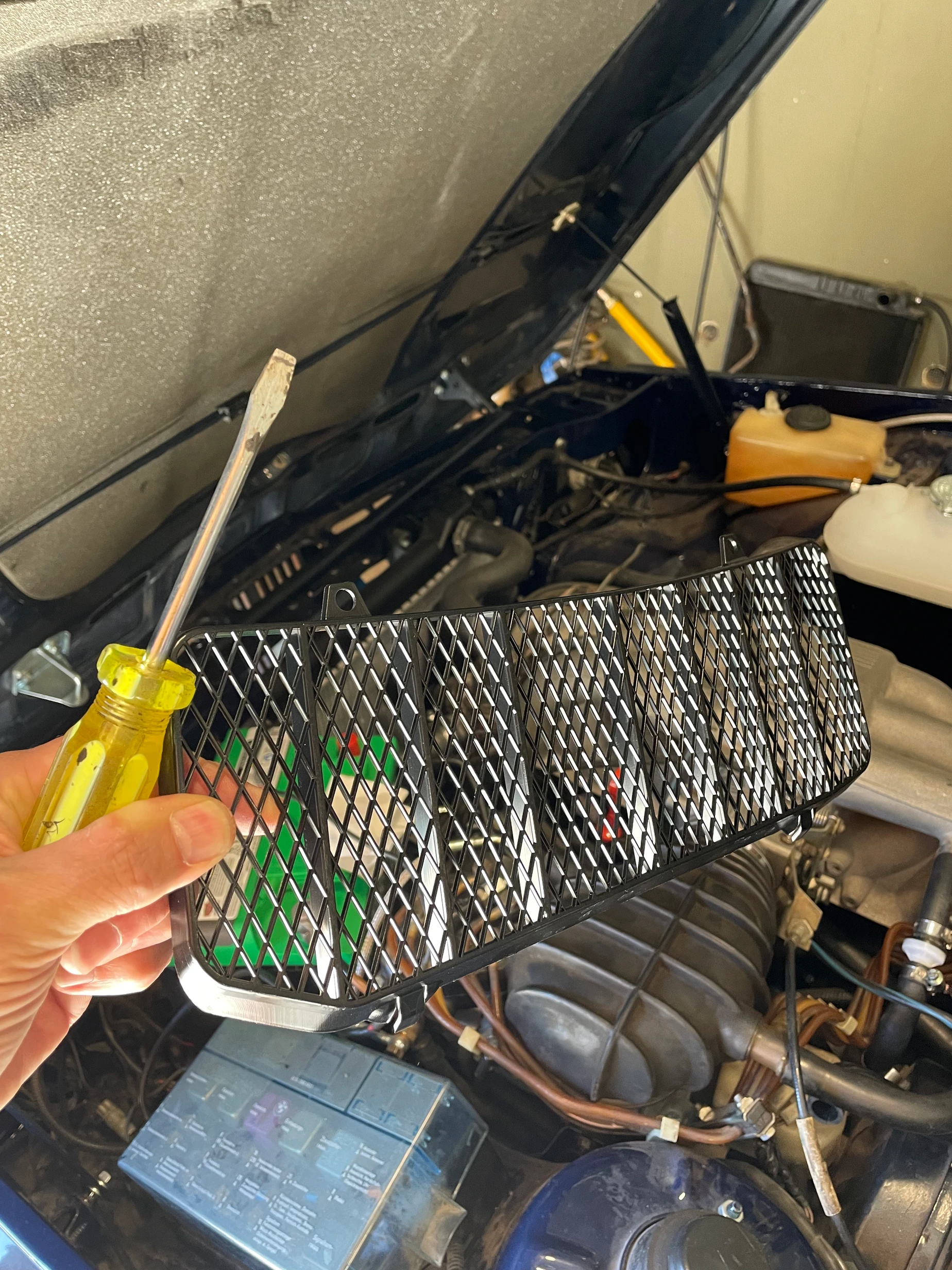
Several little parts were added, like the leaf guards in the hood.
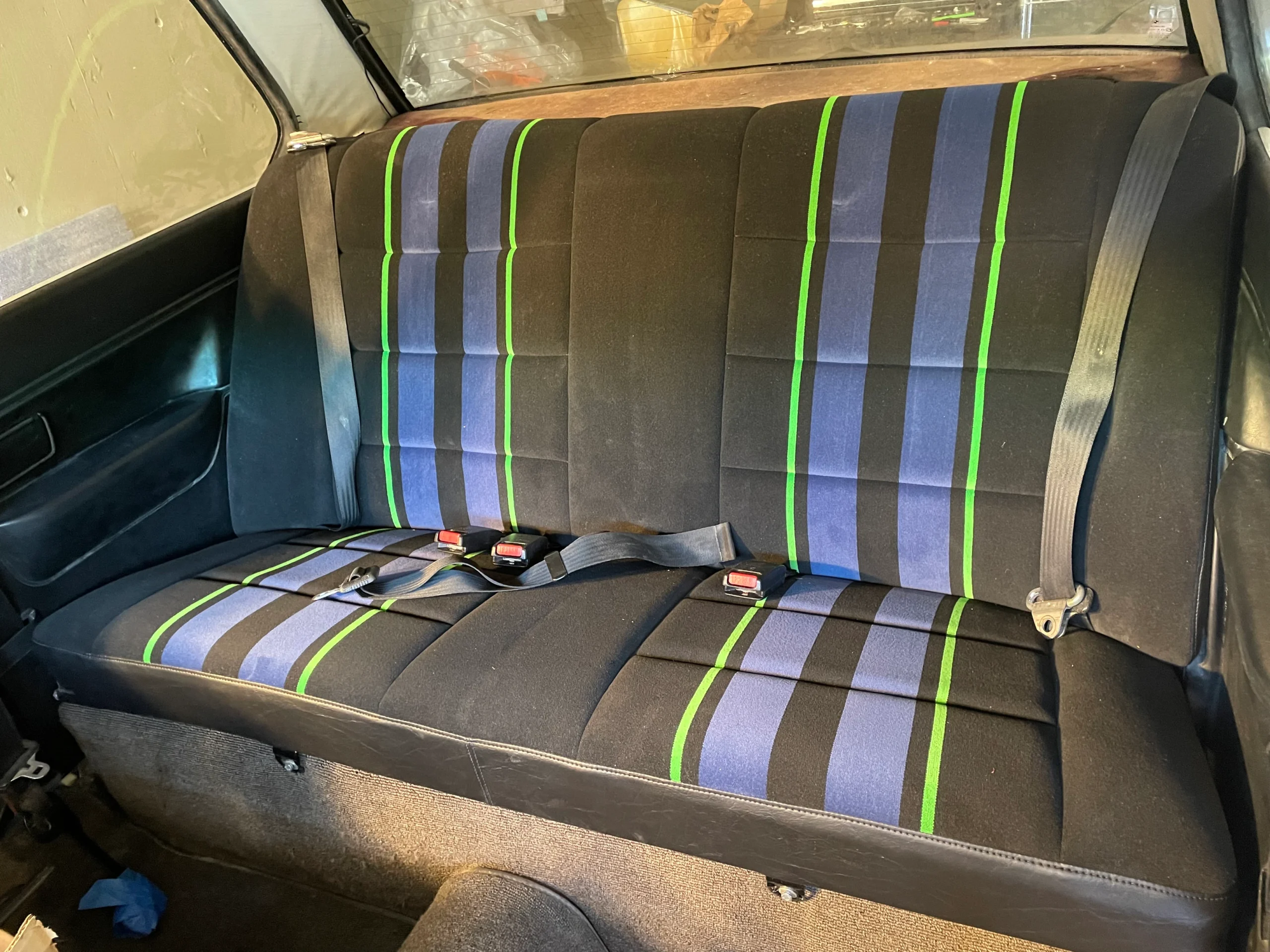
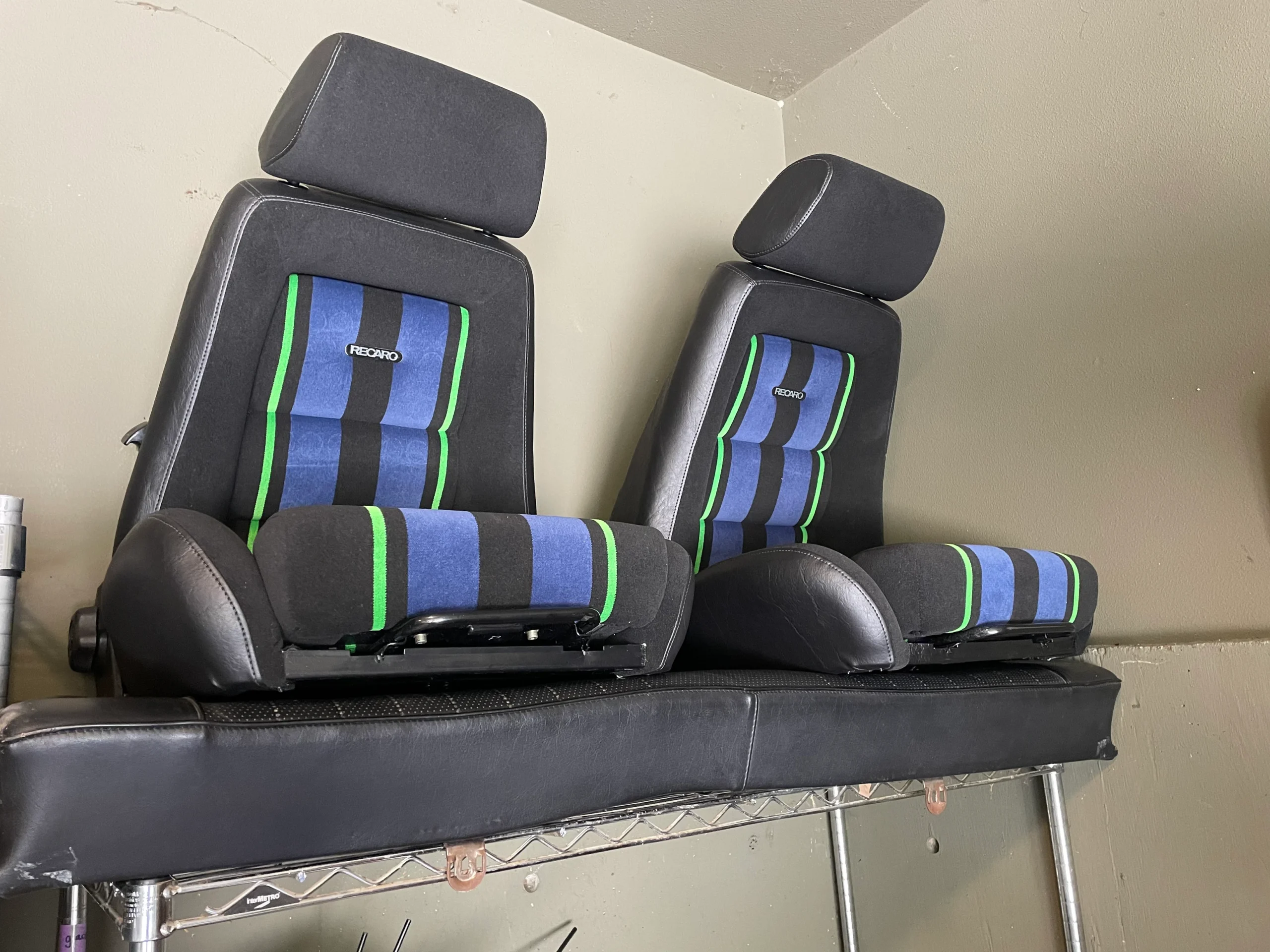
And, I did the one thing that is fairly easy yet yields big results and nice money shots: installed the freshly recovered seats in the blingy Alpina cloth.
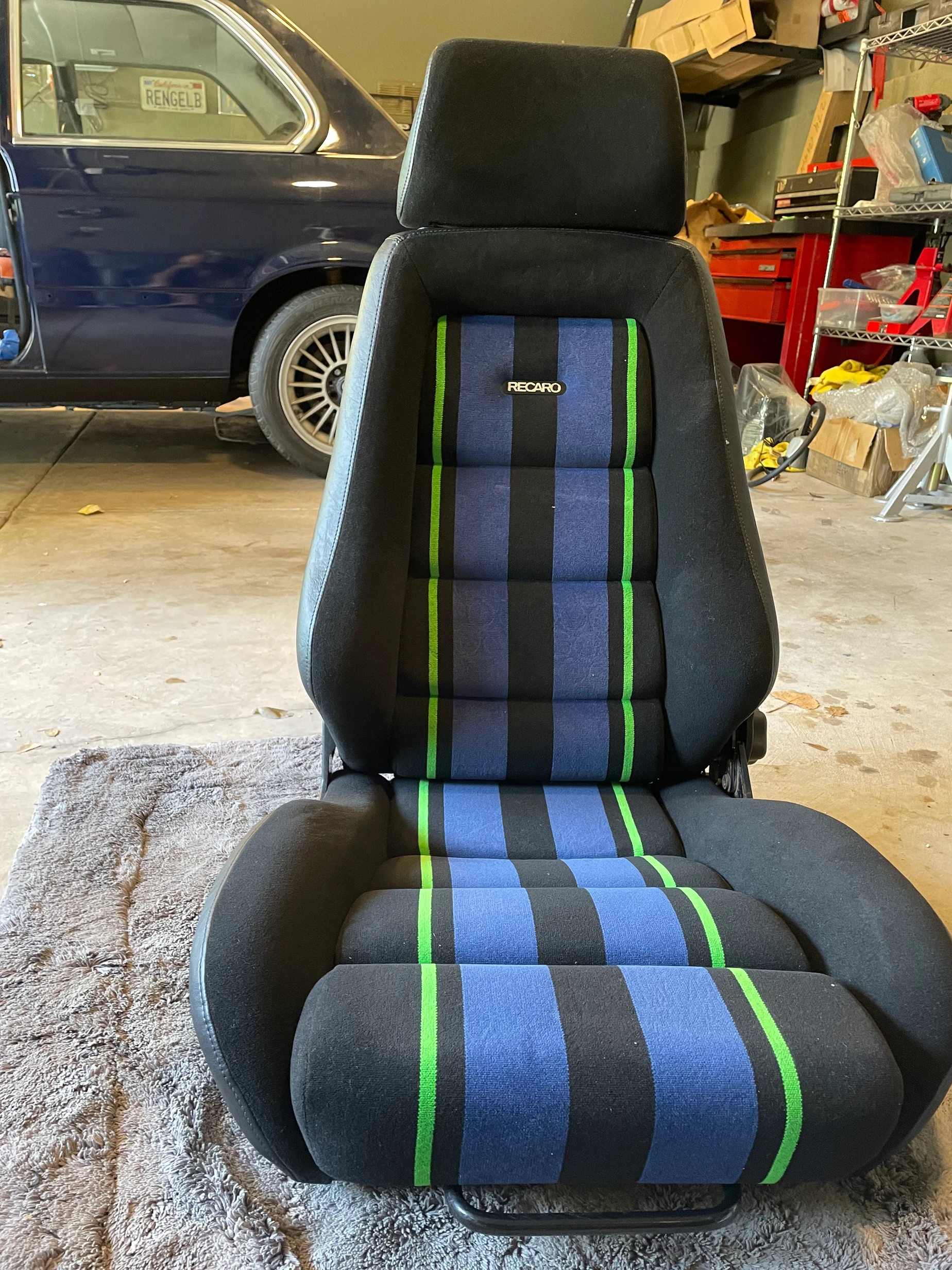
Other little things like cleaning the carpet, and rewiring the Hella big/little headlights helped move things along.
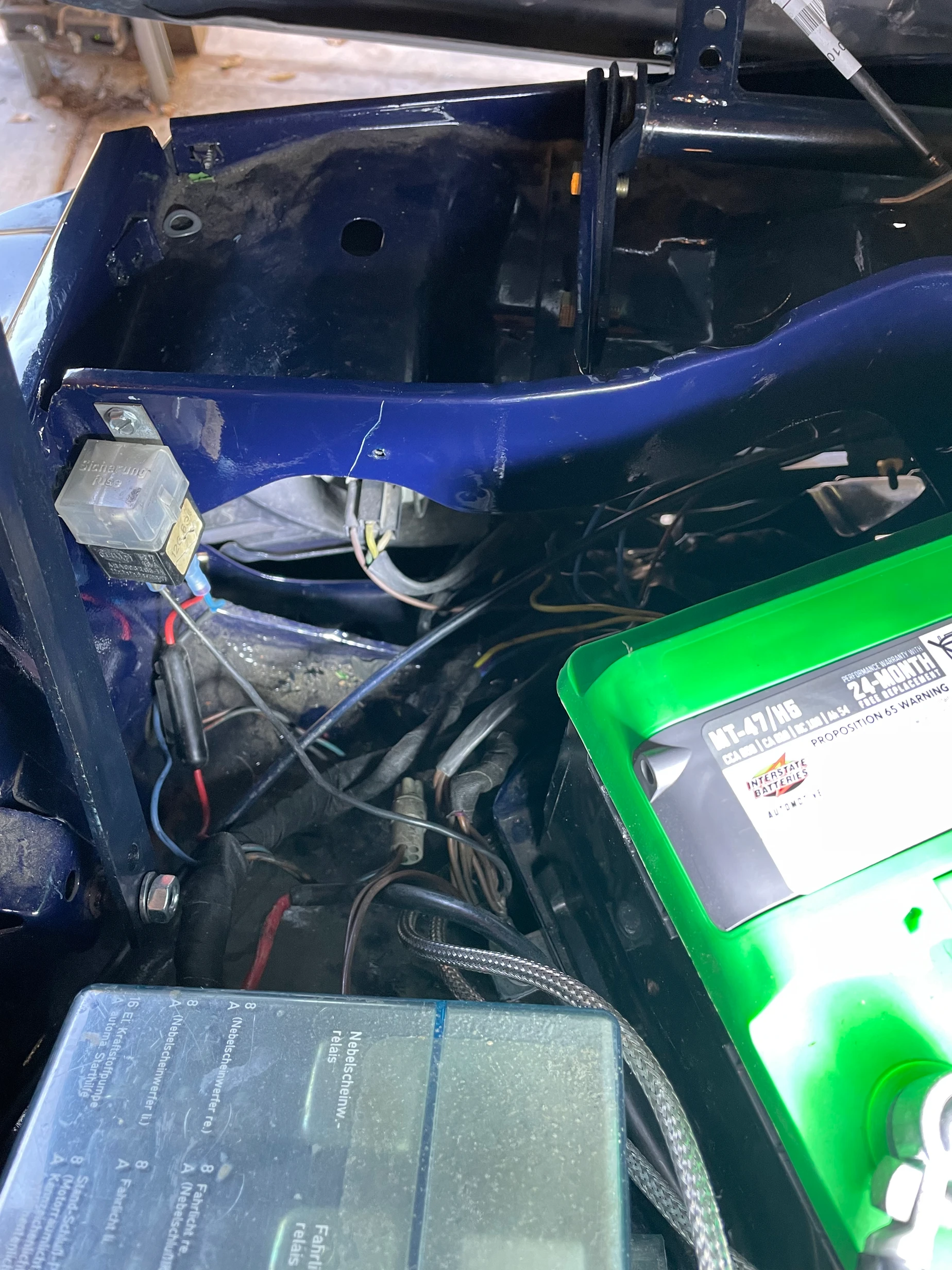
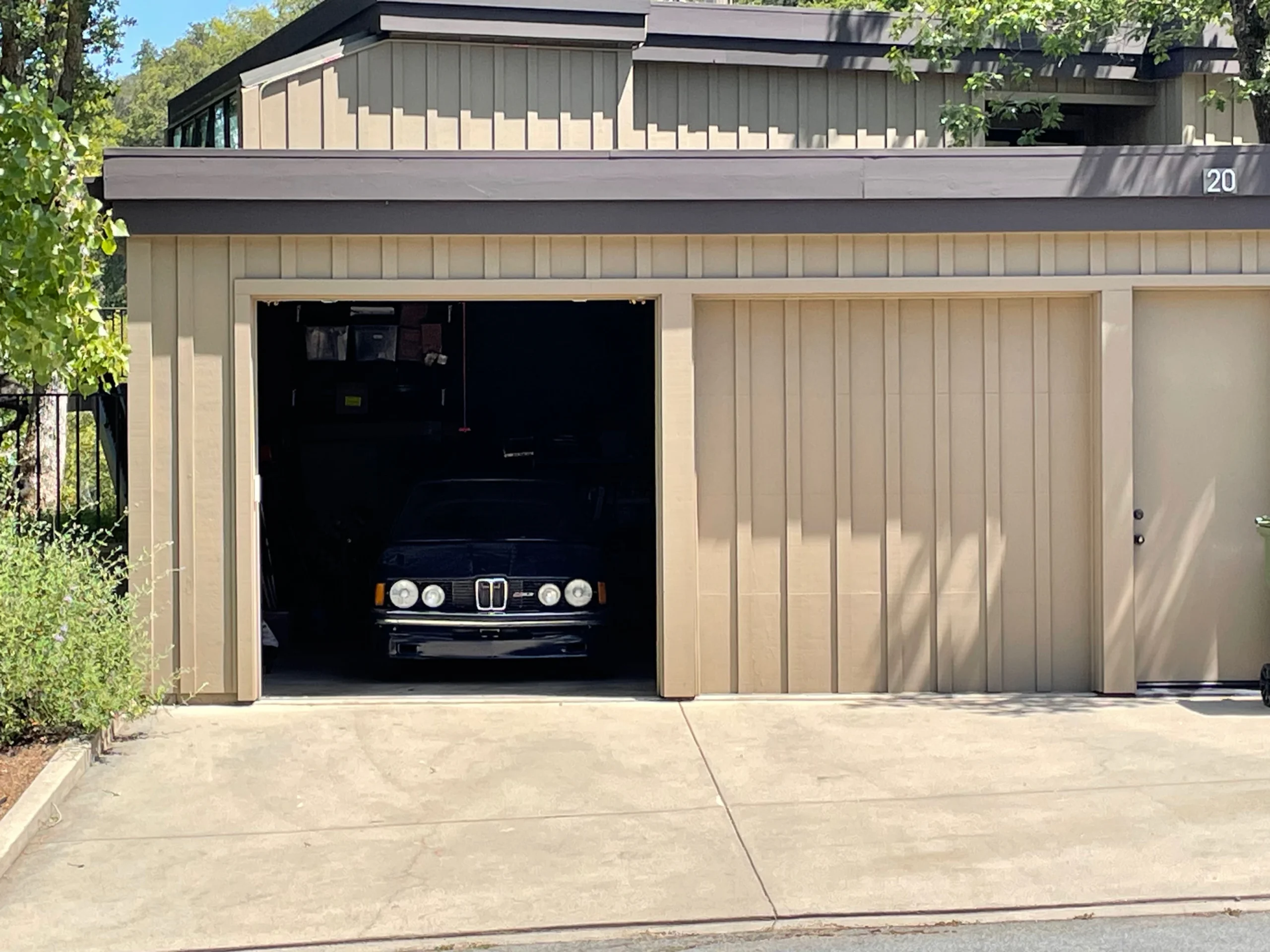
But then Summer became Fall and things stalled to a crawl, mostly due to festering frustration. Why was I frustrated? Heater problems. No, not the garage wasn’t heated. Rather, the problem was the heater in the car; specifically, my tinkering under the dash revealed that the heater ducting was removed along with the dash when it was taken out some 5 years ago (to have the cracks repaired); when the body shop reinstalled the dash they forgot to put the heater ducting back in first.
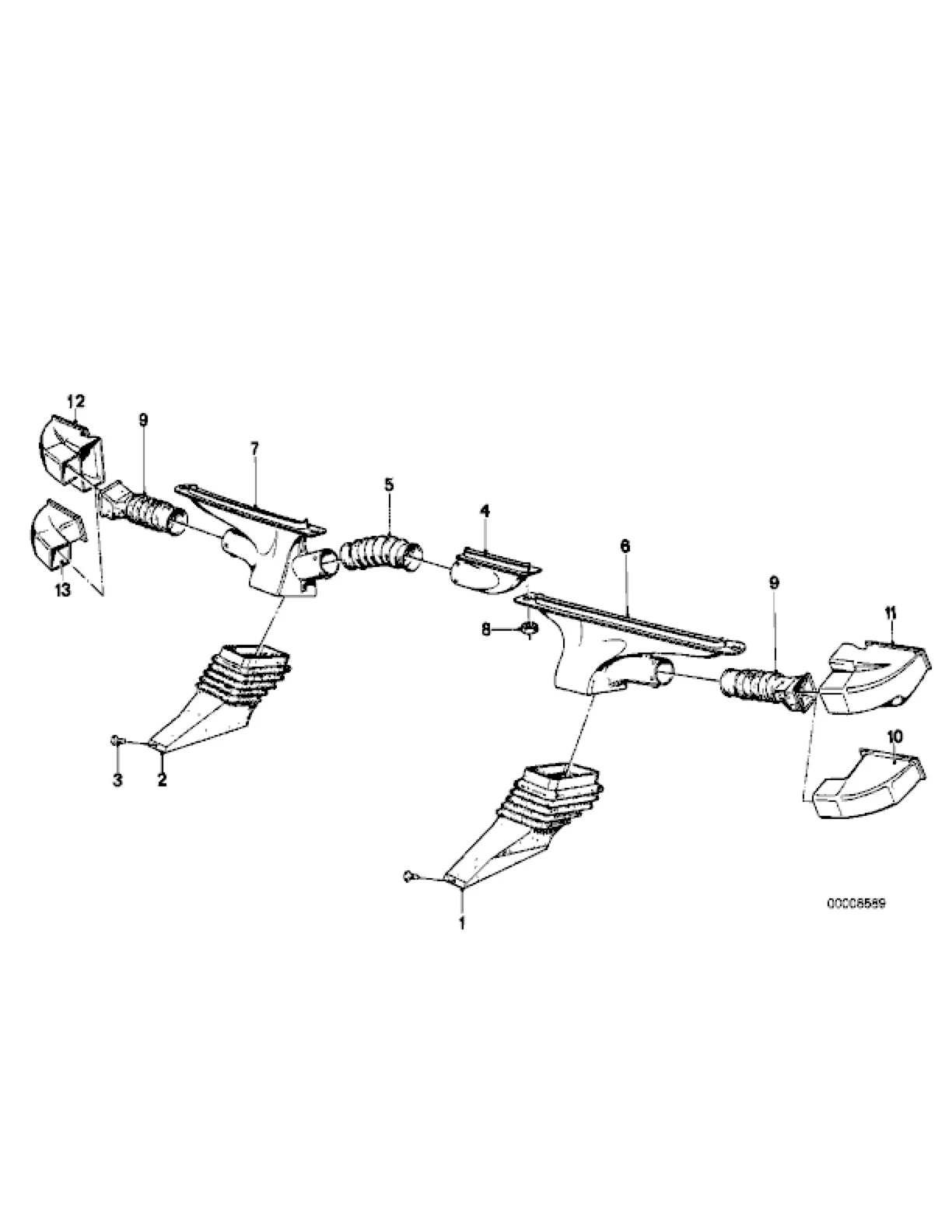
 

With some ingenuity I was able to squeeze almost all the ducting in place except for one last piece. But, oh that last one. Try as I might, there just wasn’t enough room to maneuver it in there……

defroster ducting as shown in the parts “book”
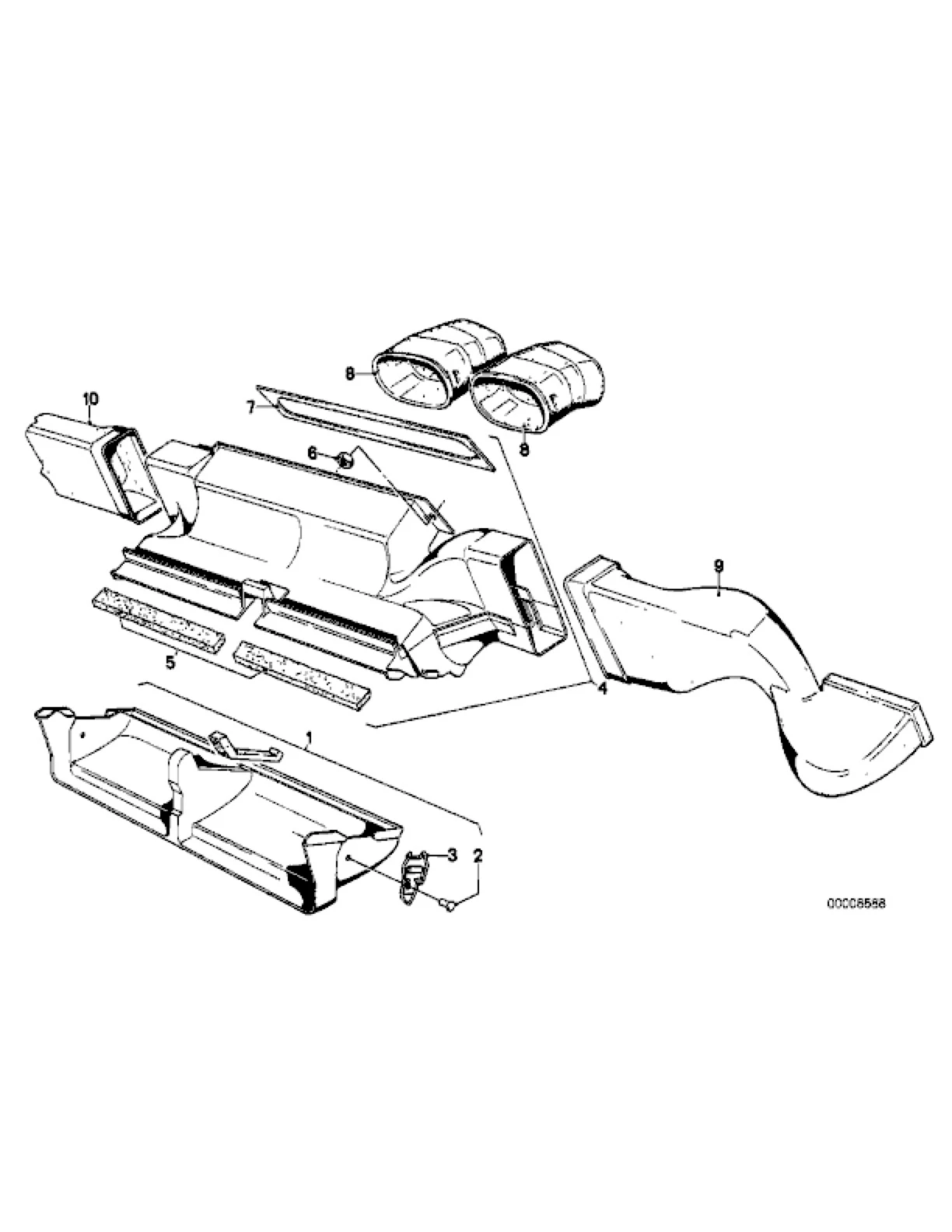
heater ducting as shown in parts “book”
Frustrated, I walked away from the car for a while. After a couple of months without any progress, my long-suffering wife finally prodded me. I realized the enormity of the project was overwhelming me. True, it was great to have the car nearby, instead of two hours away. But I had finished the tinkering and it was time to do the real work. And for that, there was a lot of comfort in having it in a shop, surrounded by many mechanically minded brains happy to help at every turn. Not having a lift at home also made things tough; that was the only way for me to work under a car given my vertigo. All this killed any joy I found working on the car.


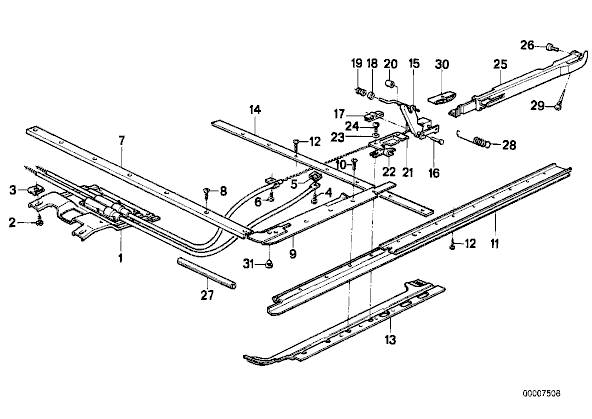
I started to wonder if I should bring the car to a shop for completion. It was not a step to be taken lightly. I took pride in re-assembling the car myself. It was truly my creation, my baby. But I knew my limits and learned that there were things, no matter how successful I was, that were above my paygrade: color sanding the paint, fixing the sunroof mechanism, fine tuning the injection, installing that last piece of heater ducting. So, I had already come to the conclusion that someone else was going to bring the car across the finish line. The only question was when.


Eventually, I decided to finish as many of the punch-list items as I could before getting it to the shop that was going to help towards completion. I wanted to try to start the car, so the engine got populated with spark plugs and fluids and other small but necessary items. Once done, a mechanic friend came over for an afternoon and we tried to get it started. We made some progress; it would crank over but not catch. We verified fuel but ran out of time before confirming spark. And that was the last significant attempt. A short while later, I had the car towed away again, this time to a shop that specializes in older BMWs.

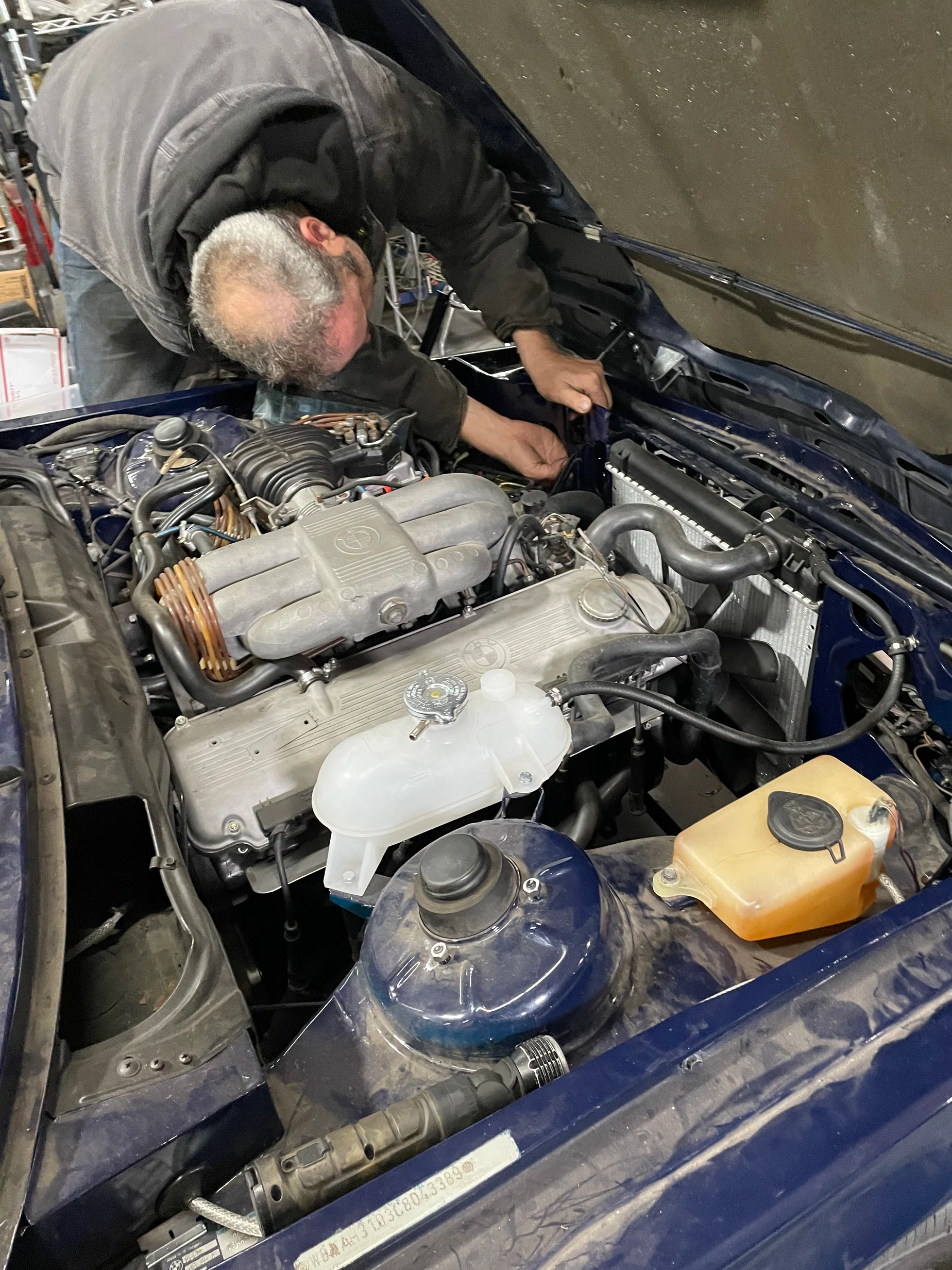
They aren’t finished, in fact they pretty much just started. They get to my car in between their regular work; I’m in no rush and they aren’t either, really. But they got it started and are making the progress that I couldn’t. They also found that the brakes are acting up and it may need a new booster or master cylinder. For me, just hearing it run was great. I’m an amateur motor assembler and worry about I did wrong until the thing runs without grenading. We’ve crossed that line, so I guess I didn’t fuck anything up too much.
<VIDEO of motor running>

The fact that the car is at a shop and that it’s running has brought back some momentum. And, more importantly, I’ve mapped out the next steps. The body shop I used on some other cars is two blocks away and they’re on-board for color sanding the paint, installing the Alpina stripes and rear spoiler, etc.


The biggest question mark with the car is still the heater; if the shop can get the last of the ducting in without removing the dash, then the control unit can go in and the interior can be buttoned-up. If not, then the dash has to come out again, which has a snowballing effect: the windshield has to come out to remove the dash. If the windshield is out, I should replace the new headliner, due to some issues with the fitment of the current one—and a few mistakes in cutting holes for the sunroof cranks and such. That’s a good amount of work, and costly, but worth it in the end to get everything right.


This is no time for cutting corners and a recent Bring-a-Trailer auction of an e21 B6 2.8 drives that point home: This car sold for $141,000 and it makes me wonder what mine is worth once completed. Sure, it’s not a B6. But Buchloe-built e21 C1s are actually rarer than B6s (In the e21 chassis, Alpina built 462 C1s and 534 B6s according to Paulo Tumminelli in the definitive book on Alpina history, OAL-BB 50: 50 Years of BMW Alpina Automobiles). And with the 2.8 stroker M20 motor, it should have the same or similar performance to the B6. I don’t expect it has B6 value but it should be a pretty nice and rare Buchloe-built C1.


But the value of car right now is solely what it means to me. And as alluded above, it is my baby, my creation because of all my blood, sweat and tears that have gone into it. Of course, all my previous projects were my babies for the same reasons and I ended up selling them after a couple of years and moving on to the next project. From that I realized I liked the process as much—maybe even more—than driving the thing. But times have changed and the projects are much more taxing on my older body and just maybe that has flipped. In the past the projects weren’t fatiguing or frustrating, they were joyous adventures. Maybe in my old age I’ll appreciate journeying in the car more than the journey of building it. Time will tell.


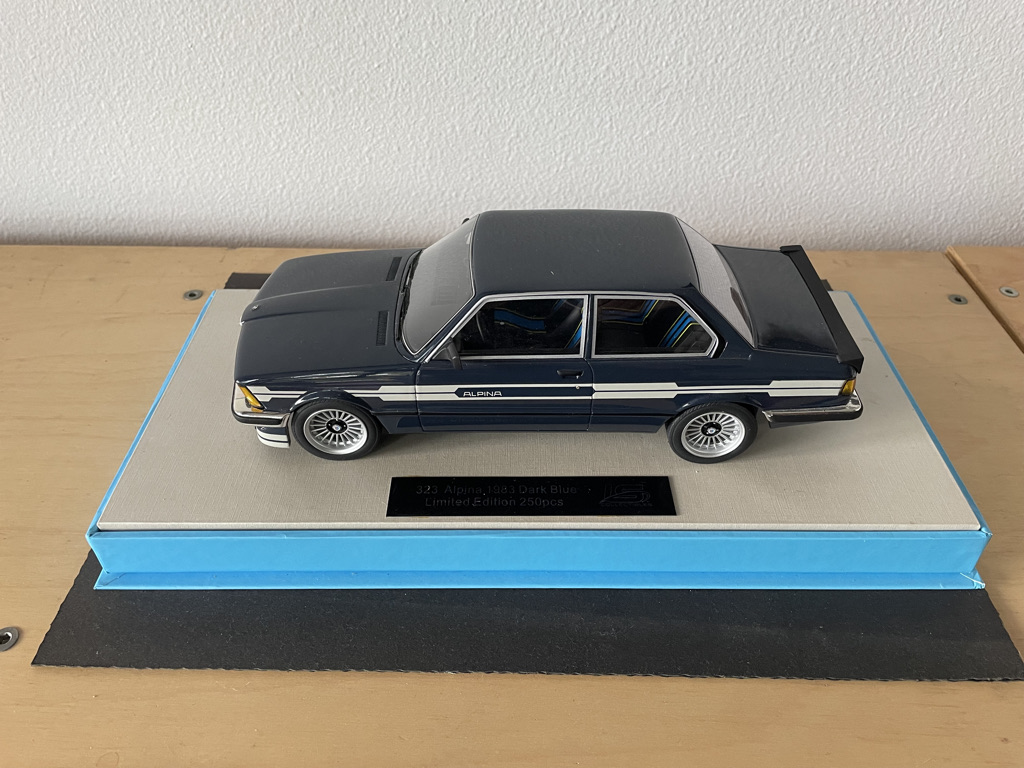
In the meantime, I have this in a conspicuous place, reminding me of what it’ll look like completed and to motivate me.

Small but important steps

Small but important steps

When I left you, dear reader, on New Years Eve 2021 the sunroof was being put together and I ticked off a list of things that still needed to be done to get the car back on the road. The list was significant – finish the engine electrical, populate the interior, including all the dash components, heater, console, and more – but comparatively short, given how long the list was when the pandemic started.

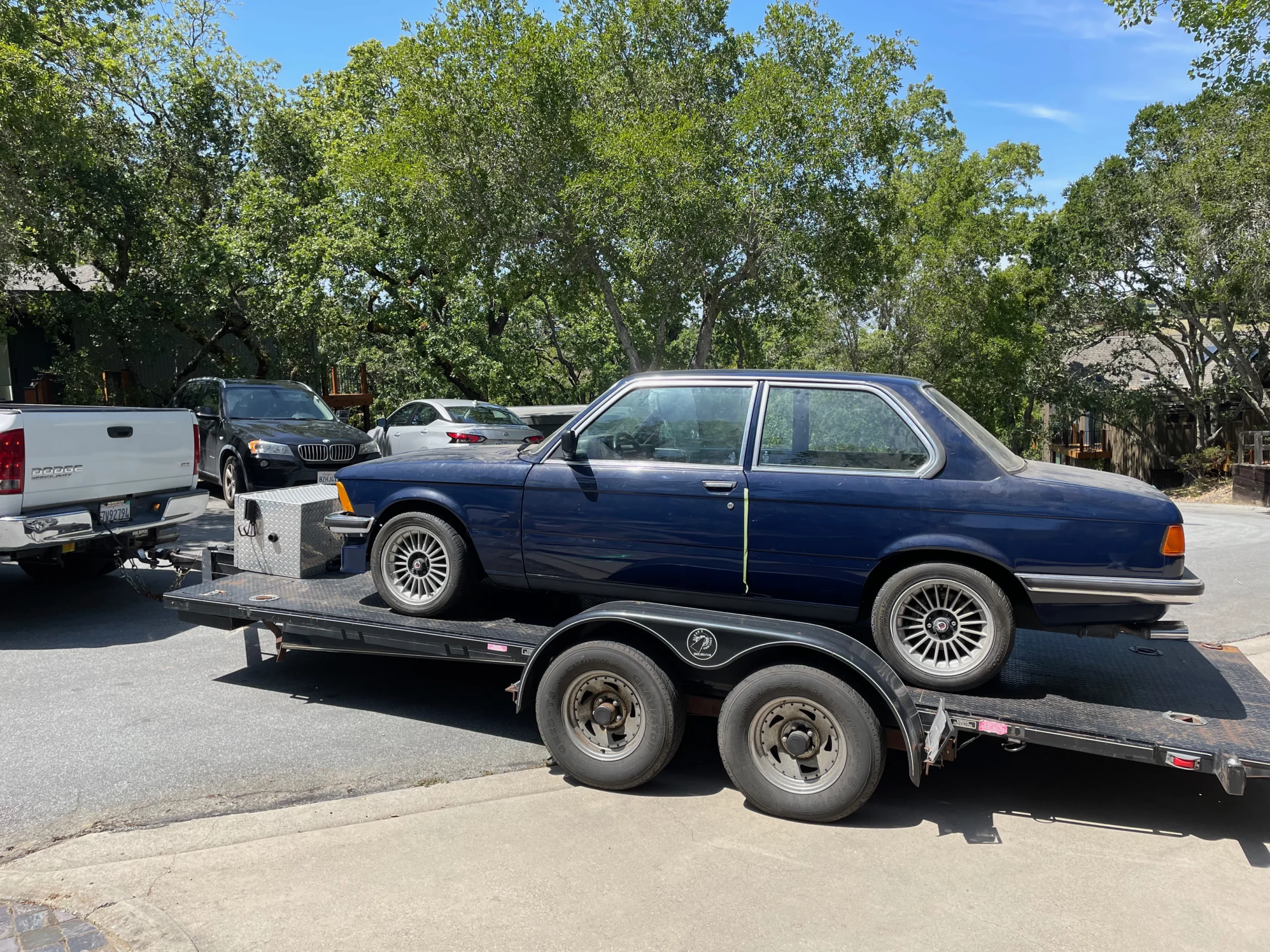
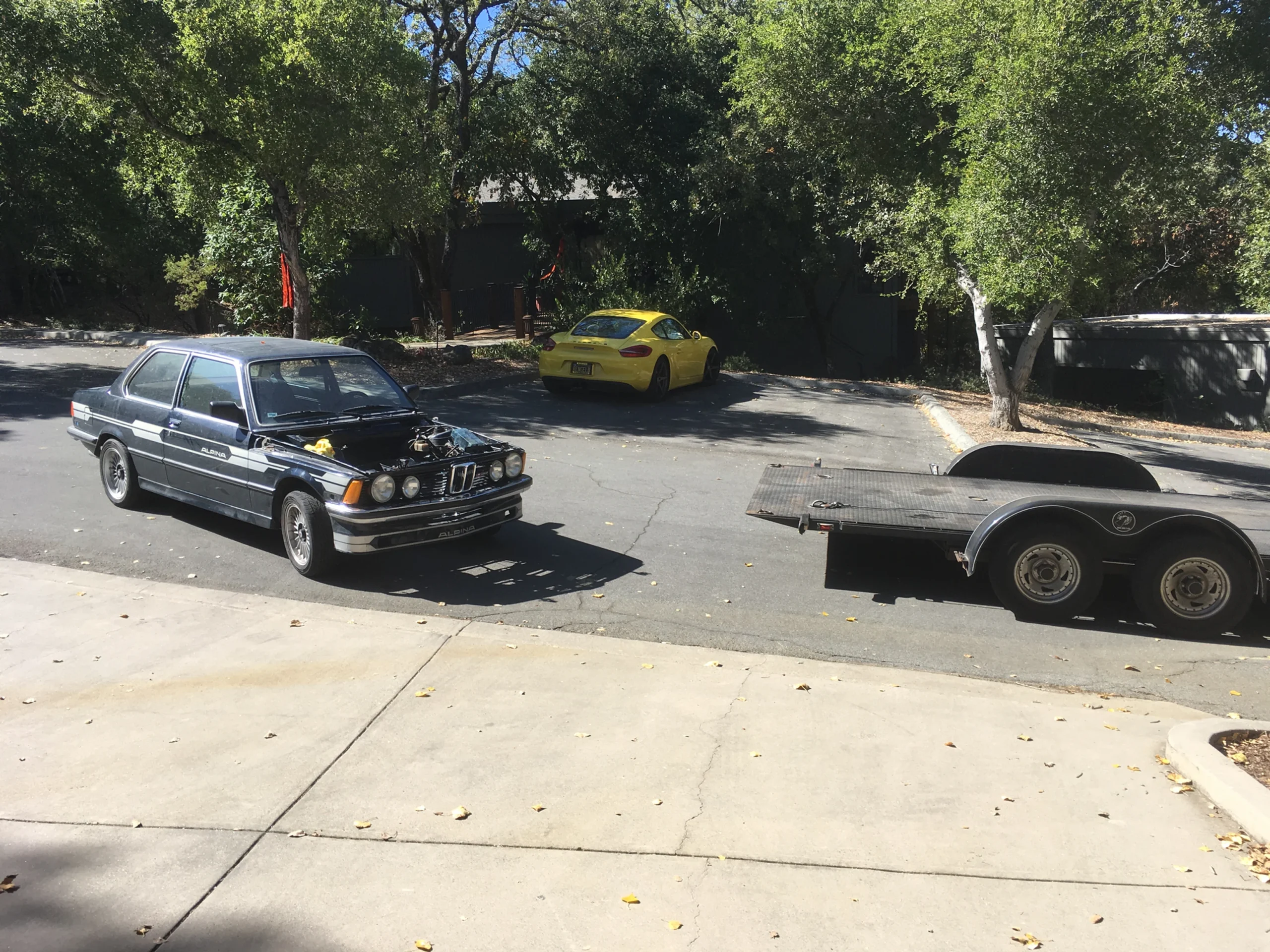
Since then the sunroof and hood have been installed and the car is ready to be trucked down from Sacramento to my garage in the San Francisco Bay Area, some 100 or so miles. Just for a little perspective, the picture below is from October 2017 when Stu came down with his truck and trailer to take the motorless shell up to Sacramento for the paint job.

Getting the sunroof back in was not easy. The entire mechanics were disassembled and most of the little parts did not stay with the shell when the body shop closed. Sourcing those small but necessary parts takes time and ingenuity. Some parts were available from BMW, some were on eBay new or used, some we got from a junk yard with an old 6-series (thankfully BMW used the same parts in several different platforms). That took many trips up to Sacramento to install the parts I got and figure out the ones I needed to get. Slow and frustrating progress.
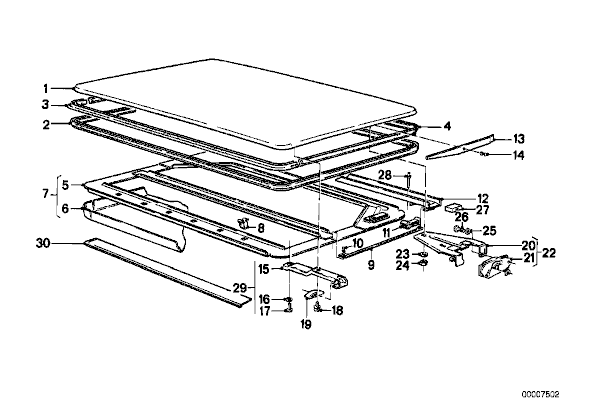
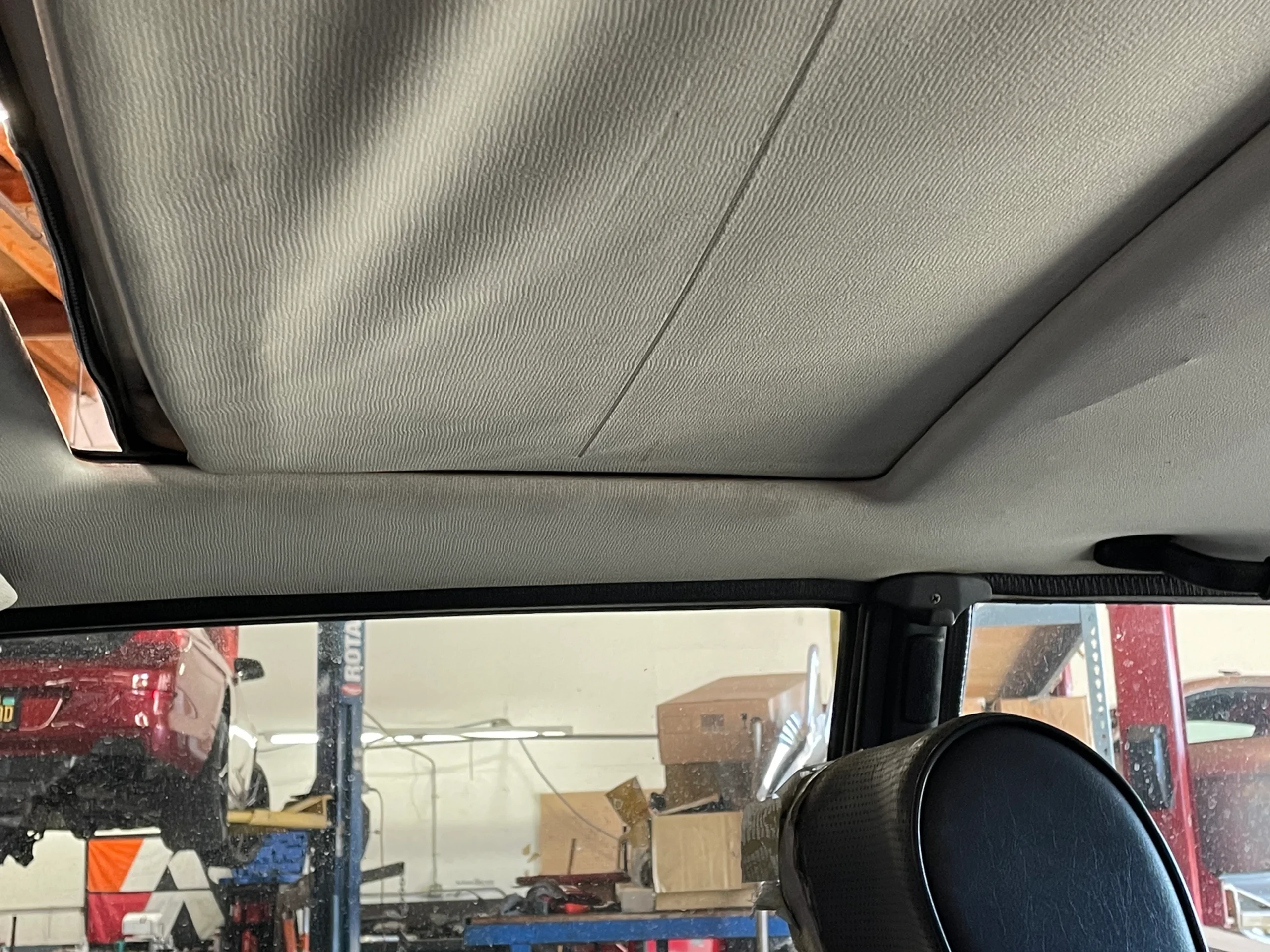
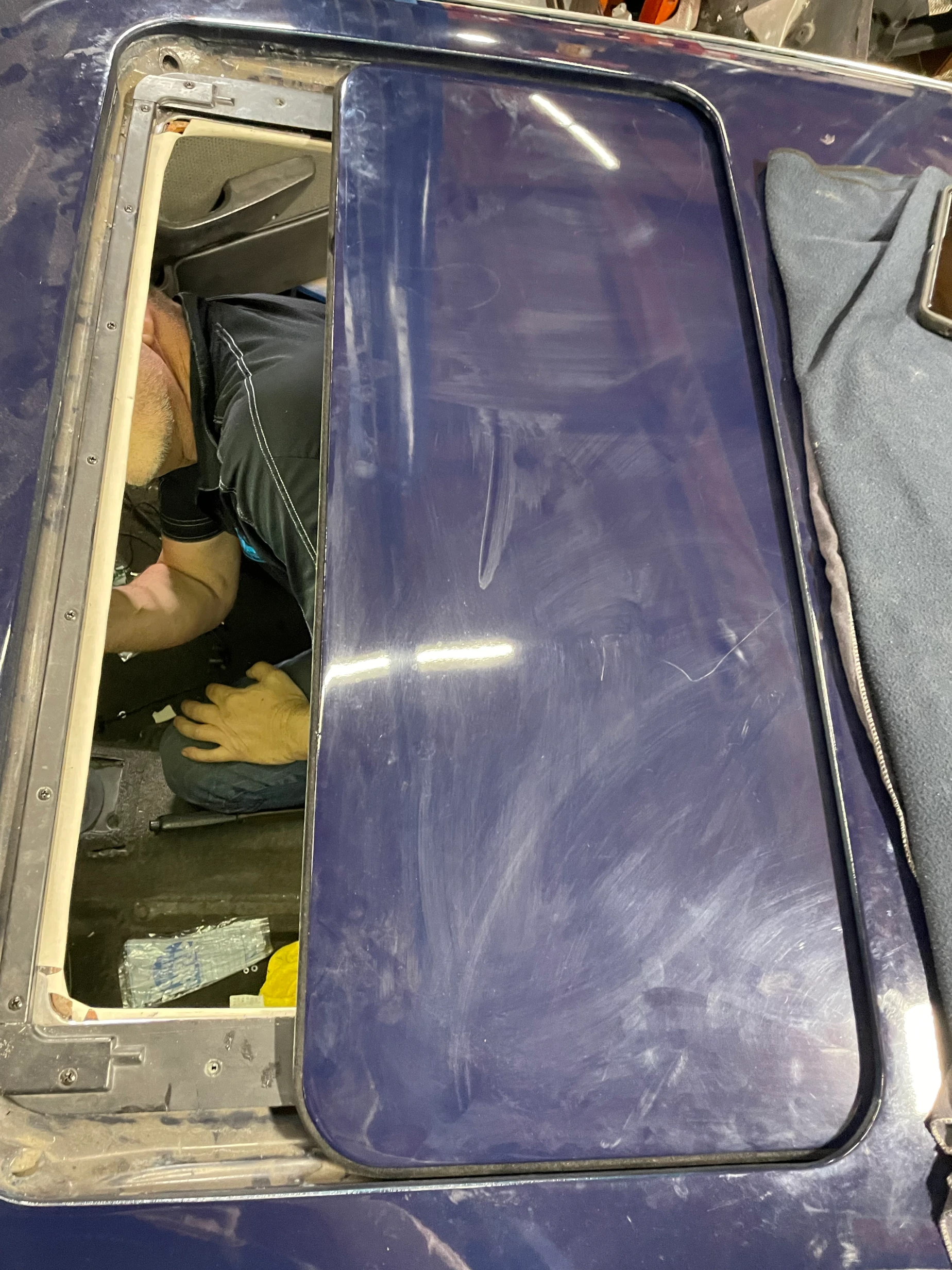
Above I told you the sunroof was in. And that is true. But it was a misleading but factual statement (my lawyer training coming through!). We finally got all the parts and were able to put the sunroof in the car. But we couldn’t get it operating. Or at least fully operating. The tilt works but not the back and forth. I’m sure with time and energy it will work but I was up for two days and had other things to accomplish before leaving. Plus, I really don’t like sunroofs anyway, so having it in but not working is not anything even near a hardship for me. Finally, the sunroof and the hood were the two final steps in getting the car water tight so it could be trucked back home.
I was working on the hood also the day we got the sunroof in. As with the sunroof, the hood was disassembled for paint and many of the little parts were missing. I was able to find most new or on eBay but they were primered, not painted. So I got some rattle cans from paintscratch.com and painted them in between the sunroof installation. By the next morning all the parts were ready to be put in the hood. By happenstance an e21 was in the shop for me to use as a template; I’d look at the white car there and go back to my hood and install parts over and over. Soon three of us carried the hood over to the shell to reunite them. Bolting it on was straight-forward but took some time. The tensioners are not on right I suspect, as the hood won’t stay up on it’s own. But the car is water tight and ready to come home.

Now we just need to find a time when I’m in town and Stu can truck it down. Once it is back in my garage I’ll populate the interior and wire up the few remaining electrical items and figure out what else is left unfinished. Oh, and see about getting the sunroof operational and the hood staying in open position.

Another (!?!?) New Year

Another (!?!?) New Year

The title for this post was going to be A New Year, given that I sat down to write this on the morning of New Years Eve, 2021. But that title was taken by a 4-year-old post discussing the paint—an event so long ago I forgot the title had been used already. Yes, a lot of time has gone by but, besides retiring from my day job, my daughter graduating college, a global pandemic, and my son going off to college, it feels like not much has happened. Ok, I guess a lot has happened. Just not to the car, that is.

That theme—that life continues to move forward but the car doesn’t really—is both true and false. It’s been a good six months since my last post, enough time to complete the car. Of course that hasn’t happened and the progress that has been made doesn’t feel like half a year’s worth.

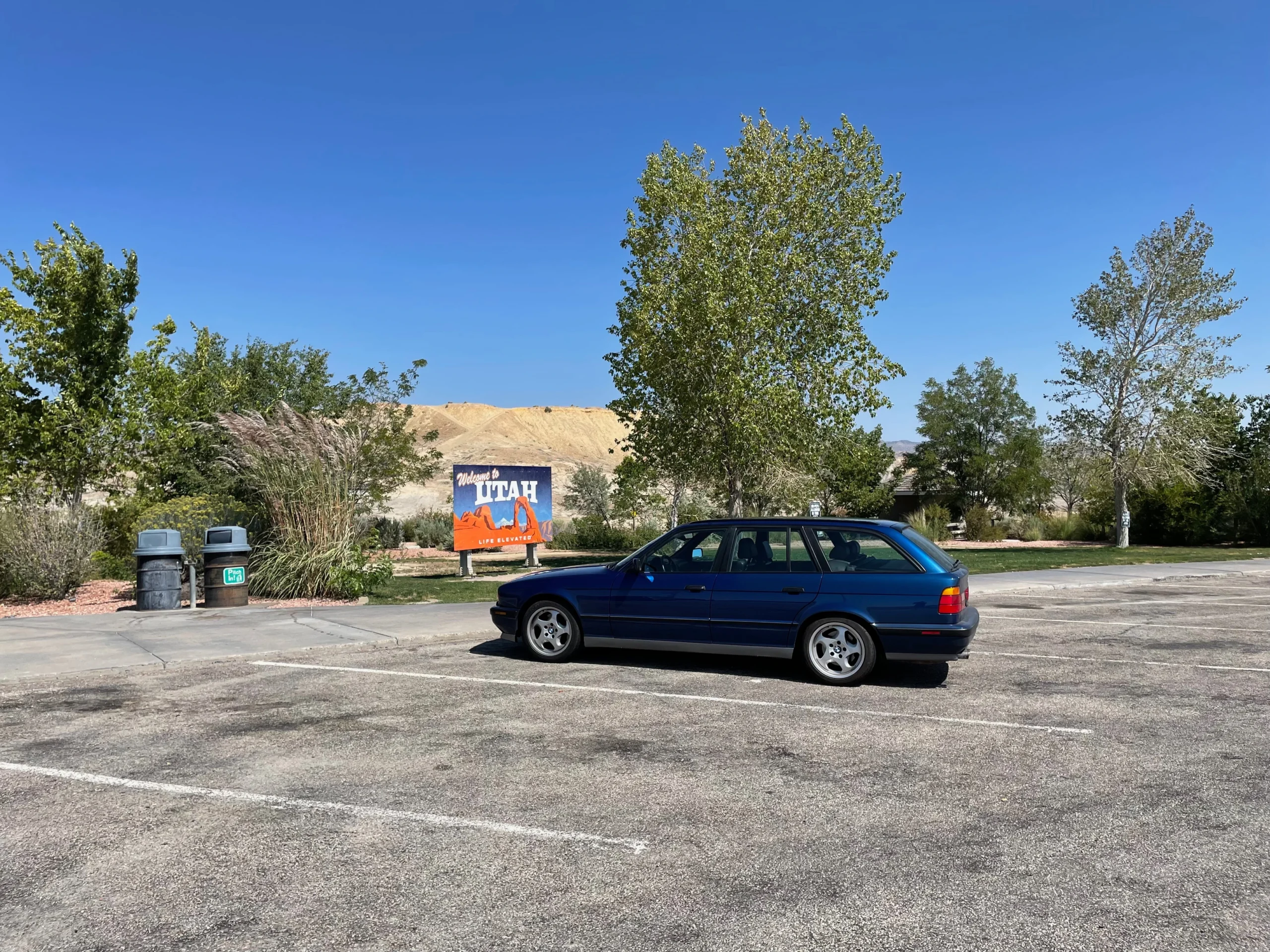
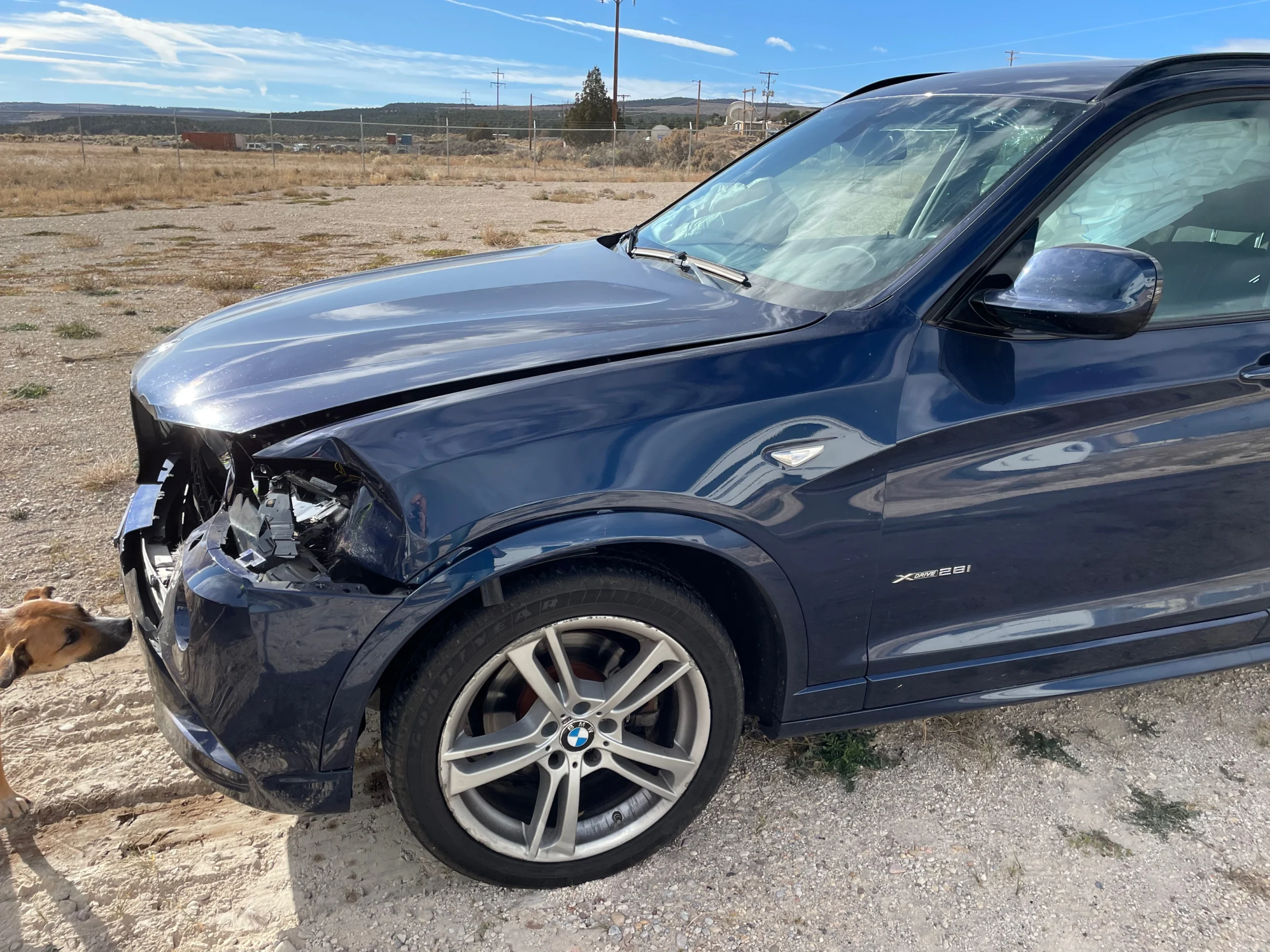
In that six months I’ve driven across the country twice, once by myself in a 1992 BMW M5 wagon I bought to replace my daily driver and then a second time with my daughter and her dog, bringing them home for the holidays. Both trips were fun but I would have preferred not have hit the deer and totaled the X3 that my daughter and I were taking across the country.

The M5 wagon in Utah

The totaled X3

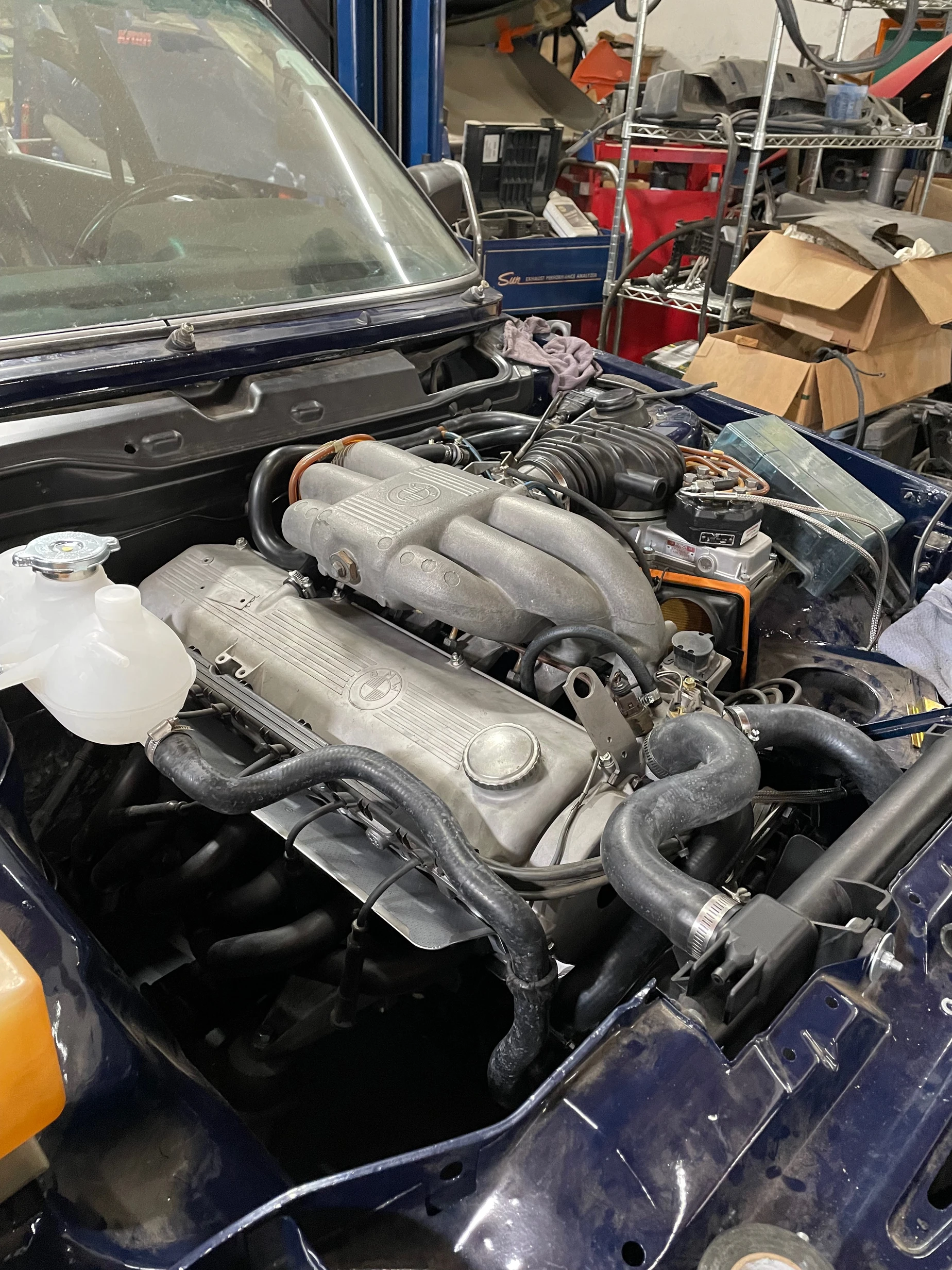
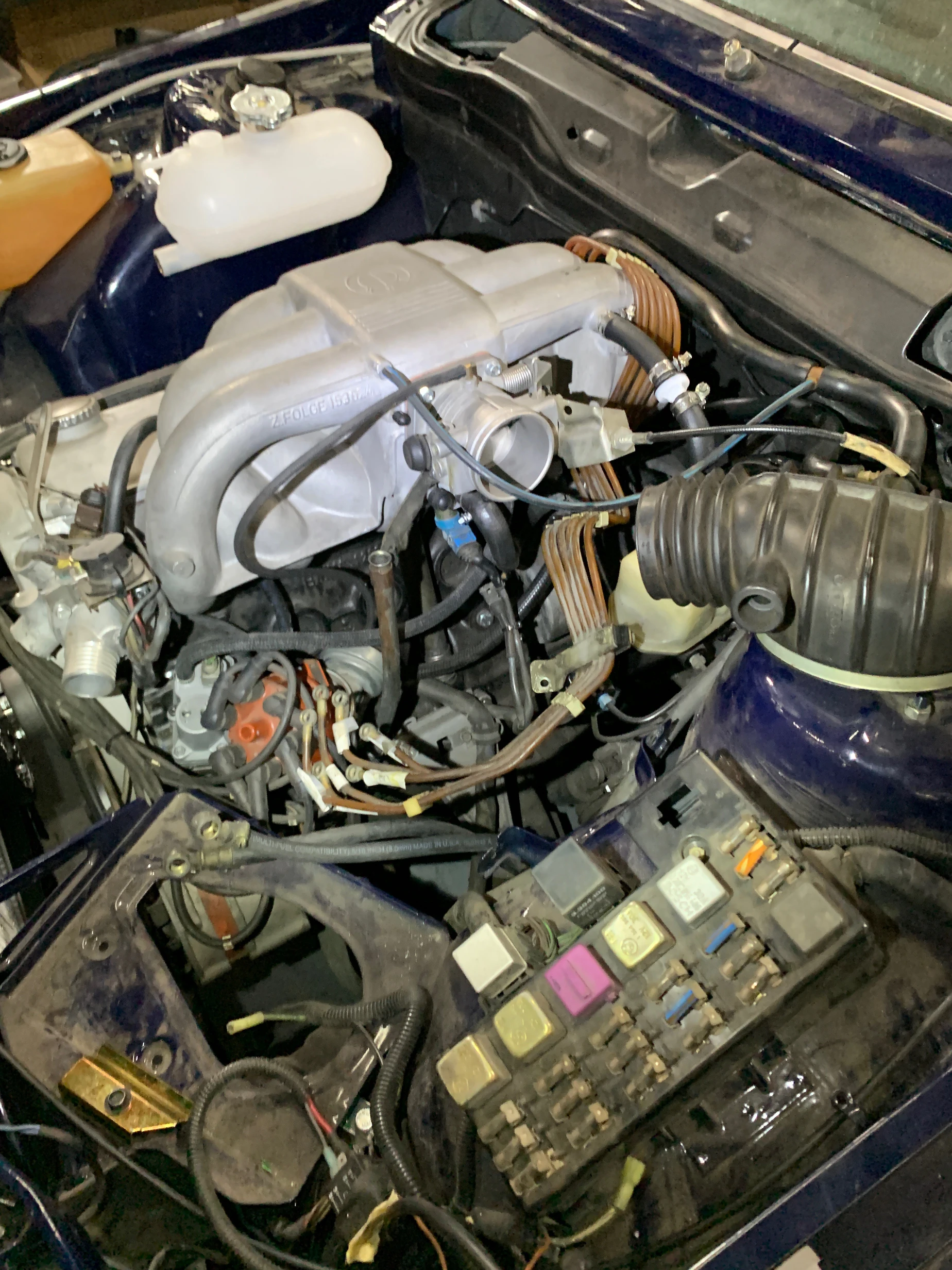
Once back from my travels, I made my way up to Sacramento to work on the car. The motor is almost done. Fuel injection was populated. Headers bolted up. Cooling system—radiator and hoses—installed.

Rear windows put in and parts for door trim being sourced from around the world.
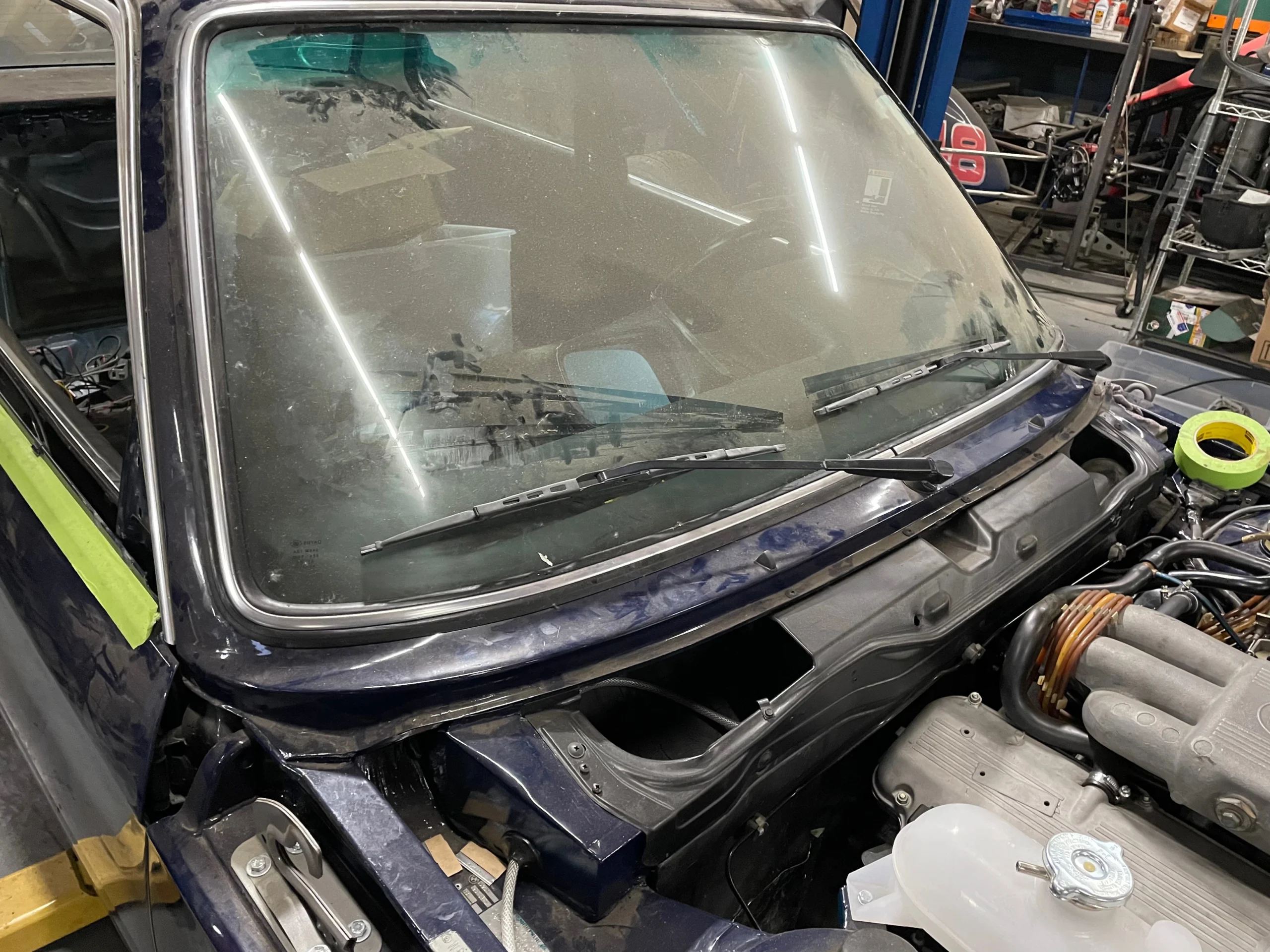
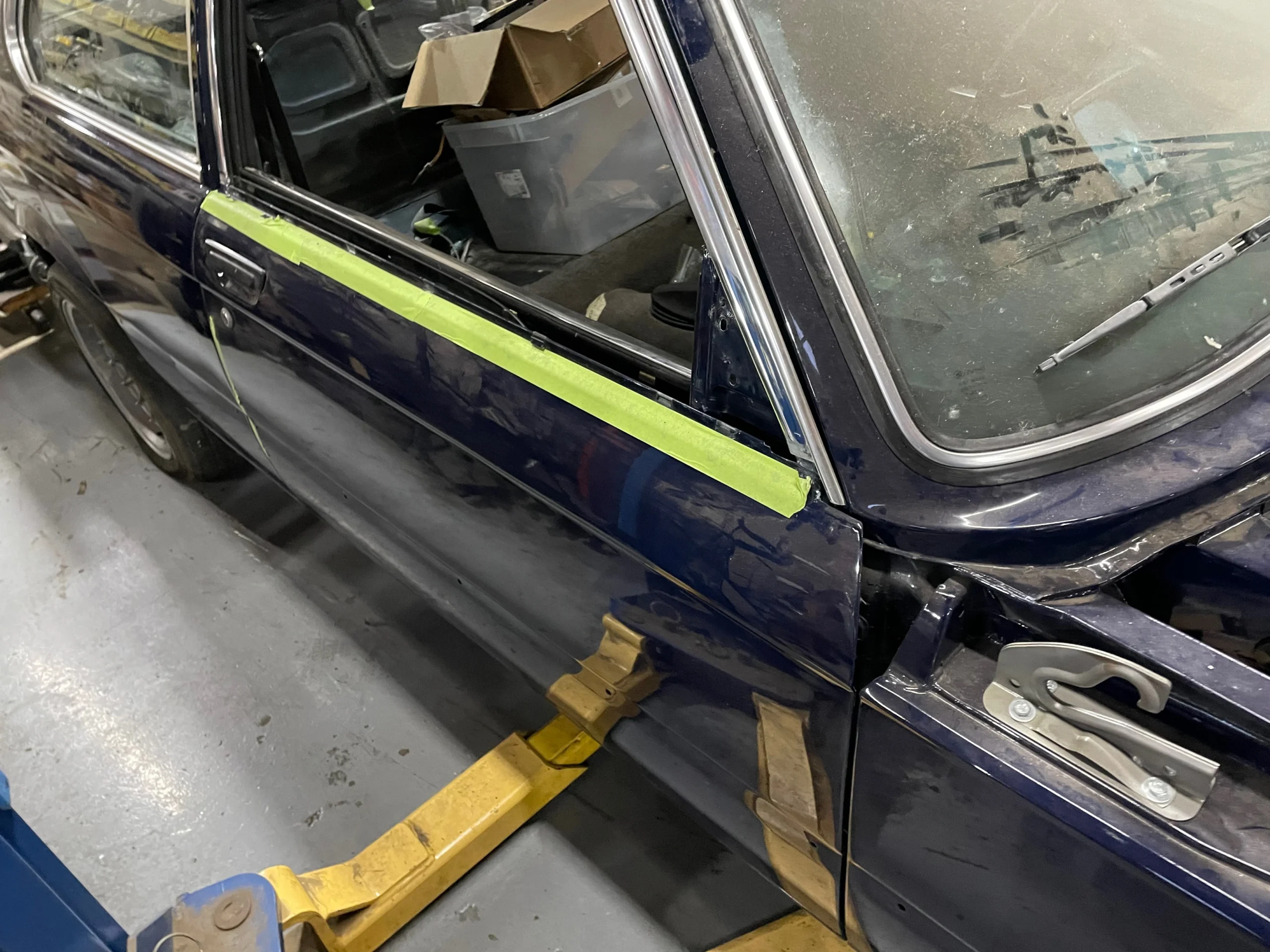
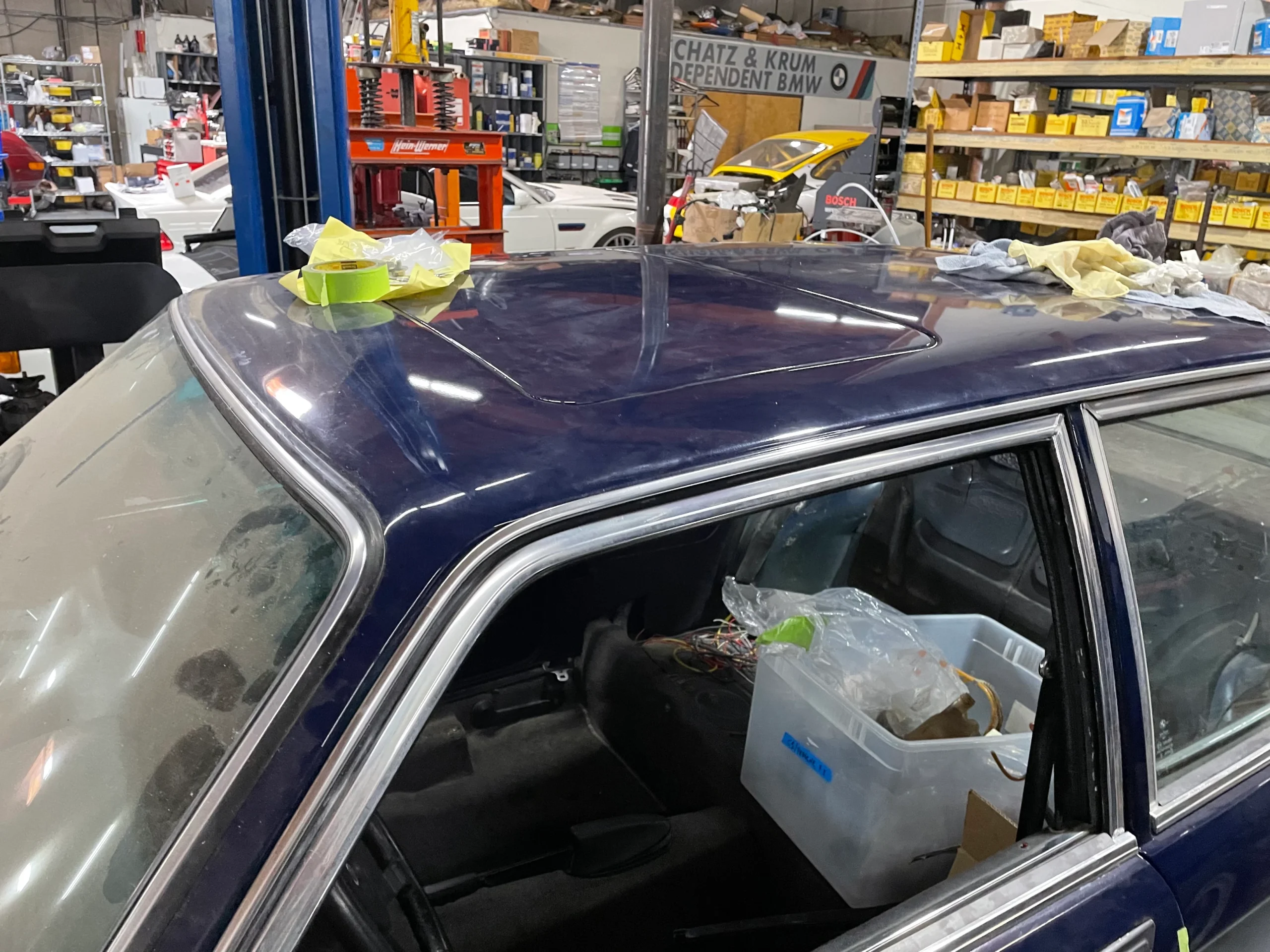
And, most recently, the sunroof is finally being addressed. First was cleaning up the sunroof frame and installing the headliner on it. Next up will be reinstalling the sunroof mechanics, the headliner frame and then the roof itself. That may happened next week.
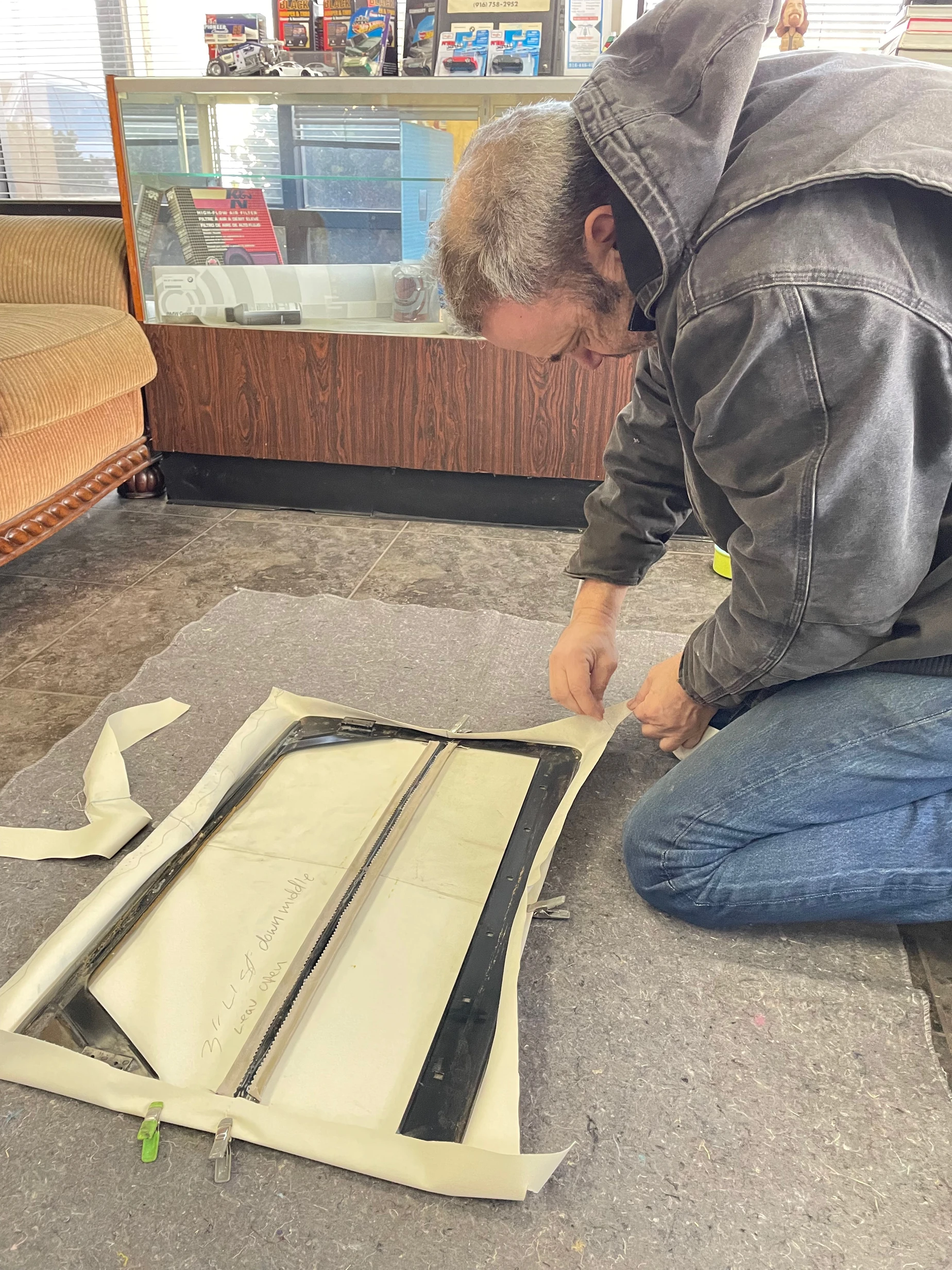
But there’s plenty to still be done. The interior still needs work: There are no seats, the dash has not been populated and lots of little parts are surely missing or broken, including the heater control unit. But that can wait until after we confirm that the car will actually run. To get there, I have a ton of details that need attention: wire in the coil (replaced by an MSD by a previous owner); finish other electric details, like sourcing and attaching battery leads; and plumb in the rest of the fuel delivery system.

And it all has to wait for me to drive my daughter and her dog back home to New York. Hopefully this time we’ll make it without totaling a car.